

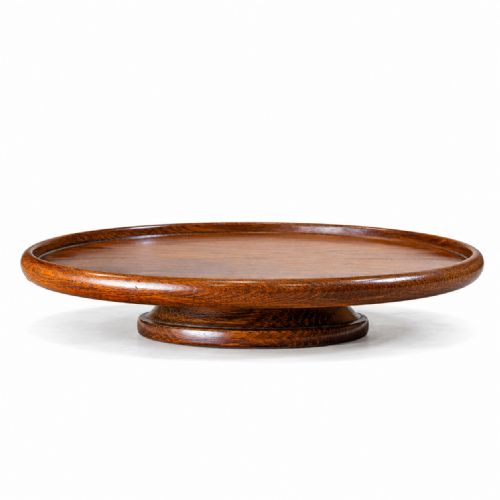
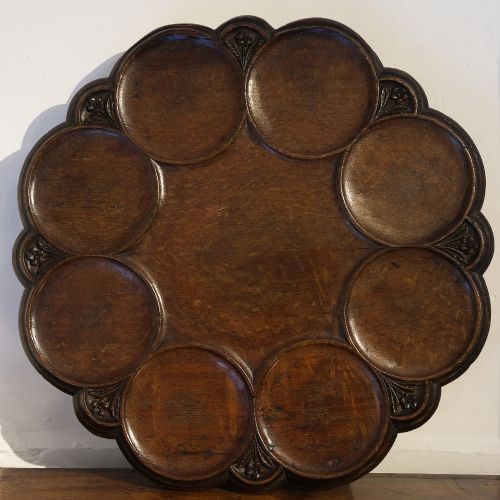


Revolving Wooden Tray
A revolving wooden tray brings simple service to the table, turning smoothly to pass dishes without the awkward reach.
Revolving Wooden Tray
A revolving wooden tray, often called a lazy Susan or table top round stand, sits at the centre of a table to share food and condiments easily among guests. When you search for a revolving wooden tray, you encounter round forms designed to rotate on a central pivot.
The selections span several eras, showing examples from the Georgian, Victorian, and Edwardian periods alongside 1920 pieces. These range from simple two-tier mahogany models to carved revolving trays and early oak pieces meant for daily dining.
How they were made
Cabinet makers constructed these trays primarily in mahogany and oak, selecting dense hardwoods capable of supporting heavy serving dishes over decades of constant rotation. The timber is often turned on a lathe or joined to form a stable circular platform.
Makers integrated internal pivot mechanisms or wooden bearings beneath the top to ensure a smooth turn. Some examples feature carved details or multi-tiered structures, requiring careful joinery to keep the rotating tiers balanced.
Revolving Wooden Tray Retail Price Guide 2026
Typical asking prices for revolving wooden tray among the pieces listed under this phrase on Sellingantiques today, from the lower quarter to the upper quarter. They describe what is for sale here now, not the wider market.
Object types catalogued under this search include lazy Susans, table top round stands, and two-tier dumb waiters.
What varies in quality
The distinction between standard examples and superior pieces lies in the choice of timber grain and the precision of the turning. A well-made tray employs well-figured mahogany or quarter-sawn oak that resists warping across the circular top.
Quality also shows in how quietly and evenly the mechanism operates under weight. Trays with robust pivots and clean, hand-finished edges command greater appreciation than those with stiff or loose turning action.
The Revolving Wooden Tray Glossary
- Lazy Susan
- A revolving tray placed on a table or countertop to assist in moving food. This term appears frequently in descriptions of rotating serving accessories.
- Dumb waiter
- A freestanding tiered stand or table used to hold dishes and tableware during a meal. These serve a similar function to tabletop revolving trays in aiding service.
- Tazza
- A small, elevated shallow bowl or dish on a pedestal foot. In the context of turn-of-the-century pieces, it describes a footed serving stand.
- Quarter-sawn
- A method of cutting logs that produces a stable board with distinct grain patterns. Oak processed this way resists the dimensional changes that can affect revolving trays.
Revolving Wooden Tray: Frequently Asked Questions
What is a revolving wooden tray used for?
These pieces function as table accessories designed to rotate dishes, condiments, and bottles within reach of all diners. They eliminate the need to pass heavy platters across a crowded table.
Historically, they sat at the centre of dining tables or on sideboards to streamline formal and informal meals alike.
How do I date an antique wooden tray?
Dating relies on observing the wood species, construction marks, and overall style. Georgian and Victorian examples often feature hand-turned mahogany with patination gained from long use.
Later Edwardian and Art Deco pieces show different turning profiles and finish treatments, helping you place them in their respective decades.
Are these trays stable on the table?
Traditional revolving trays use balanced central pivots designed to support weight evenly across the circular top. Proper construction ensures the tray does not tip when dishes are placed near the edge.
Heavier hardwood models offer greater stability during use than lighter, modern alternatives.
How do I care for a mahogany tray?
Maintain the wood surface by dusting regularly with a soft cloth and avoiding excessive moisture. Occasional application of suitable furniture wax protects the antique finish.
Keep revolving wooden trays away from direct heat sources and strong sunlight to prevent timber movement or fading.