



Revolving Table Centre
A revolving table centre provides a practical surface that turns on its axis, bringing books or dishes close without shifting the whole piece.
Revolving Table Centre
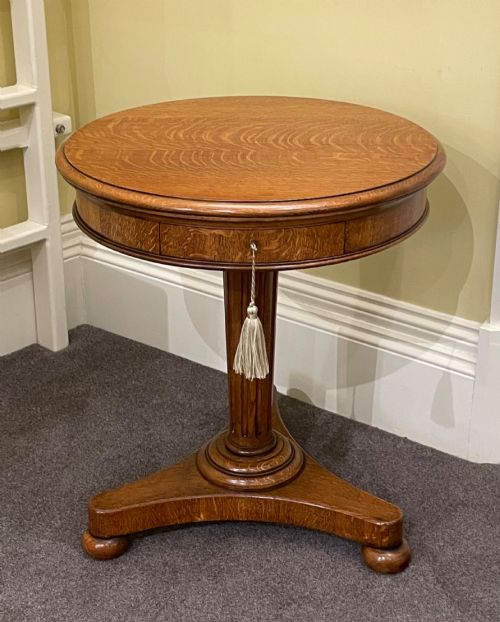
A revolving table centre typically takes the form of a circular drum table or library table designed to rotate smoothly on a central pillar. These pieces span Georgian, Regency, Victorian, and Edwardian periods, appearing in traditional British timbers alongside occasional Indian or Scandinavian examples.
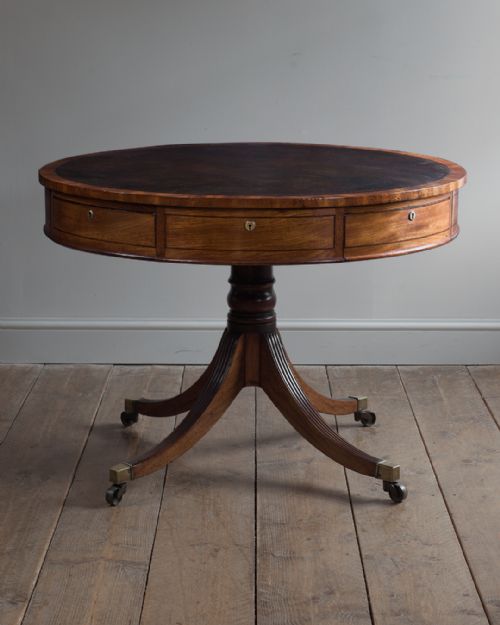
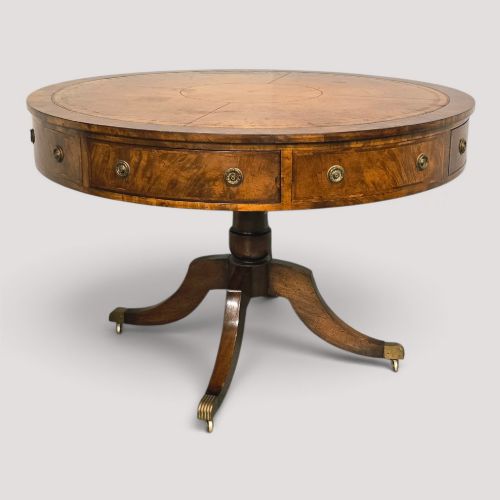
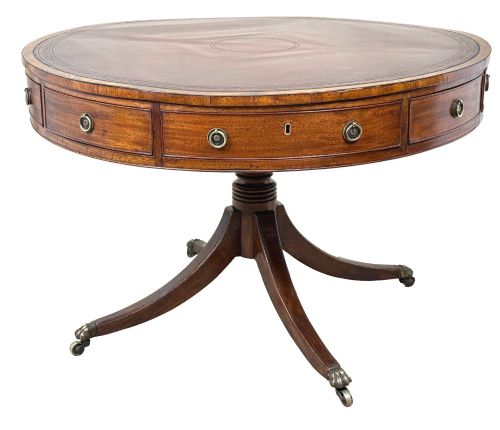
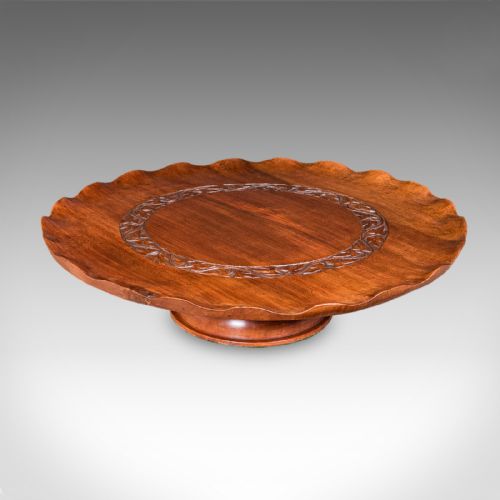
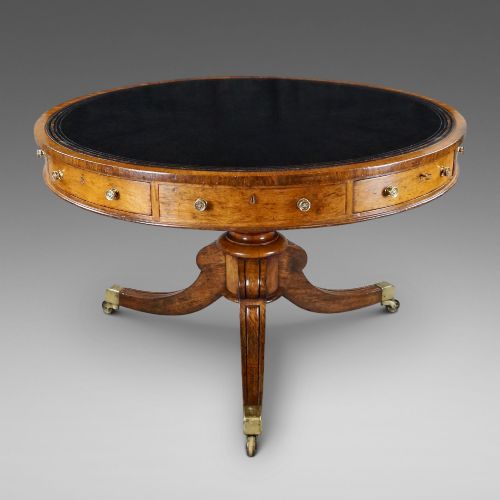
The most common formats on this page are mahogany drum tables featuring inset leather tops and revolving mechanisms hidden within the frieze. Alongside these standard library pieces, you will encounter serving trays and hall centre tables that share the same rotary function.
Originating as functional furniture for studies and dining rooms, these tables rely on clever internal engineering to let users access drawers or surface items from a seated position. The circular top remains the defining shape across both nineteenth-century designs and later Edwardian adaptations.
Materials and construction
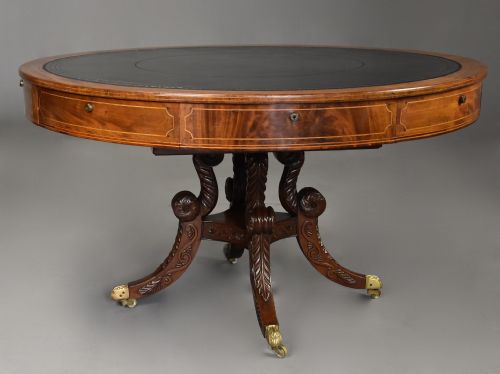
Makers utilised dense timbers such as mahogany, rosewood, oak, and burr maple to build the heavy circular tops and supporting pedestals. Flame mahogany veneers and brass inlays frequently decorate the outer rims of Georgian and Regency examples.
The internal revolving mechanism demands precise carpentry to ensure the tabletop turns evenly without wobble or friction. Leather inserts, often green with gilt tooling, are glued into recessed top channels to create a flat writing or working surface.
Revolving Table Centre Retail Price Guide 2026
Typical asking prices for revolving table centre among the pieces listed under this phrase on Sellingantiques today, from the lower quarter to the upper quarter. They describe what is for sale here now, not the wider market.
The listings span the Georgian, Regency, Victorian, and Edwardian periods, constructed in timber varieties including mahogany, rosewood, oak, teak, and burr maple.
Distinctions in quality
The standard of a revolving table centre rests on the weight of the timber and the smoothness of the turning action. Superior pieces employ solid mahogany or choice flame veneers that wrap seamlessly around the circular frieze drawers.
Cabinetmakers invested differing degrees of skill in the hidden pivot mechanism and the stability of the central pillar base. Finer examples balance robust internal framing with crisp brass inlay and well-fitted drawer interiors.
The Revolving Table Centre Glossary
- Drum table
- A circular library table with a deep frieze resembling a drum, often fitted with alternating real and dummy drawers. These tables frequently incorporate a revolving mechanism.
- Frieze
- The horizontal band beneath the tabletop that houses the drawers and conceals the internal pivot or turning mechanism. On quality pieces, the drawer fronts follow the curve of the drum.
- Rotary serving tray
- A tabletop accessory or independent tray designed to spin on a central base, allowing food and condiments to pass around a dining table.
- Flame mahogany
- A veneer cut from the branch junction of a mahogany tree, yielding a distinctive ripple pattern that resembles flickering flames. Cabinetmakers selected this timber for prominent table surfaces.
- Pillar and claw
- A central pedestal support rising from three or four curved legs, commonly found beneath the rotating tops of nineteenth-century centre tables.
Revolving Table Centre: Frequently Asked Questions
What is a revolving table centre used for?
These pieces served primarily as library tables or rent tables where documents and ledgers needed to be reached quickly from a single seating position. The rotation allowed a person to access multiple drawers and surface areas without moving the heavy base.
In domestic settings, smaller rotary trays and tables helped circulate dishes or serving items among guests during meals. The practical design combined storage with mobility in a compact footprint.
How do I identify a Regency drum table?
Regency examples typically feature rich mahogany or rosewood timbers, sometimes accented with brass inlay or gilt bronze mounts around the frieze. The proportions tend to be clean and classical, reflecting the early nineteenth-century design aesthetic.
Look for flame mahogany veneers on the circular top and traditional cockbeading around the drawer edges. The central column often rests on a platform base with splayed legs and brass paw feet.
Are all these tables English?
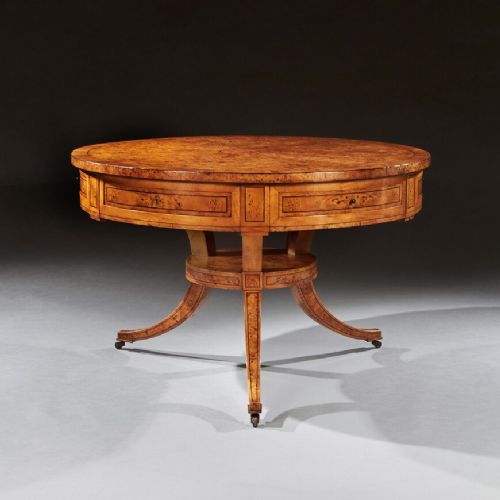
While the majority of pieces on this page originate from English workshops during the Georgian and Victorian eras, the selection includes international variations. Listings feature items from Scandinavian makers, such as Swedish burr maple pieces, alongside Indian rotary serving trays.
Regional differences appear in the choice of secondary woods and the specific execution of the turning mechanism. Reviewing the individual listing details clarifies the likely geographic origin of each piece.
How does the rotating mechanism work?
The turning action relies on a concealed pivot or bearing system housed between the underside of the table top and the top of the central pedestal. This allows the heavy circular surface to glide smoothly in either direction.
Users can spin the entire top to bring a different drawer or section within arm's reach. The internal engineering is built to support the weight of books and writing equipment without tilting.
How do I care for a leather tabletop?
Leather inserts require gentle maintenance to prevent the material from drying out or cracking over time. Dusting with a soft cloth and avoiding direct sunlight helps preserve the colour and gilt tooling.
Moisture and harsh cleaning agents should be kept away from the leather surface. Occasional application of specialist leather balm maintains suppleness across older desk and table tops.