

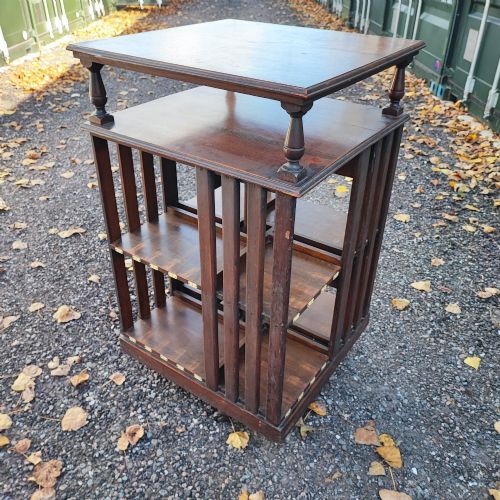
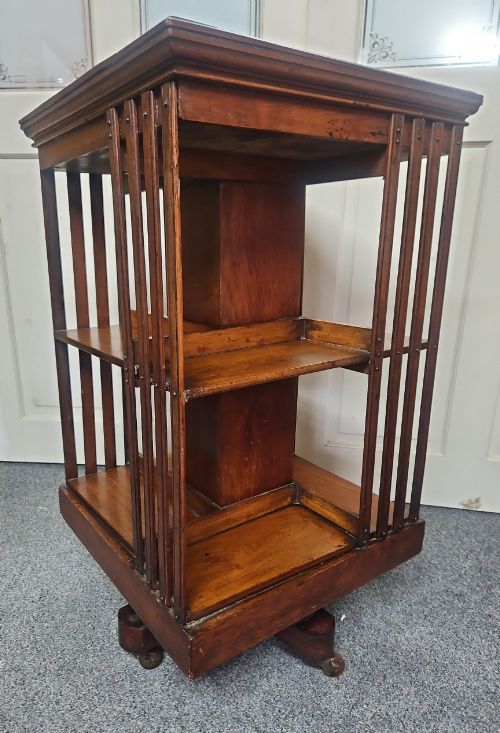
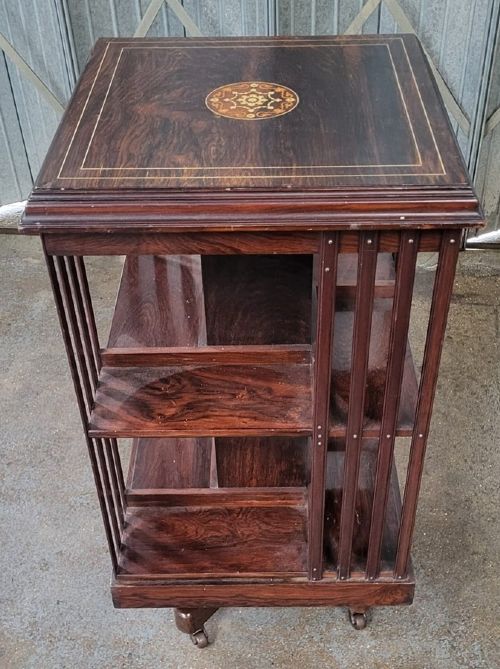
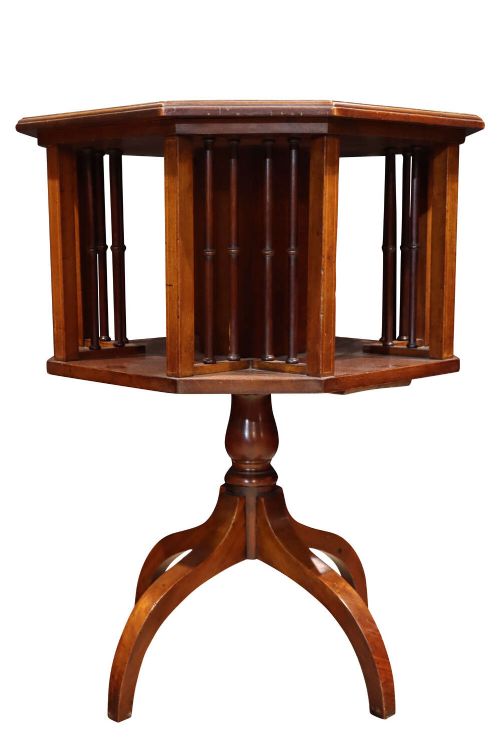
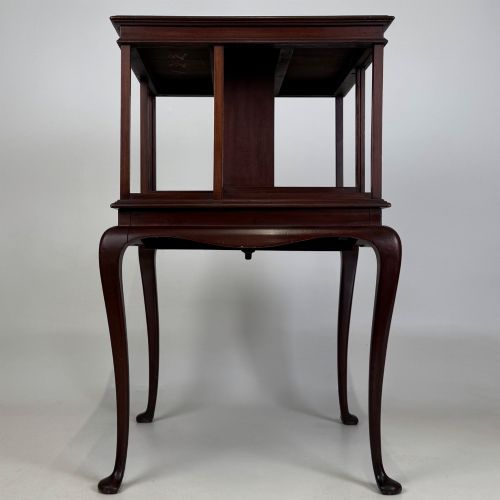

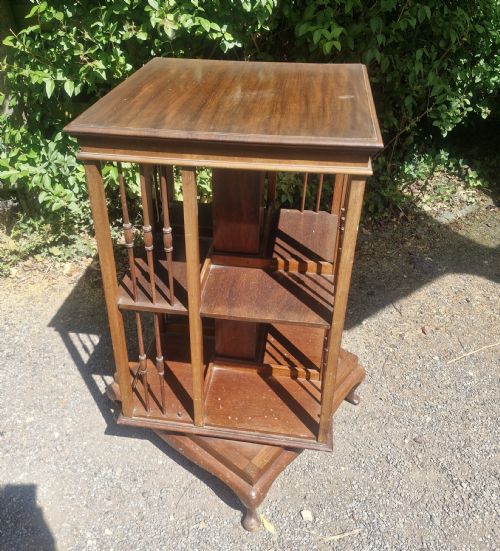

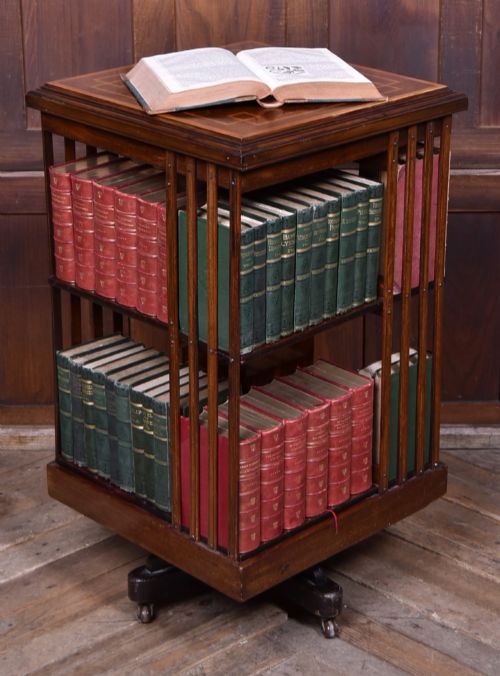

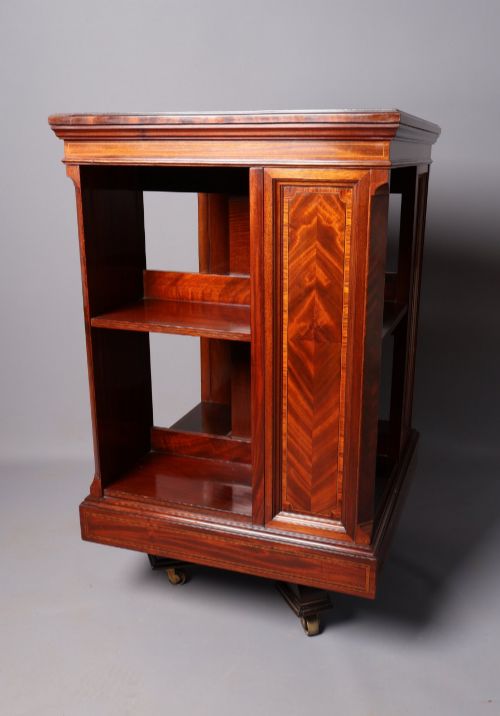


Revolving Bookstand Table
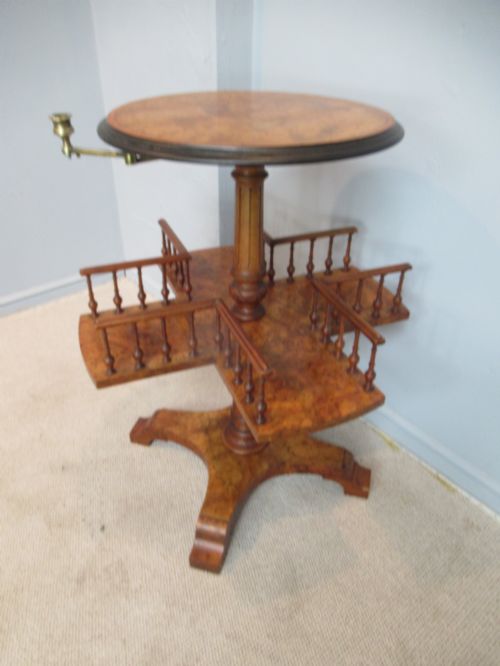
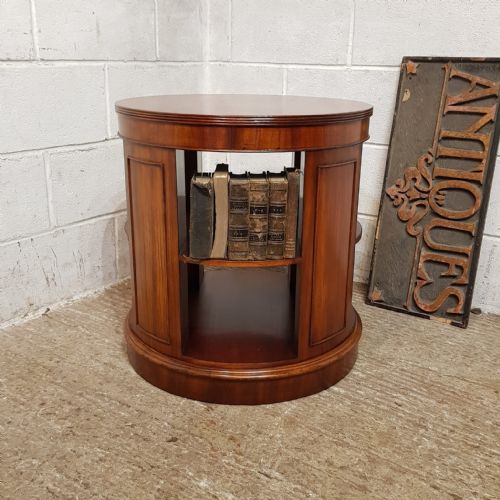
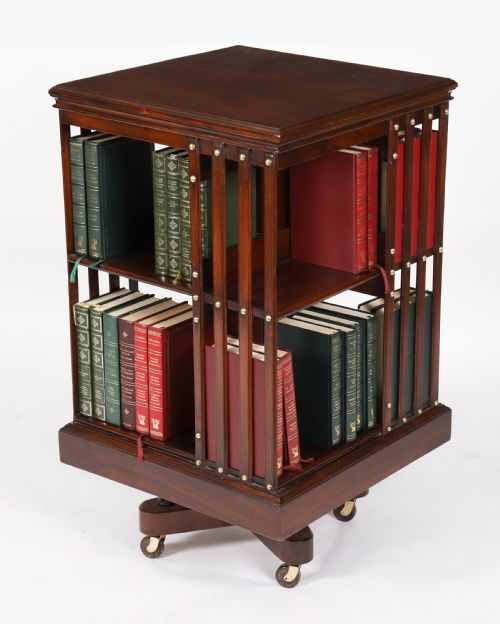
A revolving bookstand table brings books within arm's reach while turning smoothly on a compact pedestal base.
Revolving Bookstand Table
A revolving bookstand table is designed to sit beside a chair or desk, holding a modest collection of volumes that rotate into reach. When you search for a revolving bookstand table, you encounter practical furniture built for domestic libraries and studies.
The pieces appearing here stem largely from the Edwardian and Victorian eras, taking forms that range from table top models to floor-standing units. Mahogany and oak dominate the selection, often featuring circular or octagonal tiers.
Makers fashioned these stands with slatted or panelled partitions to keep books upright during rotation. Buyers most frequently meet Edwardian mahogany versions equipped with cast iron or brass internal mechanisms.
Materials and construction methods
Cabinet makers utilised dense timbers such as mahogany, oak, rosewood and satinwood to construct the tiers and vertical dividers. Boxwood inlay, ormolu mounts and brass details frequently ornament the surfaces.
The revolving action relies on a concealed pivot mechanism, often supported by iron or cast iron components beneath the central column. Joinery includes traditional dovetailing and fine edge banding to secure the tiers.
Revolving Bookstand Table Retail Price Guide 2026
Typical asking prices for revolving bookstand table among the pieces listed under this phrase on Sellingantiques today, from the lower quarter to the upper quarter. They describe what is for sale here now, not the wider market.
Listings feature mahogany, oak, rosewood and satinwood, spanning the Victorian and Edwardian eras.
Distinguishing quality in revolving bookstands
Quality rests upon the smoothness of the turning action and the stability of the central pivot. A superior piece rotates silently without wobble, whilst lesser examples develop a loose or grating motion over time.
The choice of timber and the precision of the inlay set the finer examples apart from plain utilitarian pieces. Figured veneers such as flame mahogany or burr walnut indicate a higher grade of manufacture.
Maple & Co
The Revolving Bookstand Table Glossary
- Revolving bookcase
- A freestanding or table top tier of shelves mounted on a central pivot so the whole unit turns freely. This allows access to books from a seated position without moving the furniture.
- Flame mahogany
- A veneer cut from the fork of the mahogany tree to produce a rippling, flame-like pattern. Cabinet makers used this figure on prominent surfaces to catch the light.
- Ormolu
- Gilt bronze mounted onto furniture for decorative effect. It appears on polished wood surfaces to provide metallic contrast.
- Boxwood inlay
- Narrow strips of pale wood inserted into contrasting darker timber to form geometric borders or floral motifs. This technique defines Edwardian Sheraton Revival decoration.
- Cabriole legs
- S-shaped furniture legs curving outward at the knee and tapering inward to the foot. They appear on certain floor-standing models.
Revolving Bookstand Table: Frequently Asked Questions
How do I care for a revolving bookstand table?
Dust the timber regularly with a dry cloth and apply a coat of beeswax occasionally to maintain the polished finish. Avoid placing the stand near direct heat sources to prevent the wood from warping.
Keep the internal pivot mechanism clean and lightly lubricated if the rotation stiffness changes over time. Treat the veneer surfaces gently to preserve the original polish.
Can these tables hold heavy books?
Most models accommodate standard octavo volumes and novels comfortably within their divided compartments. Heavier folios and reference books place strain on the central pivot and dividing slats.
Distribute weight evenly across the opposing tiers to ensure the mechanism rotates smoothly. Overloading one side causes uneven wear on the internal bearing.
Where should I place a revolving bookstand table?
These pieces suit placement beside an armchair, desk or sofa where books require frequent access. Their compact footprint allows them to occupy corners or tight spaces within a study.
Ensure adequate clearance around the circumference so the tiers rotate freely without striking walls or adjacent furniture.
How do I date a revolving bookstand table?
Examine the timber, secondary woods, and decorative motifs such as boxwood inlay or ormolu mounts. Edwardian pieces often display lighter mahogany and refined Sheraton Revival details, whilst Victorian examples utilise heavier oak or rosewood.
Look for construction clues in the base and the casting of the iron or brass pivot mechanism. Machine-cut screws and heavy iron plates typically point towards the late nineteenth or early twentieth century.