



Revival Style Bedstead
These revival style bedstead pieces offer grand architectural presence and period character, bringing historic European design directly into the modern bedroom.
Revival Style Bedstead
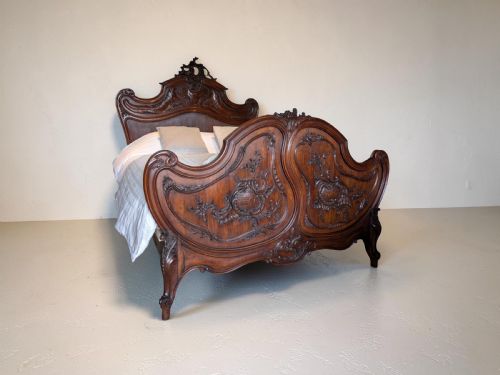
When you search for revival style bedstead, you encounter substantial framing built in various historic European idioms. The selection ranges from French Louis XV and Louis XVI revival models to Italian Rococo and Gothic iterations.
Most examples found here date from the nineteenth century up through the early twentieth century, spanning periods like the late Victorian era and the nineteen-twenties. These frames accommodate standard modern mattress proportions while retaining their original decorative grandeur.
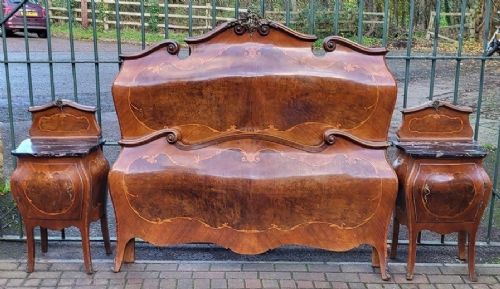
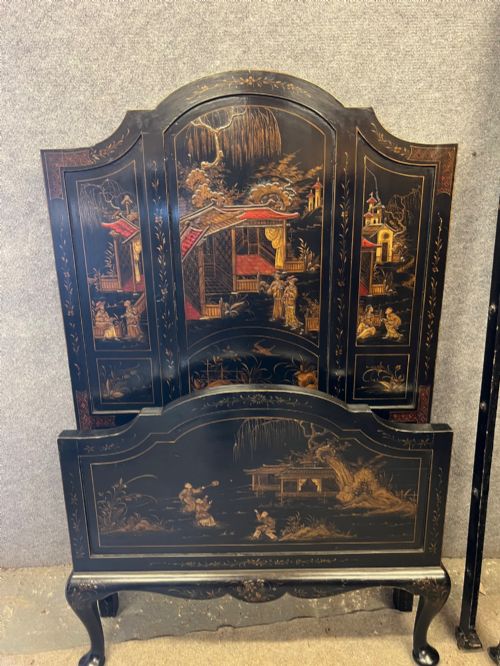
Forms include single beds, double beds, and larger king or emperor sizes, occasionally accompanied by matching bedside cabinets or executed in distinct regional aesthetics like Chinoiserie.
How they were made
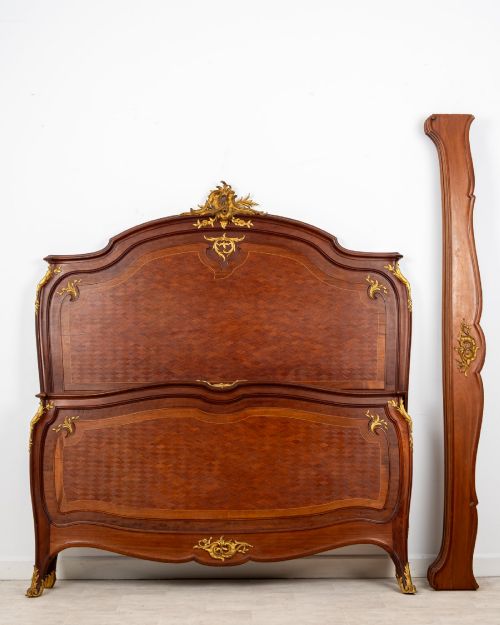
Cabinetmakers utilised rich timber foundations including walnut, burr walnut, oak, and kingwood, often enhanced with intricate parquetry and marquetry work. Hand-painted polychrome panels and decorative satinwood surfaces also appear across the surviving pieces.
Metal ornamentation played a crucial role in styling, with cast ormolu mounts and brass detailing applied to accentuate the sweeping curves of Rococo and Renaissance revival framework.
Revival Style Bedstead Retail Price Guide 2026
Typical asking prices for revival style bedstead among the pieces listed under this phrase on Sellingantiques today, from the lower quarter to the upper quarter. They describe what is for sale here now, not the wider market.
Periods represented span from Victorian and nineteenth-century examples through to nineteen-twenty productions.
What varies in quality
The distinction between standard production and exceptional work lies in the depth of the carving and the precision of the timber marquetry. Master workshops invested significantly more labour into hand-sculpted woodwork and finely chased ormolu mounts.
Structural integrity and the retention of original decorative finishes determine the desirability of each frame. Pieces featuring intact hand-painted portrait panels or cohesive matching suites demonstrate superior original craftsmanship.
Maple And Co
The Revival Style Bedstead Glossary
- Ormolu
- Gilded bronze mounts applied to furniture. This technique adds metallic highlight and decorative contrast against dark timber surfaces.
- Marquetry
- Inlaid wood pieces arranged to form decorative patterns or pictures. Craftsmen cut contrasting veneers to create detailed ornamentation on the headboards and footboards.
- Parquetry
- Geometric wood inlay patterns. This method creates repeating tessellated designs across large flat panels of the bed frame.
- Chinoiserie
- European imitation of Chinese artistic motifs. This decorative style brings whimsical painted scenes and exotic character to the woodwork.
Revival Style Bedstead: Frequently Asked Questions
What mattress size fits these antique beds?
Many nineteenth and early twentieth-century frames deviate slightly from contemporary standard dimensions. Careful measurement of the interior rails ensures proper placement for modern bases.
Custom mattress ordering is occasionally necessary for older European sizing formats, particularly with larger king or emperor proportions.
How do I style a revival bedstead today?
These ornate frames function naturally as focal points within minimalist or traditional bedroom schemes. Pairing the carved woodwork with simple neutral bedding balances the heavy historical aesthetic.
Allowing the exposed walnut, ormolu mounts, or painted panels to remain unobstructed preserves the visual impact of the piece.
Are bed bases included with these frames?
Inclusions vary by individual listing, with some examples supplying integrated or modern replacement support systems. Reviewing the specific description clarifies whether a base accompanies the woodwork.
Additional slatted wooden bases can be fitted discreetly inside antique rails to support modern mattresses securely.
How do I identify the revival style?
Stylistic markers point directly to the historic era being emulated, such as asymmetrical Rococo curves or geometric neoclassical symmetry. Examining the carved motifs and hardware reveals the specific design vocabulary.
Nineteenth-century makers frequently combined elements from French Louis reigns with heavier Victorian proportions.