

Revival Open Bookcase
A revival open bookcase brings architectural ambition to ordinary shelving, offering an exposed timber stage for books and curiosities.
Revival Open Bookcase
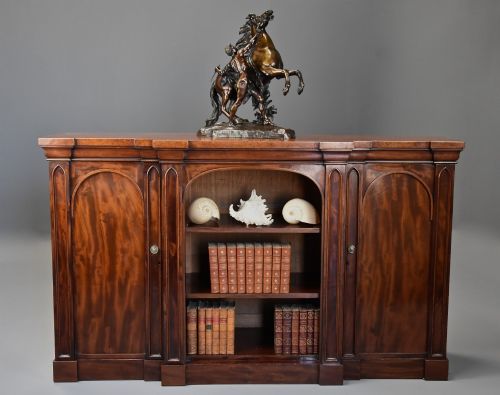
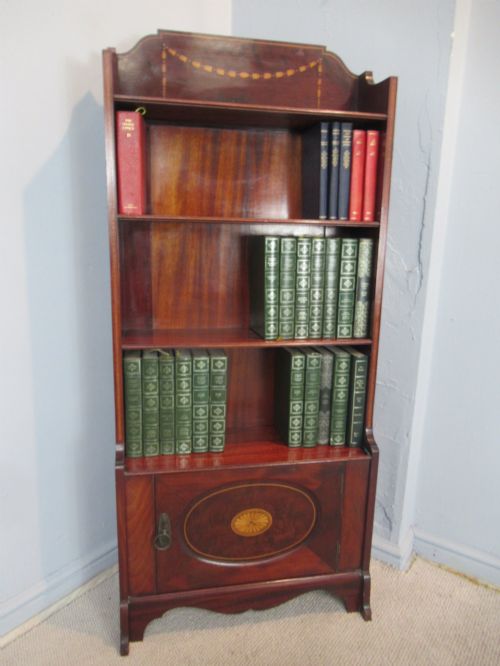
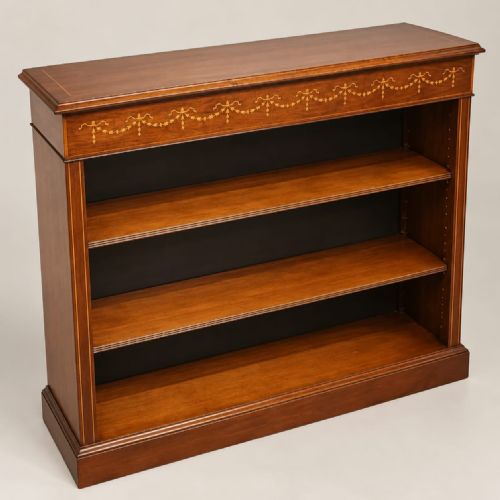
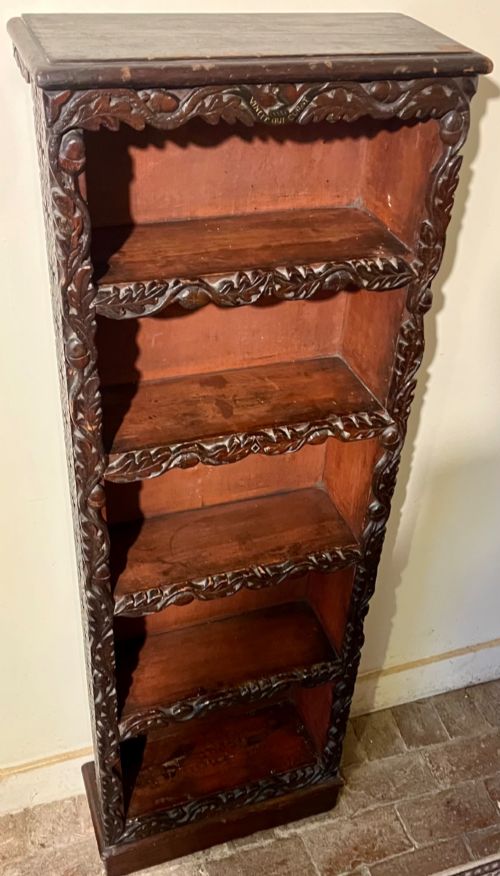
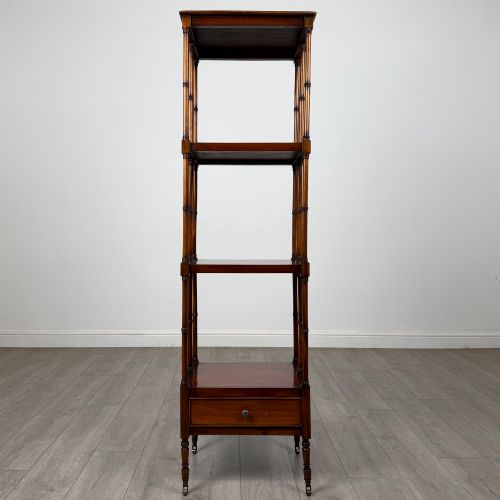
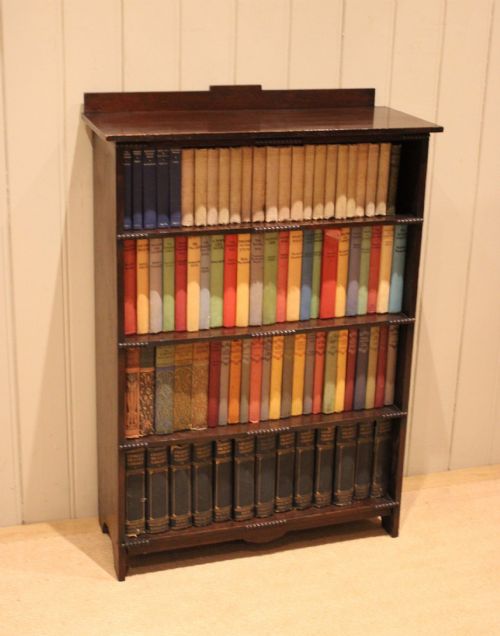
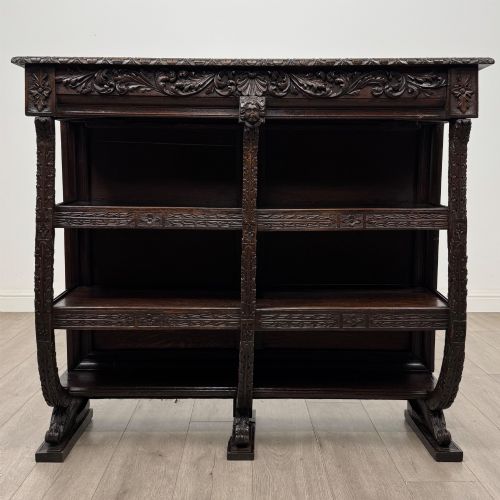
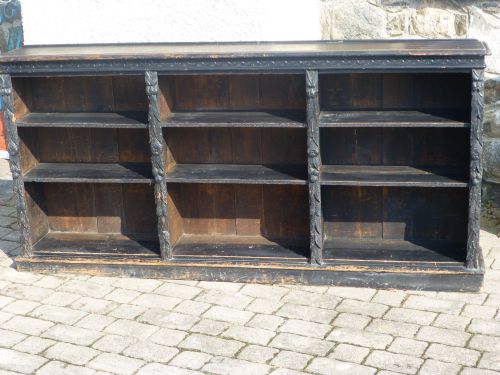
A revival open bookcase takes historical design idioms from Gothic, Jacobean, Sheraton, and Regency periods and applies them to accessible storage furniture. When sorting through this phrase, buyers encounter everything from narrow Edwardian mahogany uprights to heavy Victorian carved oak display shelves and low walnut dwarf units.
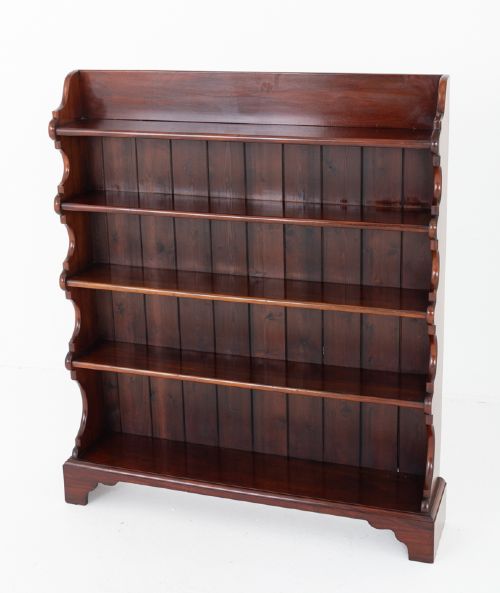
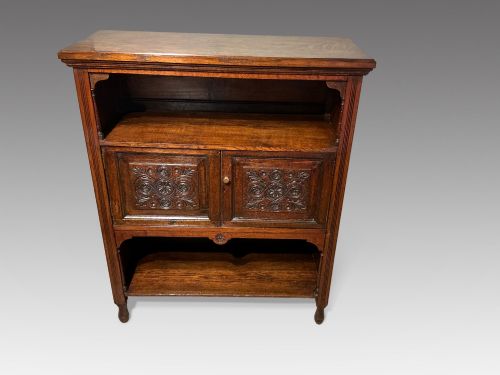
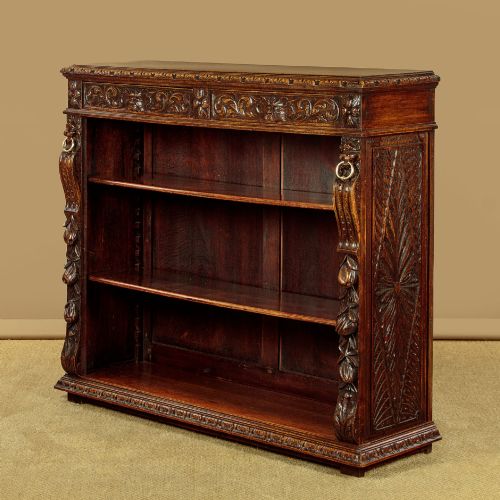
The most common versions on this page are sturdy oak iterations dating from the late nineteenth century and the 1920s, often fitted with adjustable shelves. These pieces range from restrained, beaded-edge models to elaborate designs featuring carved green men, raised galleries, or slender pillars.
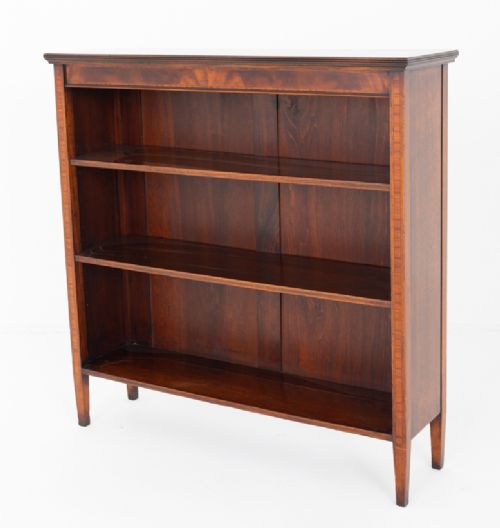
Origins stretch across English workshops and continental influences, encompassing specific maker-attributed pieces alongside utilitarian library shelving. Buyers find formats that vary from compact low bookcases intended to sit beneath windows to tall, imposing double units designed for substantial collections.
Materials and Technique
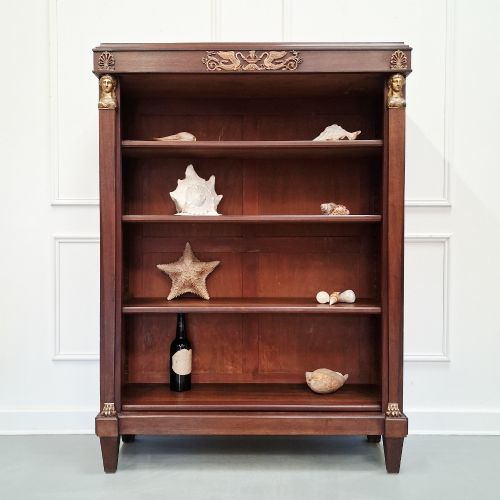
Makers relied heavily on solid oak and figured mahogany, often selecting burr walnut or satinwood for decorative surfaces and inlaid panels. Ebonised finishes and gilt metal mounts appear frequently to heighten contrast in Gothic and neoclassical interpretations.
Construction methods utilise solid timber framing combined with veneered panels on larger carcases, supporting heavy loads with dovetailed joints and channeled interiors. Brass galleries, carved top edges, and turned pillars demand precise hand joinery and relief carving executed by skilled cabinetmakers.
Revival Open Bookcase Retail Price Guide 2026
Typical asking prices for revival open bookcase among the pieces listed under this phrase on Sellingantiques today, from the lower quarter to the upper quarter. They describe what is for sale here now, not the wider market.
Listings span from the mid-nineteenth century through the 1930s, featuring oak, mahogany, walnut, and satinwood across various revival styles.
The Measure of Craft
Quality rests in the depth of the timber selection and the crispness of hand-carved details, distinguishing mass-produced commercial shelving from workshop-built commissions. Superior examples exhibit tightly figured grain, harmonious proportions, and robust structural joinery that prevents sagging under heavy volumes.
Hardware and secondary details separate standard utility pieces from exceptional items, seen in heavy brass galleries, finely turned pillars, and smoothly operating adjustable shelf mechanisms. The integration of revival motifs, whether restrained Sheraton inlay or deep Gothic relief, shows whether a maker understood historical proportions.
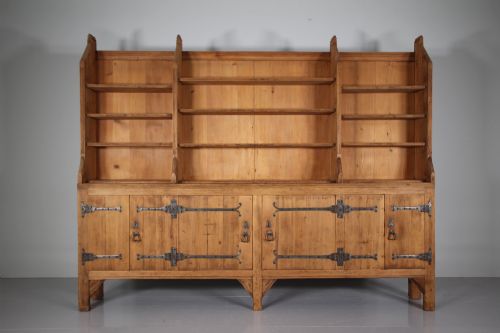
Bowman Brothers, London·George Edmund Street
The Revival Open Bookcase Glossary
- Revival
- The architectural or decorative reinterpretation of past historical styles, popular throughout the nineteenth and early twentieth centuries. It allowed Victorian and Edwardian cabinetmakers to mix Tudor, Gothic, and classical elements into domestic furniture.
- Adjustable shelves
- Shelving supported by movable pegs, ratchets, or metal strips that allow the interior layout to change. This feature is particularly prized in antique library furniture designed to accommodate volumes of varying heights.
- Gallery
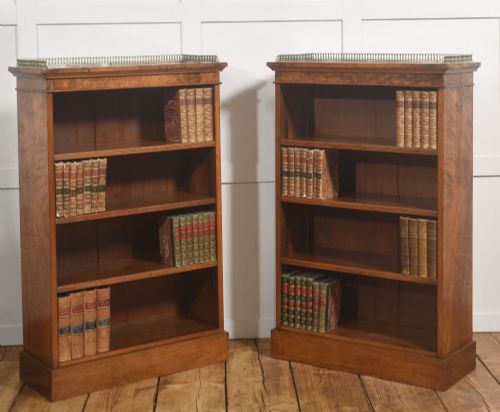
- A raised ornamental railing or border fitted along the top edge of a cabinet or bookcase. It prevents small objects from sliding off the upper surface.
- Ebonised
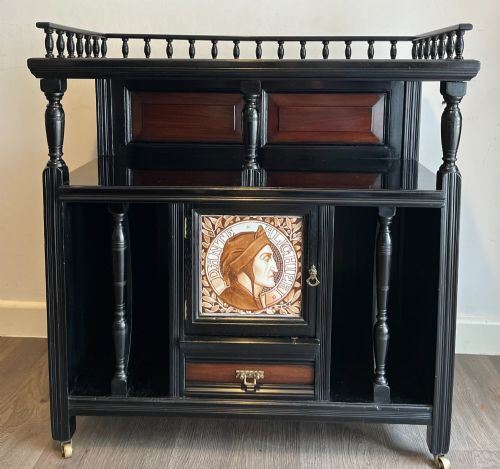
- Timber treated with chemical stains or dark paint to imitate expensive ebony. This technique was widely utilised in nineteenth-century Gothic and Aesthetic movement furniture to create dramatic visual contrast.
- Breakfront
- A piece of furniture where the central section projects forward from the flanking wings. This architectural arrangement creates depth and shadow across the front elevation.
Revival Open Bookcase: Frequently Asked Questions
What is a revival open bookcase?
A revival open bookcase is a piece of shelving built in the nineteenth or twentieth century that adopts historical design motifs from earlier eras like the Gothic or Sheraton periods.
These items lack doors, offering direct, unobstructed access to the books or decorative objects stored inside.
Are the shelves usually adjustable?
Many examples feature adjustable shelving systems, often supported by wooden tooth racks, brass pins, or slotted vertical strips inside the carcase.
This adaptability distinguishes better-quality library furniture from simpler fixed-shelf variants.
Where should I place a low bookcase?
Low dwarf bookcases suit placement beneath windows or against plain walls where taller furniture would block light or overwhelm the room.
Their upper surfaces provide a convenient display area for lamps, clocks, or smaller collections.
How do I identify the revival style?
Revival styles reveal themselves through distinct decorative details, such as pointed arches for Gothic pieces or delicate satinwood inlay for Sheraton revivals.
Examining the carving motifs, timber choices, and overall proportions helps connect the piece to its historical inspiration.