







Revival Monk Bench
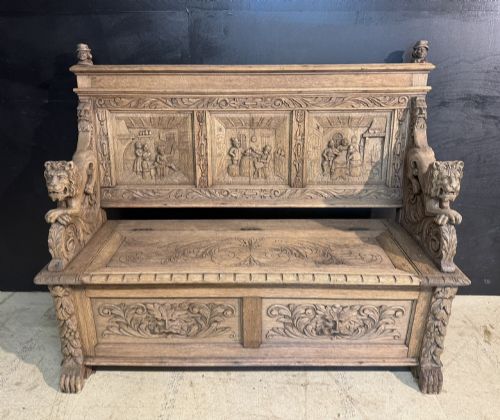
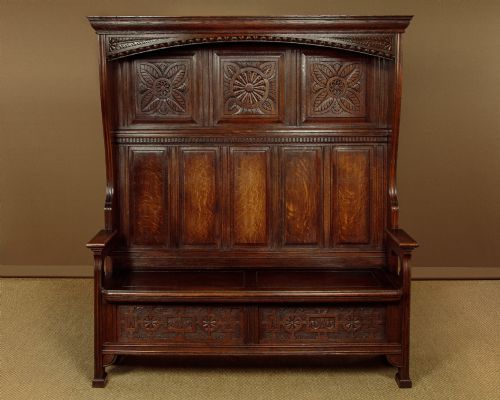
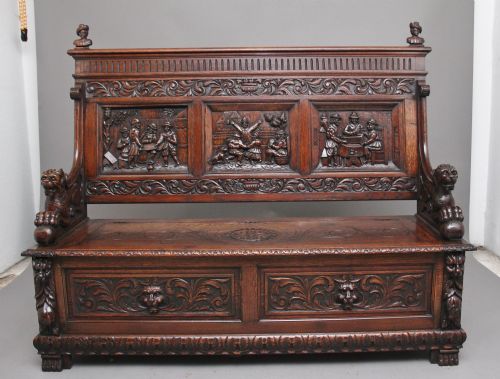
A revival monk bench is a heavy timber seat with a transforming back that folds down to form a table, bringing robust historic character to an entrance hall.
Revival Monk Bench
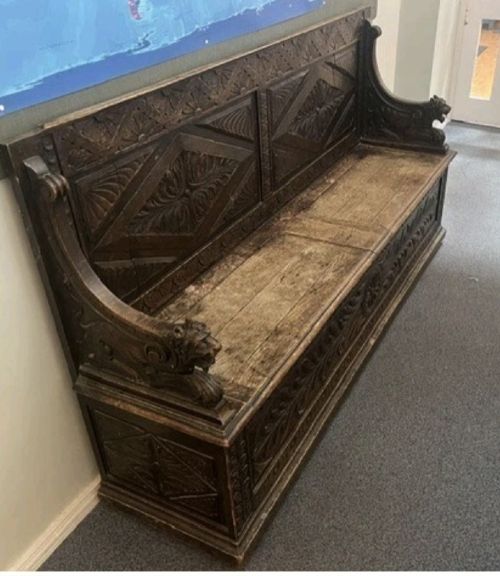
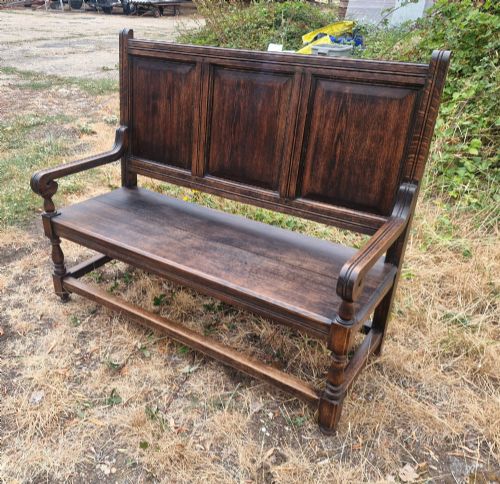
A revival monk bench takes inspiration from earlier historic forms, appearing in forms such as hall benches, settles, and monks benches across the Victorian, Edwardian, and early twentieth-century periods. These pieces serve as practical hallway seating while concealing storage beneath lift-up lids or hinged seats.
The version most commonly met on this page is constructed from carved oak, often featuring high backs, panelled construction, and substantial storage boxes. Makers drew heavily upon Jacobean, Gothic, and Renaissance revival styles to create imposing hall furniture for period homes.
Materials and construction methods
Solid oak dominates the construction of these pieces, sometimes complemented by walnut, pine, iron, brass, and leather or fabric upholstery. Carpenters utilised traditional joining methods, incorporating panelled backs, sturdy armrests, and robust hinges to support the dual-purpose folding top mechanism.
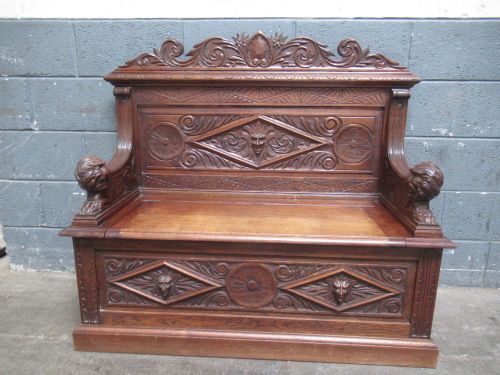
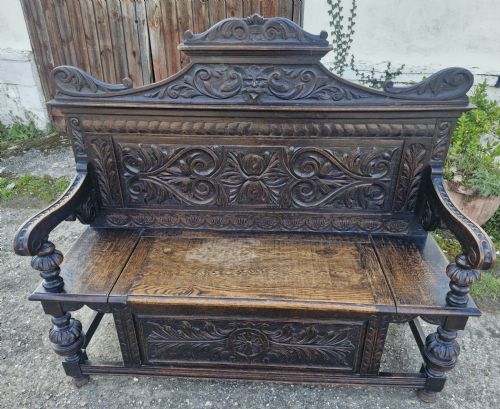
Carving is the primary decorative technique, with artisans applying deep relief work, linenfold panels, and characteristic motifs such as the Green Man. Surface finishes applied to the timber accentuate the natural grain and deep brown tones typical of revival furniture.
Revival Monk Bench Retail Price Guide 2026
Typical asking prices for revival monk bench among the pieces listed under this phrase on Sellingantiques today, from the lower quarter to the upper quarter. They describe what is for sale here now, not the wider market.
Carved Green Man faces peer out from beneath numerous lift-up lids, watching over the boots and gloves stored inside.
Distinguishing quality in revival seating
Quality separates through the crispness and depth of the timber carving, alongside the proportion and architectural balance of the overall frame. Pieces displaying refined hand-carving and well-executed joinery stand apart from simpler, more mechanised production.
The integrity of the mechanism and the stability of the timber box base indicate superior craftsmanship. Heavier gauge oak and thoughtful proportioning in high-back settles distinguish finer examples from standard commercial workshop output.
The Revival Monk Bench Glossary
- Monks bench
- A multifunctional furniture piece featuring a hinged back that folds flat over the arms to create a table top, positioned above a box seat.
- Settle
- A wooden bench with a high solid back, solid arms, and a closed base designed to keep out draughts in cold hallways.
- Green Man
- A sculptural architectural motif depicting a human face emerging from or entwined with foliage, frequently found carved into revival oak furniture.
- Jacobean Revival
- A nineteenth-century design movement resurrecting the heavy proportions, dark oak, and geometric panelling of the early seventeenth century.
- Canopy top
- An architectural overhead structure incorporated into the top of high-back hall seats and settles.
Revival Monk Bench: Frequently Asked Questions
What is a monk bench used for?
Historically, the dual-purpose design allowed the piece to serve as a high-backed seat by the door and convert into a table for dining or administrative tasks when space was limited.
In modern interiors, they remain popular in entrance halls and boot rooms, providing both a comfortable seat for putting on shoes and concealed storage underneath the hinged lid.
How do I date a revival monk bench?
Dating relies on examining the timber preparation, the style of the carving, and the hardware used in the hinges and joints. Pieces from the Victorian and Edwardian periods often utilise machine-sawn timber combined with hand-finished details.
Revival furniture specifically mimics older eras like the Jacobean or Gothic periods, so the construction methods inside the storage box usually reveal the true nineteenth or twentieth-century manufacturing date.
Where should I place a hall settle?
These substantial pieces anchor large entrance halls, corridors, and wide landings where their high panelled backs can be appreciated against a plain wall.
Because they are deep and heavy, measuring the floor space and doorway clearance beforehand ensures the bench fits comfortably without blocking foot traffic.
How do I care for antique oak furniture?
Maintain the timber by keeping it away from direct heat sources and sudden temperature changes, which can cause the solid oak panels to split or warp.
Apply a traditional beeswax polish occasionally to nourish the wood and preserve the surface sheen without building up sticky residues.