



Revival Furniture Sofa
Revival furniture sofa designs bring the grand historic gestures of Victorian and Edwardian sitting rooms straight into modern homes.
Revival Furniture Sofa
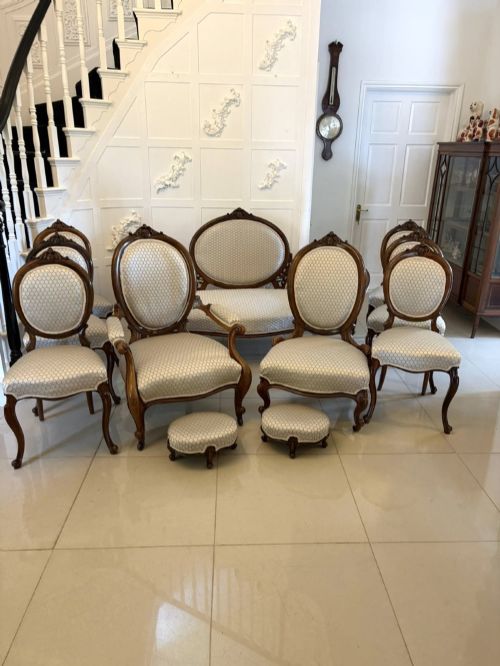
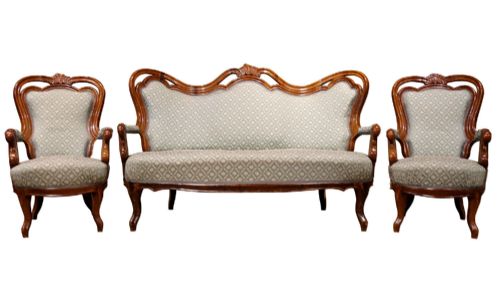
A revival furniture sofa takes inspiration from historic eras such as the Victorian, Edwardian, and earlier nineteenth-century periods, reinterpreting past aesthetics for contemporary domestic comfort. Buyers searching this phrase encounter substantial seating arrangements, from expansive multi-piece salon suites to individual carved settees and camelback designs.
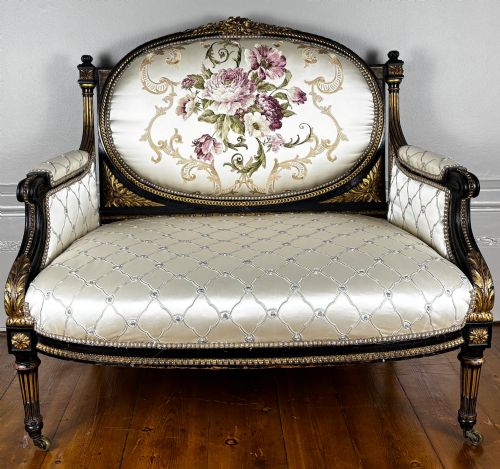
The aesthetic vocabulary draws heavily on historic revivals, including Rococo, Empire, Jacobean, Islamic, Chinese Chippendale, and Egyptian styles. These seating options often form the centrepiece of a drawing room or formal parlour, combining generous proportions with decorative woodwork and upholstery.
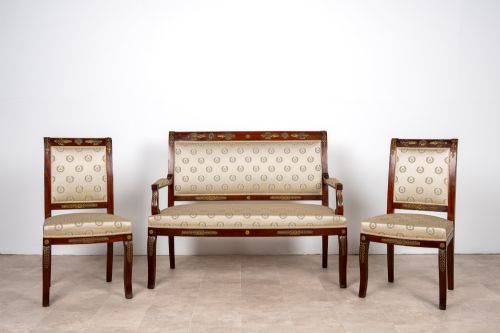
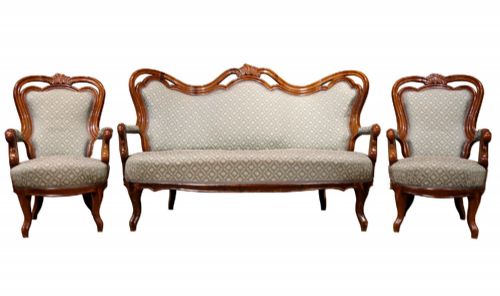
Most examples originate from the nineteenth and early twentieth centuries, reflecting the Victorian and Edwardian fascination with historicism and craftsmanship. Pieces range from large walnut or mahogany settees to integrated salon suites complete with matching armchairs.
Materials and construction methods
Makers utilised dense hardwoods such as mahogany, walnut, rosewood, and amboyna to build the sturdy structural frames that support these large seats. These timbers were selected for their ability to hold deep, ornate carvings and support intricate joinery.
Upholstery played a vital role in construction, employing traditional textiles, rich fabrics, and velvet to cover sprung or padded seating areas. Brass details and boulle inlay occasionally accented the wooden frames, adding contrasting metallic highlights to the dark timber.
Revival Furniture Sofa Retail Price Guide 2026
Typical asking prices for revival furniture sofa among the pieces listed under this phrase on Sellingantiques today, from the lower quarter to the upper quarter. They describe what is for sale here now, not the wider market.
Materials recorded across the inventory include mahogany, walnut, rosewood, amboyna, velvet, textile, fabric, oak, and brass.
Determining quality and craftsmanship
The refinement of the timber carving separates standard production from exceptional examples, with crisp detailing and depth in the woodwork indicating superior workshop output. Master carvers produced deeply articulated foliage, scrolls, and stylistic motifs that remained sharp and balanced across the entire frame.
The choice of primary wood and secondary veneers dictates the visual weight of the piece, with choice cuts of figured walnut, rosewood, or amboyna elevating the status of the furniture. Structural integrity in the joinery ensures that large settees and multi-piece suites maintain their stability over generations of use.
Edward’s And Robert’s·Morison & Co
The Revival Furniture Sofa Glossary
- Settee
- A long upholstered seat with a back and arms, designed to seat multiple people comfortably. These forms date back centuries and evolved into the various revival styles seen in nineteenth-century drawing rooms.
- Salon suite
- A matching set of seating furniture, typically comprising a settee and several armchairs or side chairs intended for a formal reception room. They provide a unified decorative scheme for grand interiors.
- Camelback
- A sofa style featuring a distinctive arched backrest that resembles the hump of a camel. This shape gained popularity during the eighteenth century and was frequently revived in later periods.
- Boulle inlay
- A technique of decorating furniture surfaces using contrasting materials such as brass and tortoiseshell cut into elaborate patterns. It appears on select revival pieces to provide a luxurious finish.
Revival Furniture Sofa: Frequently Asked Questions
What is a revival furniture sofa?
A revival furniture sofa is a historic seating piece designed in the nineteenth or early twentieth century that mimics the aesthetic styles of earlier eras. These include Rococo, Empire, and Chinese Chippendale influences applied to substantial wood frames.
Such pieces range from single settees to components of large drawing-room suites. They serve both as functional seating and as decorative statements rooted in historic design movements.
How do I style a large settee?
Placing a large Victorian or Edwardian settee in a room requires balancing its visual weight with surrounding open space and complementary lighting. These pieces often anchor a formal sitting area or drawing room.
Pairing the sofa with matching armchairs from a salon suite creates a cohesive layout. Alternatively, positioning the settee near a centre table enhances the traditional domestic arrangement.
What woods were used in these sofas?
Cabinetmakers primarily relied on durable hardwoods such as mahogany and walnut to construct the structural frames of revival seating. These timbers provided the necessary strength for intricate hand-carving.
More decorative examples incorporate rosewood, amboyna, or oak veneers. Brass and textile elements frequently complemented these woods to complete the upholstered design.
How do I identify different revival styles?
Identifying specific revival styles involves examining the decorative motifs carved into the wood and the overall silhouette of the furniture. Rococo revival pieces feature asymmetrical scrolls and floral elements, whereas Empire revival leans toward neoclassical symmetry and restrained grandeur.
Looking at the construction period, such as Victorian or Edwardian eras, also helps contextualise the design. Comparing the woodwork against historical design dictionaries clarifies the exact stylistic lineage.