

Revival Display Case
A revival display case brings together glass and polished timber to show off porcelain and silver with period elegance.
Revival Display Case
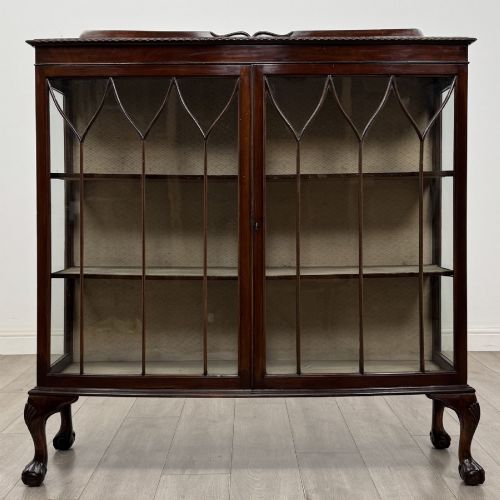
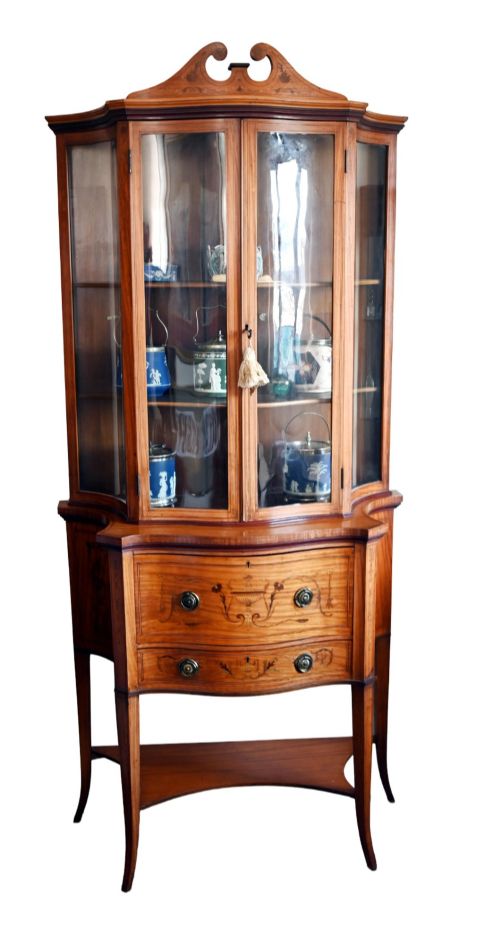
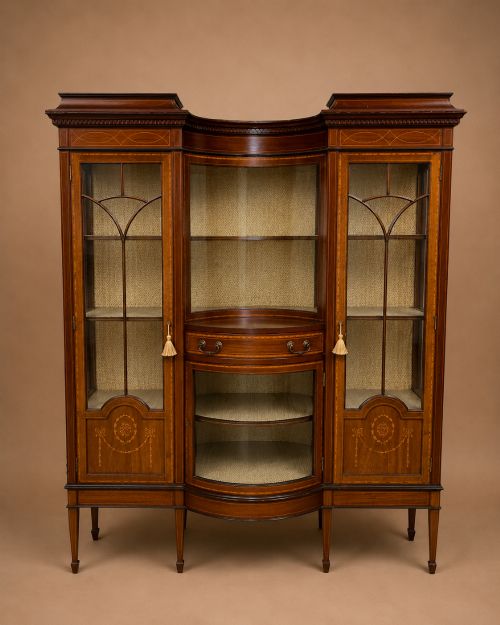
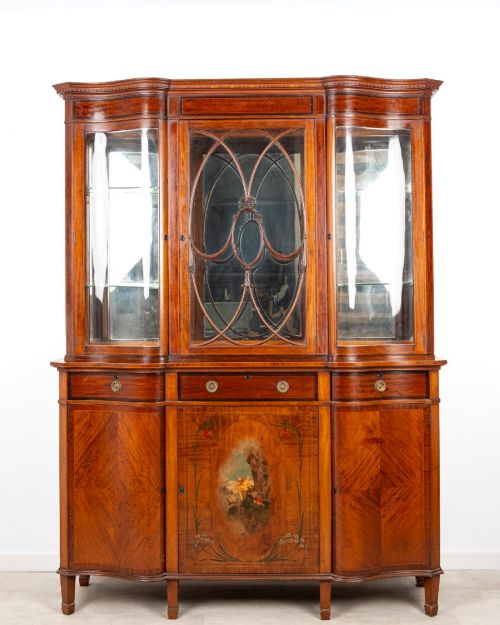
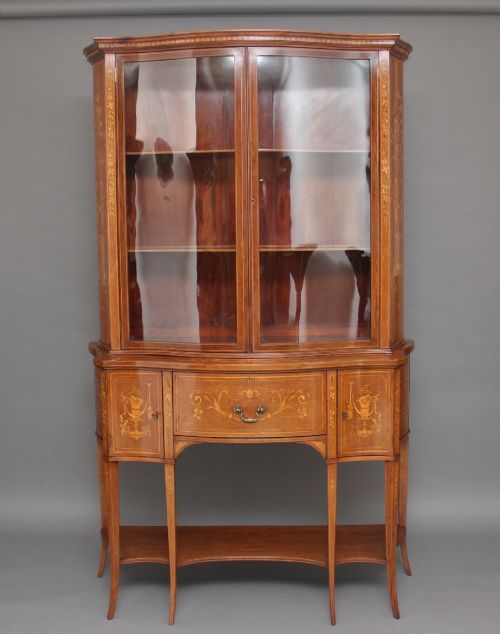
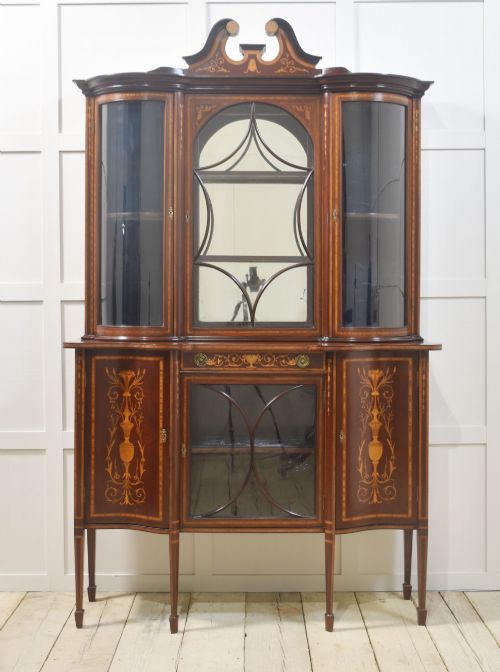
A revival display case gathers glass, timber and metal mountings to show off ceramics and small collections inside domestic rooms. When buyers search for a revival display case, they encounter cabinet forms that draw on earlier historical vocabularies, particularly the eighteenth-century Georgian and Sheraton repertoires.
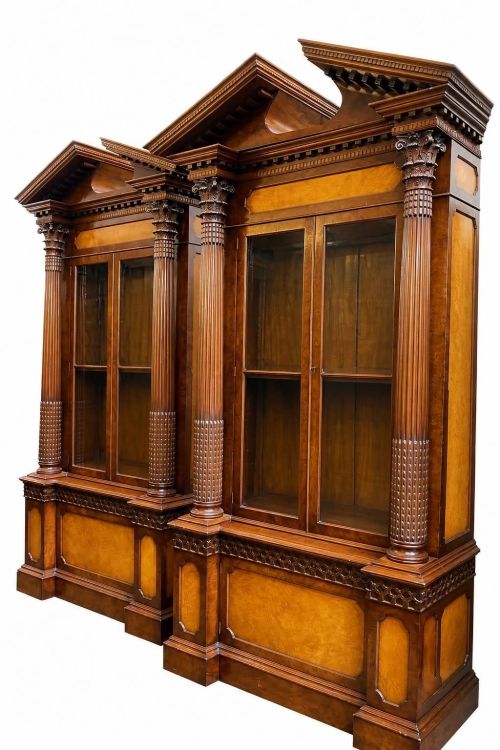
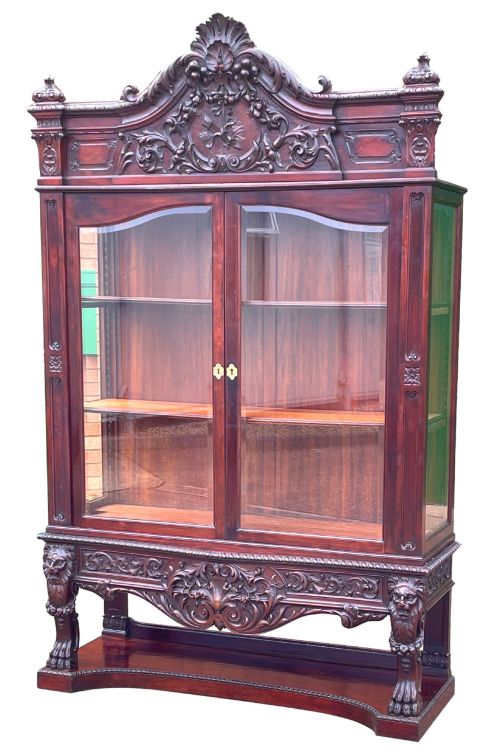
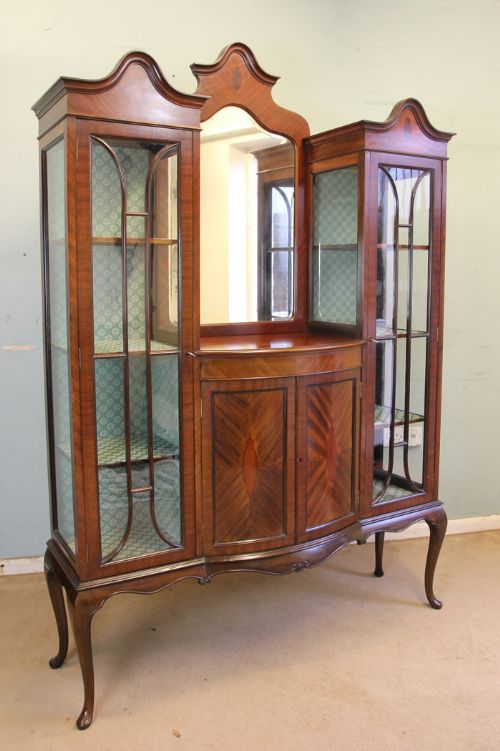
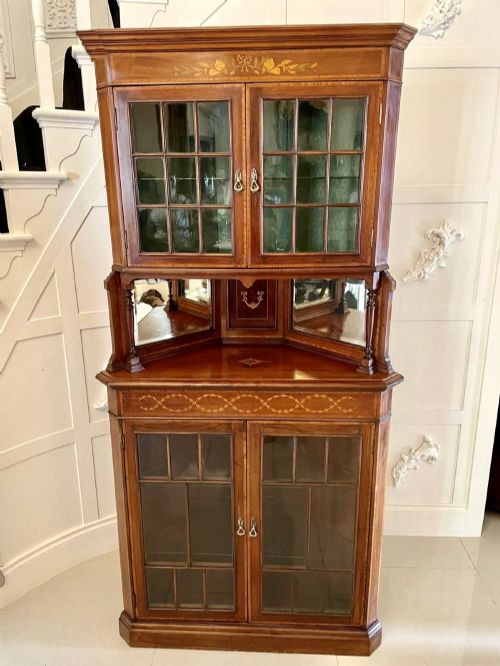
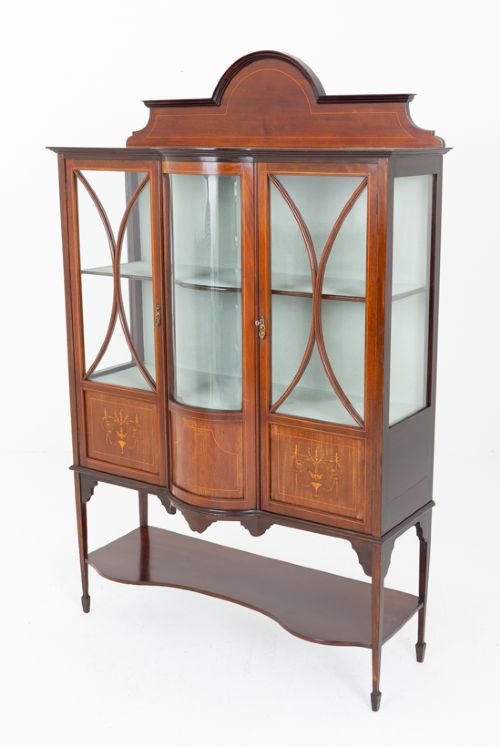
The pieces present on this page originate predominantly from the Victorian and Edwardian eras, stretching from the late nineteenth century into the 1920s. Common structural formats include tall freestanding cabinets, corner cabinets, vitrines and combined bookcase units.
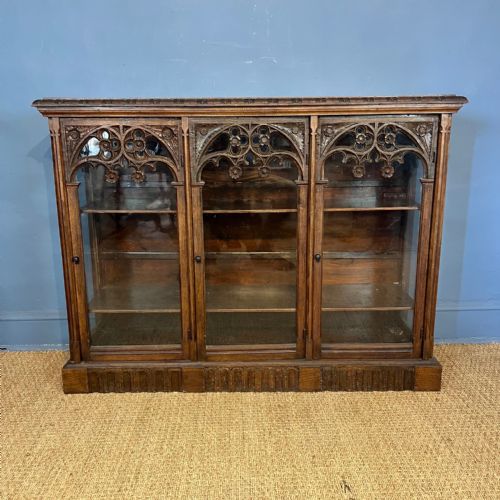
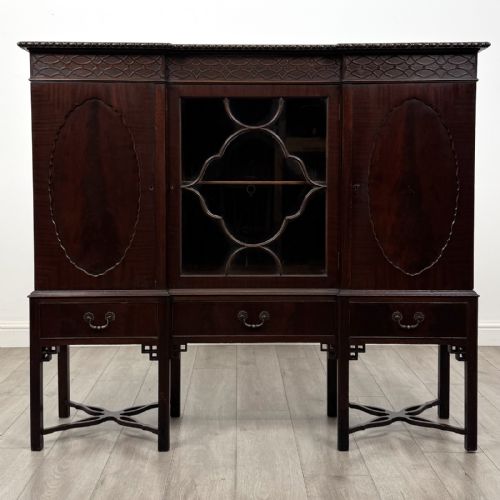
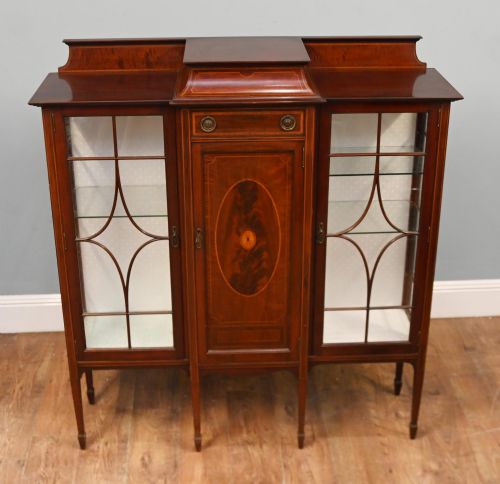
Makers of these items turned to past historical styles such as Sheraton Revival, Chippendale Revival, Gothic Revival and Jacobean Revival. Edwardian examples in mahogany and satinwood appear with particular frequency across the current selection.
How they were made
Cabinet makers constructed carcass frames in solid mahogany, oak, walnut and satinwood, frequently applying finer timbers like kingwood and veneer overlays to prominent exterior surfaces. Inlay work incorporates contrasting woods and satinwood banding to define borders and central panels.
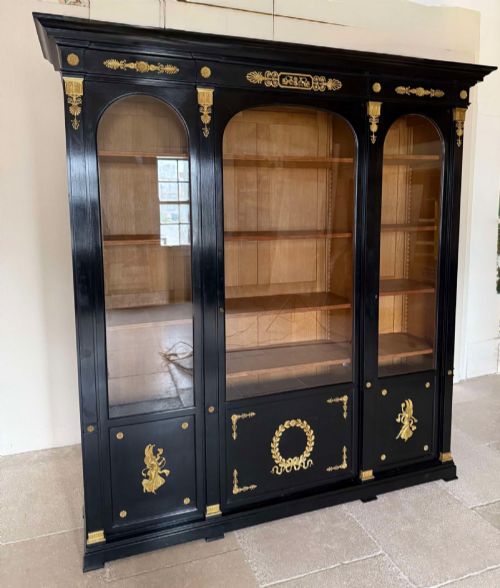
Glazing takes the form of transparent glass panes held within wooden frames or leaded sections, accompanied by brass hardware and cast ormolu mounts on continental pieces. Interior spaces sometimes incorporate fabric linings alongside adjustable wooden or glass shelving.
Revival Display Case Retail Price Guide 2026
Typical asking prices for revival display case among the pieces listed under this phrase on Sellingantiques today, from the lower quarter to the upper quarter. They describe what is for sale here now, not the wider market.
Some display cases feature velvet-lined shelves specifically designed to keep small porcelain collections from sliding around during heavy carriage traffic outside.
What varies in quality
The degree of refinement in timber selection and cabinet assembly marks the distinction between standard production items and pieces of high craftsmanship. Finer examples display precise marquetry inlay, well-matched veneer grains and substantial brass or ormolu hardware rather than simpler cast fittings.
Structural integrity depends on the precision of joinery in the door frames, the weight and clarity of the glass, and the stability of internal shelving arrangements. Maker attribution, through signatures or stamps on the timber or mounts, also separates standard workshop output from documented cabinet-making firms.
François Linke·James Hicks·G. Durand
The Revival Display Case Glossary
- Vitrine
- A glass-fronted cabinet designed specifically for displaying porcelain, curiosities and objects of art. These pieces usually feature glazed sides to maximise light penetration.
- Ormolu
- Gilt-bronze mounts applied to furniture, frequently seen on French and continental revival pieces from the nineteenth century. The technique involves applying a gold amalgam to bronze.
- Inlay
- A decorative technique where pieces of contrasting timber, shell or metal are inserted into recesses cut into the primary surface wood. This method creates geometric or floral patterns.
- Sheraton Revival
- A late nineteenth and early twentieth century design movement that reinterprets the neoclassical furniture forms associated with designer Thomas Sheraton. Pieces in this style typically utilise light satinwood and delicate inlay.
- Bijouterie cabinet
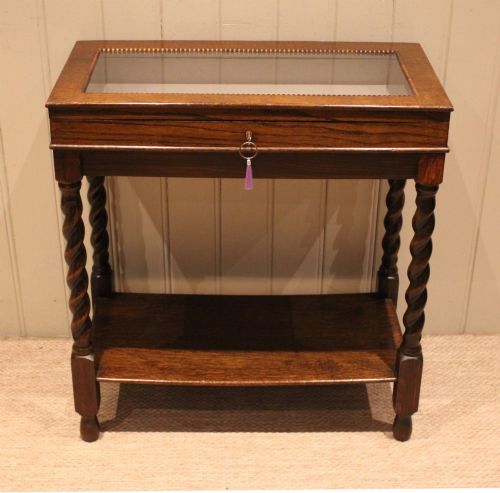
- A shallow glass-topped or glass-fronted display table or cabinet intended for small valuables, jewellery and medals. These items often feature hinged lids lined with velvet or fabric.
Revival Display Case: Frequently Asked Questions
What is a revival display case?
A revival display case is a glazed wooden cabinet produced during the Victorian, Edwardian or early twentieth-century periods that imitates historical furniture styles. These pieces combine period aesthetic vocabulary with functional storage and display space for domestic objects.
Cabinet makers utilised forms inspired by Georgian, Sheraton and Louis XV designs, adapting them to suit the interior tastes of later eras.
How do I identify the period?
Dating these cabinets involves examining the timber species, construction techniques, hardware and characteristic decorative motifs present on the piece. Edwardian examples often feature light satinwood with delicate painted or inlaid decoration, while nineteenth-century pieces tend toward heavier mahogany or oak construction.
Makers' marks, lock stamps and secondary woods inside the carcass can provide additional chronological indicators.
Where should I place it?
These cabinets suit reception rooms, drawing rooms and hallways where natural light can pass through the glazed doors to illuminate the contents. Direct sunlight should be avoided to protect sensitive timber finishes and internal fabrics.
Floor stability matters when positioning tall or heavy cabinets, particularly older examples with delicate legs or claw feet.
How do I clean the wood?
Maintenance requires gentle dusting with a soft, dry cloth along the grain of the mahogany, satinwood or walnut surfaces. Excessive moisture and modern aerosol polishes can damage antique finishes over time.
Periodic application of appropriate wax helps preserve the sheen of the timber without building up heavy residue.