

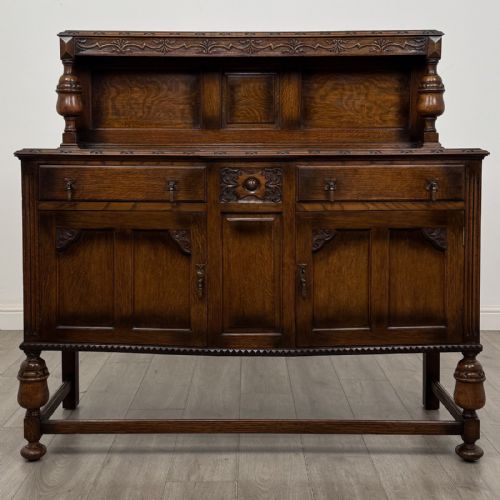
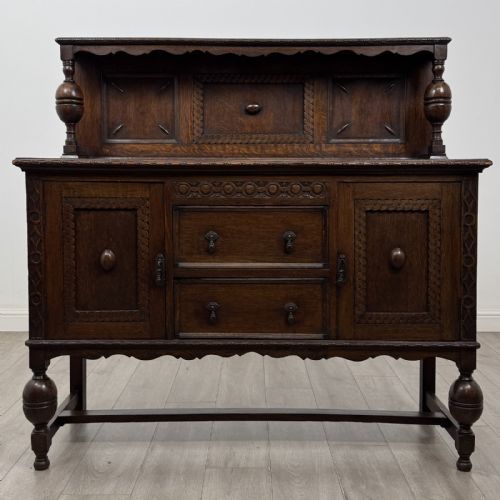
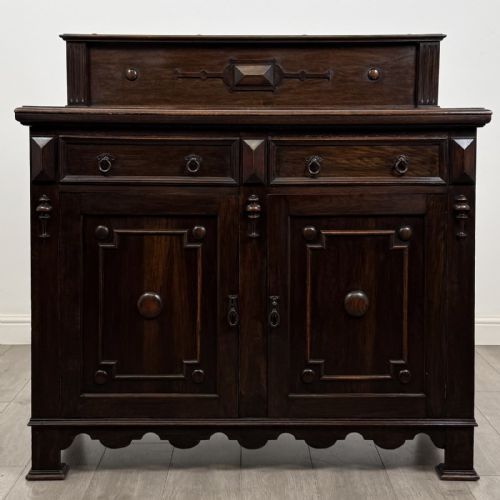
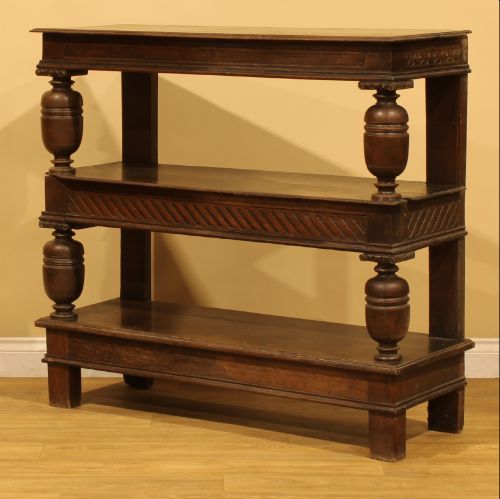
Revival Carved Sideboard
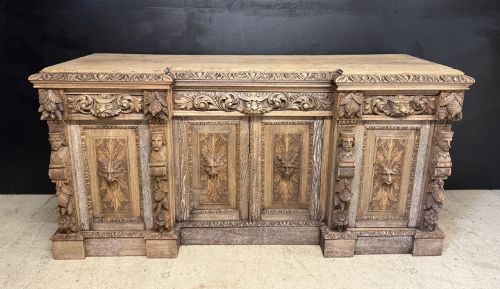
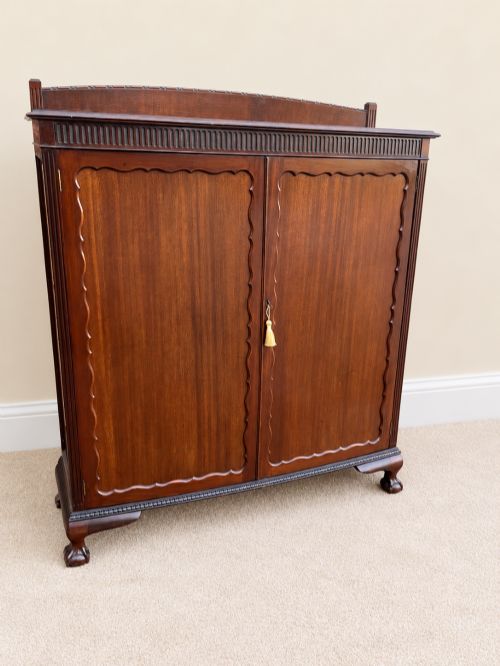
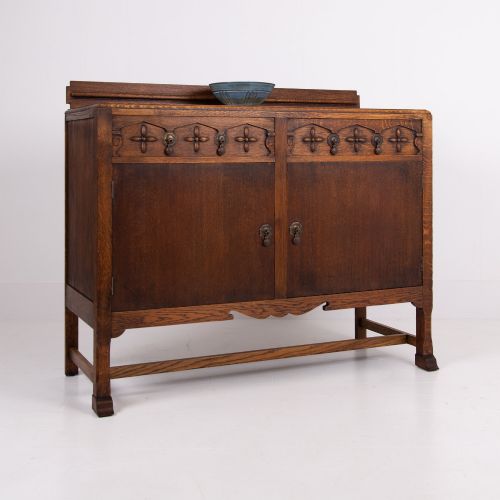
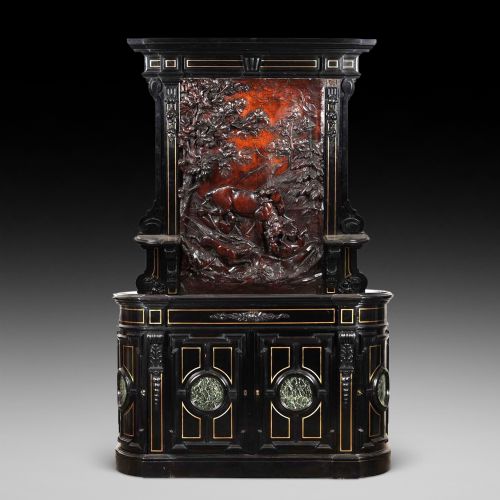
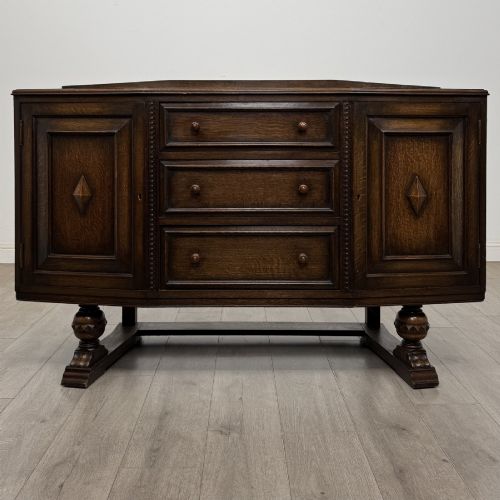
A revival carved sideboard brings heavy historic presence into a room, offering deep relief panels and sturdy timber storage rooted in nineteenth and early twentieth century revivals.
Revival Carved Sideboard
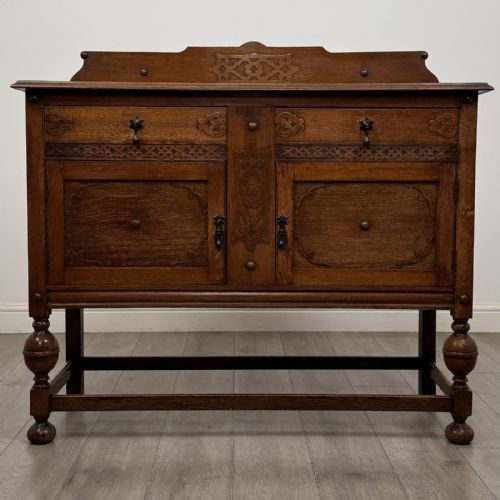
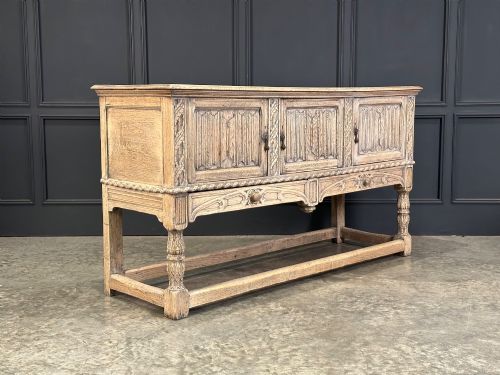
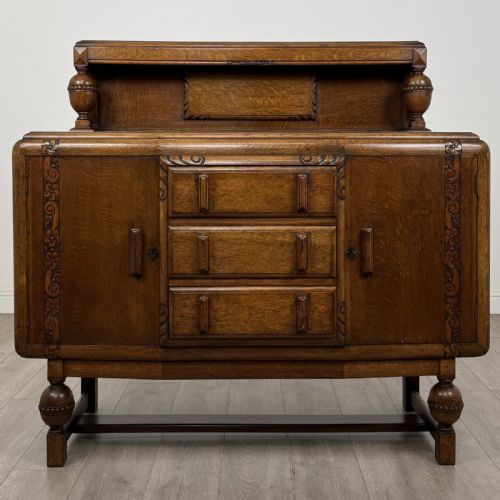
When you search for a revival carved sideboard, you encounter substantial dining room and hall furniture built during the Victorian, Edwardian and early twentieth century periods. These pieces draw heavily on earlier design vocabularies, translating historical forms into functional storage.
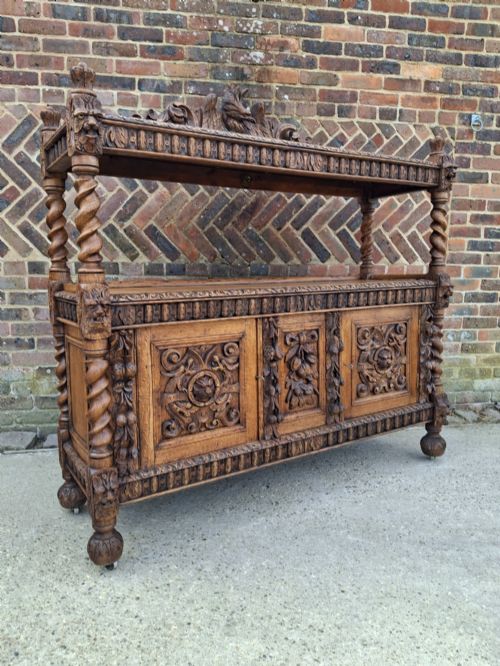
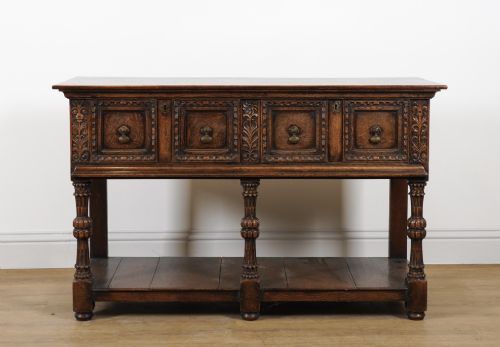
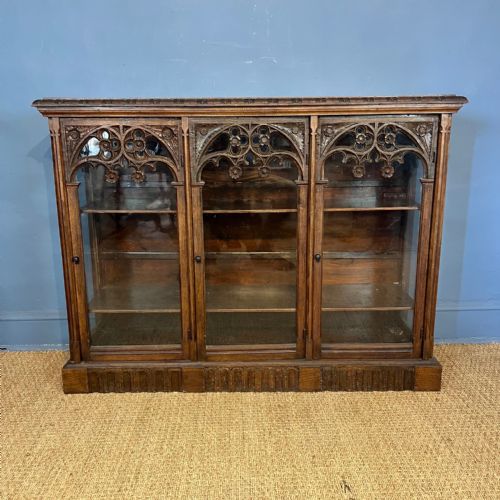
Makers of this era looked back to specific stylistic traditions, resulting in pieces reflecting Jacobean, Gothic, Renaissance, Carolean and French provincial aesthetics. Each iteration repurposes ancient motifs such as linenfold panels, lion masks, Green Man carvings and barley-twist supports to create a commanding architectural focal point.
Materials and construction
Cabinetmakers relied predominantly on sturdy timber frames of oak and walnut, occasionally turning to mahogany or ebonised hardwood for darker, formal finishes. These dense woods supported the deep chisel work required for high-relief carvings.
Construction techniques combined traditional joinery with applied decorative elements, securing heavy doors with robust brass or iron hardware and mounting mirrors within carved wooden pediments. Drawer linings and internal shelving utilised secondary timbers to support heavy household tableware and provisions.
Revival Carved Sideboard Retail Price Guide 2026
Typical asking prices for revival carved sideboard among the pieces listed under this phrase on Sellingantiques today, from the lower quarter to the upper quarter. They describe what is for sale here now, not the wider market.
Listings feature periods spanning from the Victorian era through the 1930s, constructed predominantly in oak, mahogany and walnut.
Distinctions in quality
The tier of a piece rests on the depth and crispness of the carving, distinguishing sharp hand-chiselled foliage and figurative work from shallow, mechanical press-moulded ornamentation. Superior examples display thoughtful proportion and confident integration of architectural elements.
Material selection and hardware integrity further separate standard production from exceptional exhibition pieces. High-grade items employ carefully figured burr walnut or select quarter-sawn oak, complemented by heavy brass face handles and well-fitted internal cabinetry.
Gillows·Leonard Wyburd
The Revival Carved Sideboard Glossary
- Gothic Revival
- An architectural and furniture style drawing on medieval ecclesiastical forms. Pieces often incorporate pointed arches, tracery and quatrefoil motifs.
- Linenfold
- A style of carved wooden panelling resembling folded vertical linen fabric. It appears frequently on cupboard doors from this category.
- Barley-Twist
- A turned furniture leg or support resembling a twisted column of barley sugar. This detail is common on Edwardian and Carolean revival pieces.
- Credenza
- A sideboard or buffet cabinet originally used for displaying plate. Victorian examples often incorporate an elevated mirror back.
Revival Carved Sideboard: Frequently Asked Questions
What periods do these sideboards span?
The pieces span from the mid-nineteenth century through the Edwardian era up to the 1930s. They represent various historic revival movements popular during those decades.
Maker workshops reinterpreted older styles using contemporary Victorian and Edwardian workshop methods, producing substantial dining room furniture with deep historical references.
How were these large sideboards used?
They served primarily in dining rooms and halls for storing tableware, linens and serving dishes. The upper surfaces and mirror backs provided space to display decorative ceramics and silver.
Cupboards and drawers kept provisions secure, while specialised variants included bottle racks or serving slides for entertaining guests.
How do I care for carved oak?
Maintain the timber by dusting regularly with a dry cloth and applying occasional quality beeswax to nourish the grain. Avoid placing the piece near direct heat sources.
Keep humidity stable in the room to prevent the solid wood and traditional joinery from shifting or splitting over time.
How do I distinguish Gothic from Jacobean style?
Gothic revival pieces feature medieval ecclesiastical motifs such as pointed arches, tracery and vertical linenfold panels. They emphasise vertical lines and stone-carving translations.
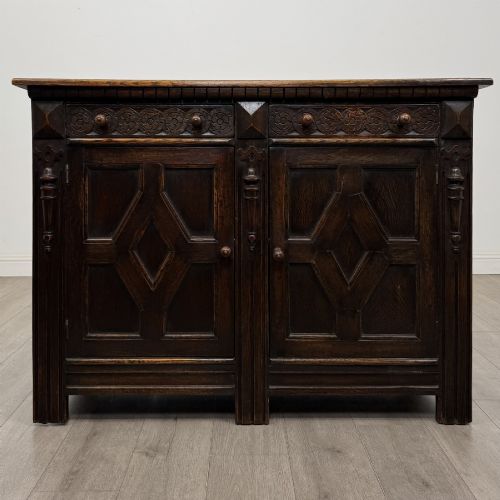
Jacobean revival furniture relies on heavy geometric mouldings, rectangular panels and turned barley-twist or cup-and-cover supports reflecting seventeenth-century domestic interiors.