

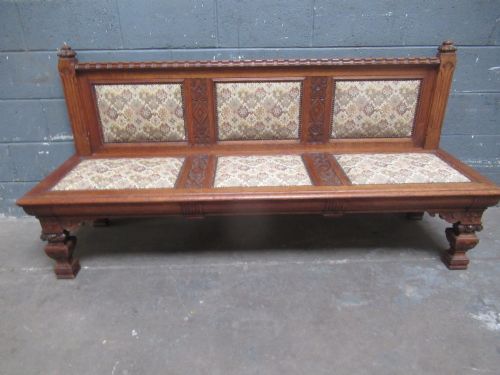
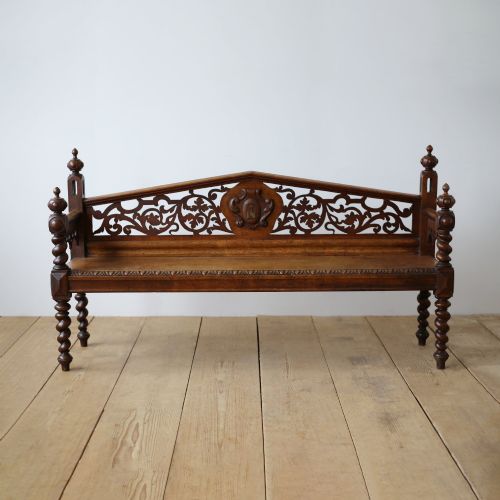
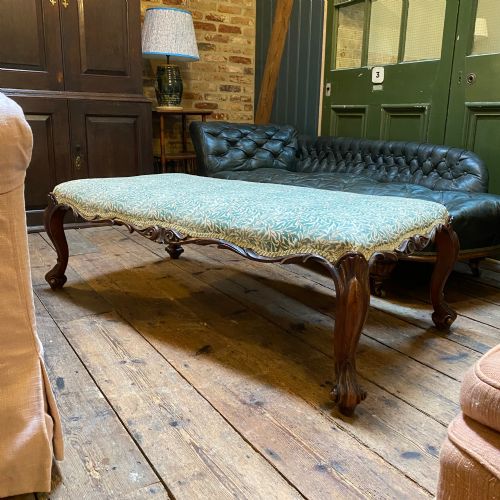
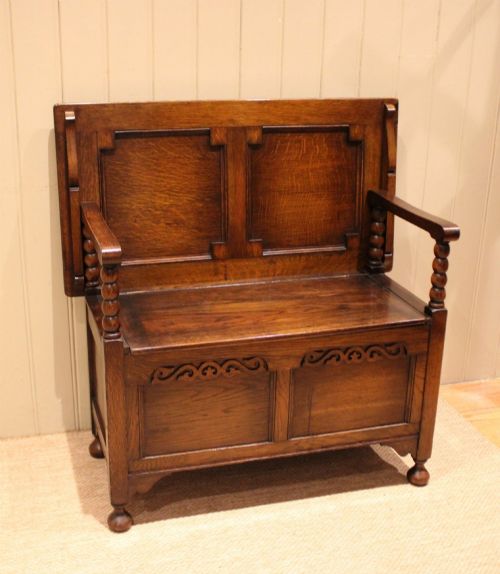
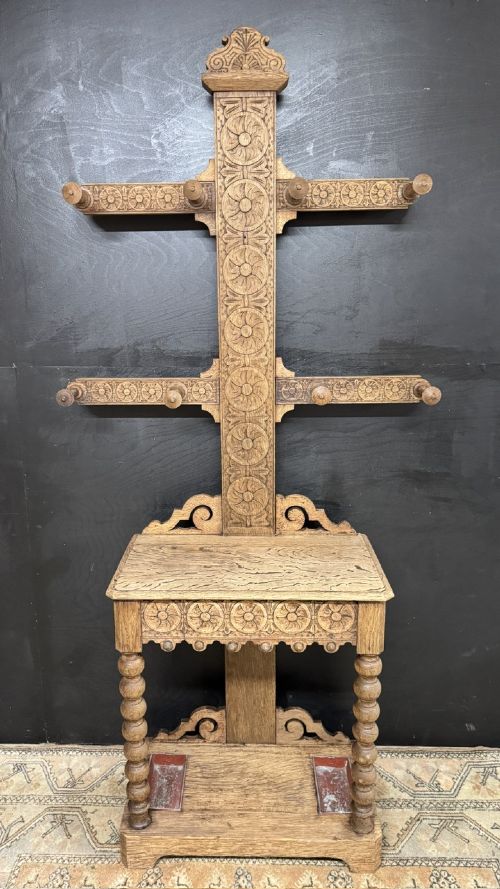

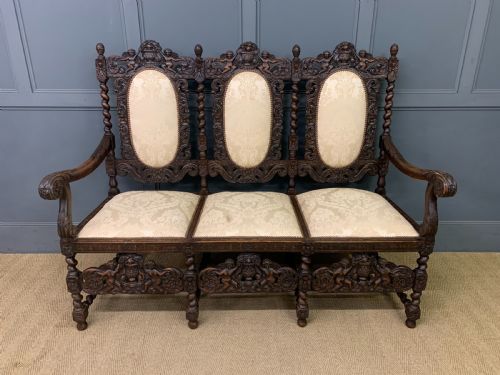
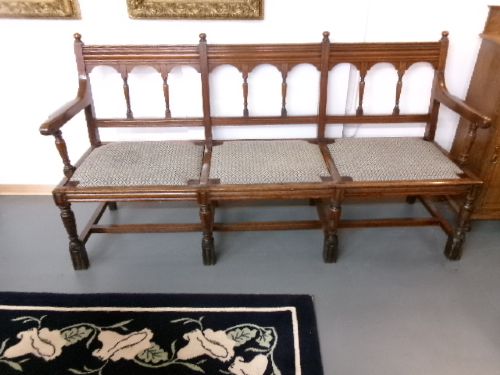
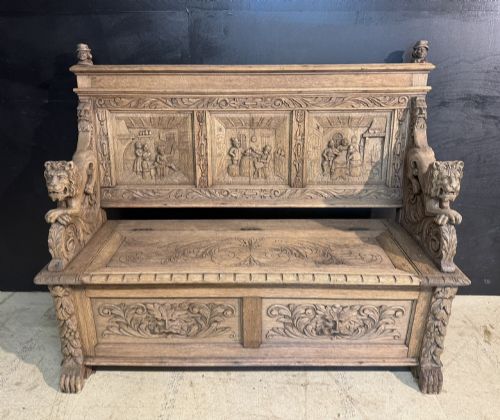


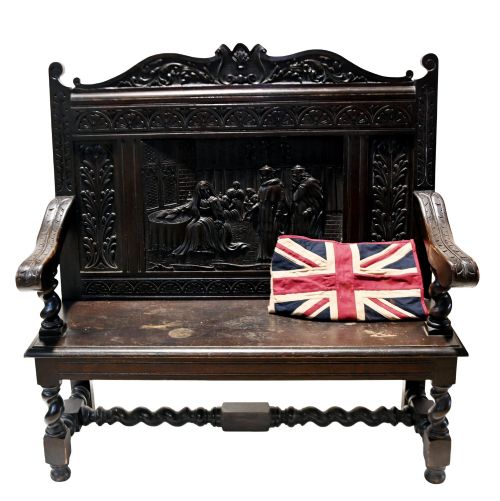

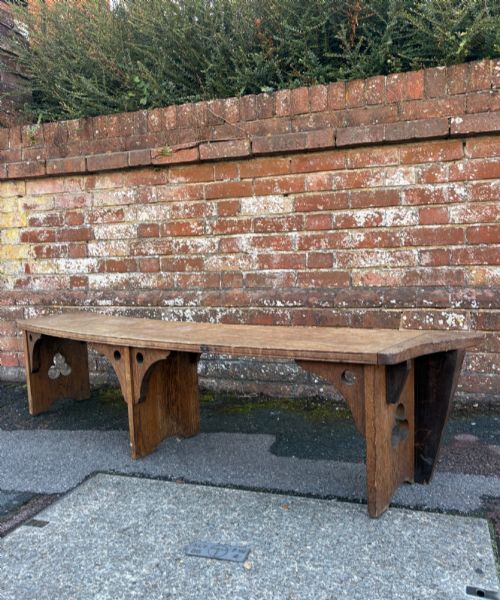
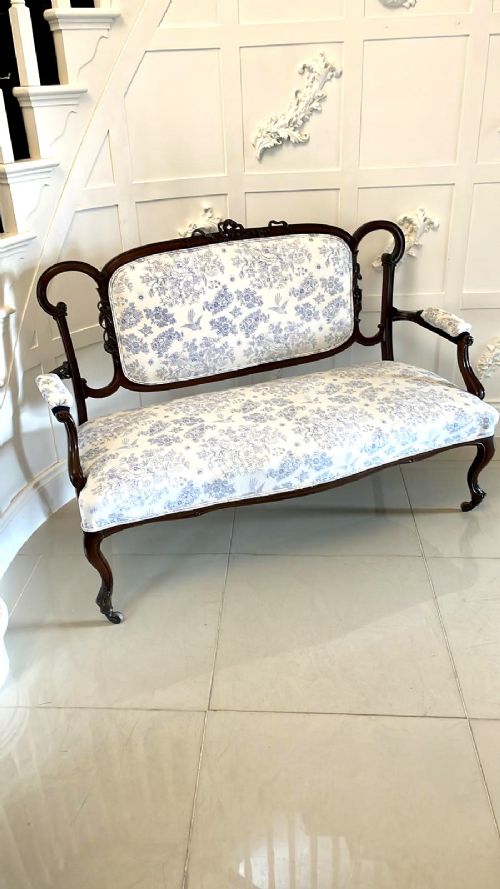
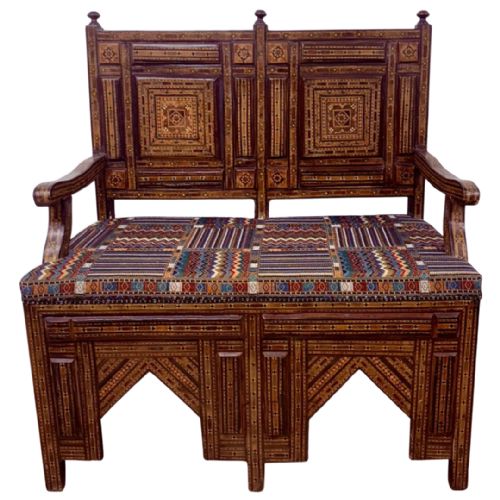
Revival Carved Bench
A revival carved bench brings architectural presence and rich ornamentation into a hallway or living space through historic revival styles.
Revival Carved Bench
A revival carved bench takes its design cues from earlier centuries, encompassing styles such as Gothic, Jacobean, Renaissance, and Rococo revival. When searching for a revival carved bench, buyers encounter substantial seating options designed to anchor a room with heavy woodwork and detailed ornamentation.
The pieces listed on this page span the nineteenth and early twentieth centuries, reflecting Victorian, Edwardian, and later interpretations of historic forms. Common manifestations include hall benches with storage seats, architectural settlers, and window seats produced across England, France, and Italy.
Makers and workshops of the period utilised solid timber construction to recreate the weight and authority of antiquity. These seats often combine practical utility, such as lift-up lids for box storage, with elaborate sculptural carving along the backrests and arms.
Assessing Quality and Execution
The depth and crispness of the carving dictate much of the visual success in a piece of this nature. Skilled execution results in undercut details and sharp relief that retain clarity, whereas lesser examples rely on shallow, machine-cut stamping.
Timber selection and structural integrity separate robust examples from weaker iterations. Grain matching, the weight of the solid oak or walnut, and the stability of the box storage compartments or frame joints determine longevity and tactile authority.
Revival Carved Bench Retail Price Guide 2026
Typical asking prices for revival carved bench among the pieces listed under this phrase on Sellingantiques today, from the lower quarter to the upper quarter. They describe what is for sale here now, not the wider market.
Recorded forms range from architectural box settles and cassapancas to upholstered window seats and cane-backed settees.
GIllows·James Shoolbred & Co.
The Revival Carved Bench Glossary
- Cassapanca
- A traditional Italian bench featuring a backrest, arms, and a deep storage chest beneath the seat. This form frequently incorporates Renaissance revival carving and architectural mouldings.
- Poppy head finial
- An architectural ornament carved in the shape of a poppy seed capsule, commonly found topping the bench ends of Gothic revival seating. It provides a distinct vertical accent to the piece.
- Settle
- A wooden bench with a high back designed to block draughts, often incorporating a box seat base. Revival versions adapt this medieval form with Jacobean or Gothic carved panels.
- Gothic Revival
- An architectural and decorative style drawing inspiration from medieval design. Pieces in this idiom display pointed arches, trefoils, and heavy tracery.
- Jacobean Revival
- A style replicating the heavy, rectilinear furniture of the early seventeenth century. It utilises turned legs, geometric panelling, and strapwork carving in dark oak.
Revival Carved Bench: Frequently Asked Questions
Where should I place a large wooden hall bench?
A substantial wooden hall bench fits naturally in an entrance hallway, wide corridor, or reception room where its architectural presence can anchor the space.
These pieces often include lift-up seats or box compartments, offering practical storage for boots and textiles while maintaining a formal appearance.
How do I distinguish between Gothic revival and Renaissance revival styles?
Gothic revival pieces draw on medieval architecture, displaying pointed arches, trefoil carvings, and vertical emphasis.
Renaissance revival furniture leans towards classical symmetry, utilising bold scrollwork, figural carvings, and architectural cornices inspired by continental design.
Are these benches comfortable for daily seating?
Historic wooden benches were built primarily for formal use and architectural impact rather than lounging.
Many examples include upholstered pads, cushions, or hinged box seats that allow for the addition of loose squabs to improve comfort.