



Retro Walnut Table
A retro walnut table brings the sharp geometry and rich figuring of nineteen-thirties design straight into a modern room.
Retro Walnut Table
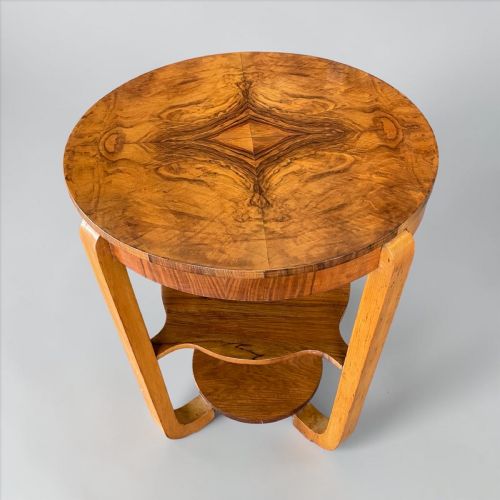
A retro walnut table belongs firmly to the Art Deco period, typically emerging from around nineteen-thirty in distinct occasional and coffee table forms. These pieces often feature stepped silhouettes, multi-tier construction, and contrasting lighter timbers such as maple alongside the dark grain.
While the search points directly to tables, the broader grouping includes related side and coffee variants that share the same characteristic geometric lines. Buyers looking for this aesthetic will frequently encounter tiered occasional designs built to maximise surface display within compact footprints.
How they were made
Cabinet makers of the period utilised walnut and walnut veneer applied over sturdy wood cores, often contrasting the primary dark surfaces with lighter maple highlights. This technique allowed workshops to display striking wood grain patterns across flat table tops and tiered shelves without warping.
Metal elements such as chrome and brass occasionally appear in supporting structures or trim, reflecting the industrial influences of nineteen-thirties design. Construction relied on steady framing methods that supported stepped tiers and geometric profiles.
Retro Walnut Table Retail Price Guide 2026
Typical asking prices for retro walnut table among the pieces listed under this phrase on Sellingantiques today, from the lower quarter to the upper quarter. They describe what is for sale here now, not the wider market.
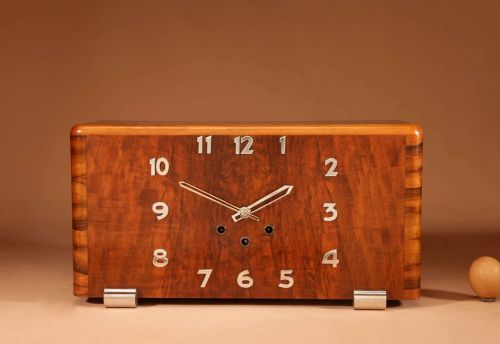
Several clocks sharing the walnut aesthetic keep company with the tables, ensuring the living room is thoroughly supervised.
What varies in quality
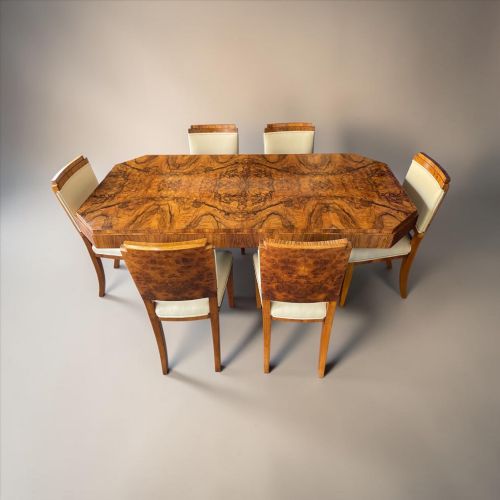
The sophistication of the timber figuring sets finer examples apart, particularly where burl or burr walnut veneer shows complex, natural patterns across the surface. Poorer examples rely on plain, uniform grain that lacks the visual depth characteristic of better Art Deco design.
The precision of the joinery on tiered and multi-level tables dictates the overall integrity of the piece. Clean alignment between contrasting wood veneers and structural tiers indicates careful workshop execution.
Bowman Brothers·Elliott of London
The Retro Walnut Table Glossary
- Art Deco
- A design style dominant in the nineteen-twenties and nineteen-thirties characterised by geometric shapes, streamlined forms, and modern materials. It replaced the flowing curves of earlier decorative arts with bold, symmetrical lines.
- Walnut veneer
- A thin slice of superior walnut timber applied to a stable secondary wood base. This method permitted makers to display decorative grain patterns across wide table surfaces while preventing the wood from splitting.
- Occasional table
- A small, movable table designed for specific, intermittent use within a living space. These pieces include multi-tier side tables intended for display or holding small objects.
- Maple
- A dense, light-coloured hardwood utilised by period cabinet makers for contrasting inlay or secondary timber elements. Its pale tone sets off the darker grain of walnut.
Retro Walnut Table: Frequently Asked Questions
How do I care for walnut veneer?
Walnut veneer requires protection from direct sunlight and excessive moisture to prevent fading and lifting of the thin wood layer. Regular dusting with a soft, dry cloth preserves the polished surface.
Avoid placing hot items or liquids directly onto the wood to maintain the integrity of the original polish and grain.
Where were these tables used?
These tables were designed for urban sitting rooms, studies, and drawing rooms of the nineteen-thirties where compact, stylish furniture was paramount. Multi-tier variants allowed owners to display decorative objects efficiently.
Today, they function well beside modern seating arrangements as practical surface space that carries distinct historical character.
How do I spot the Art Deco period?
The Art Deco period is identified by symmetry, stepped profiles, and a lack of fussy Victorian ornamentation. Walnut and contrasting light woods like maple dominate the palette of these wooden pieces.
Construction details, such as the use of veneered surfaces over sturdy timber frames, confirm the manufacturing standards of nineteen-thirty.