




Retro Glass Pendant Shade
A retro glass pendant shade brings honest twentieth-century illumination to a room, combining practical glasswork with enduring metal fittings.
Retro Glass Pendant Shade
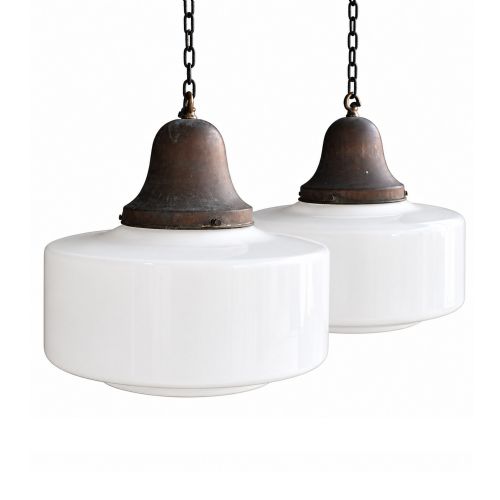
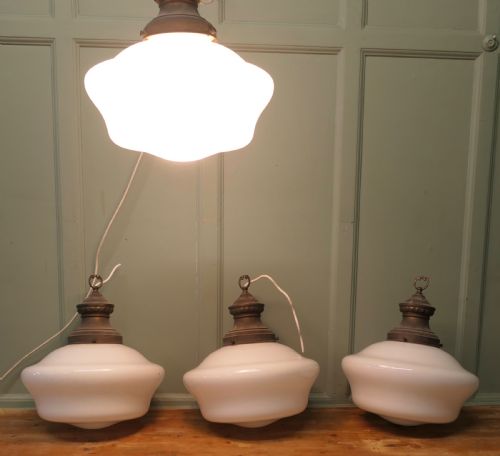
A retro glass pendant shade provides targeted downward illumination while serving as a distinct architectural fixture. When exploring retro glass pendant shade options, buyers encounter styles spanning the Victorian era through the mid-twentieth century, with the 1930s and Art Deco periods particularly well represented.
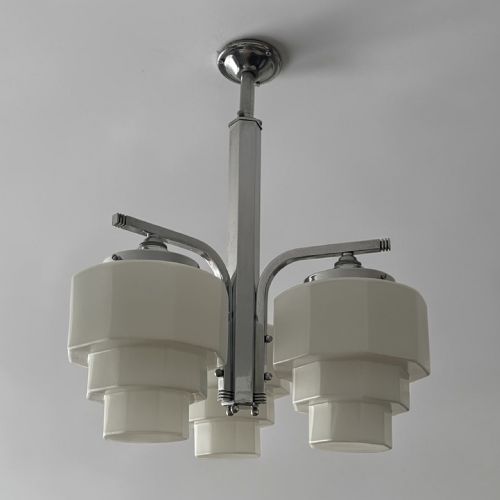
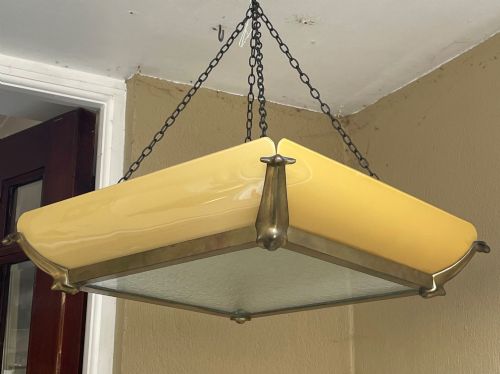
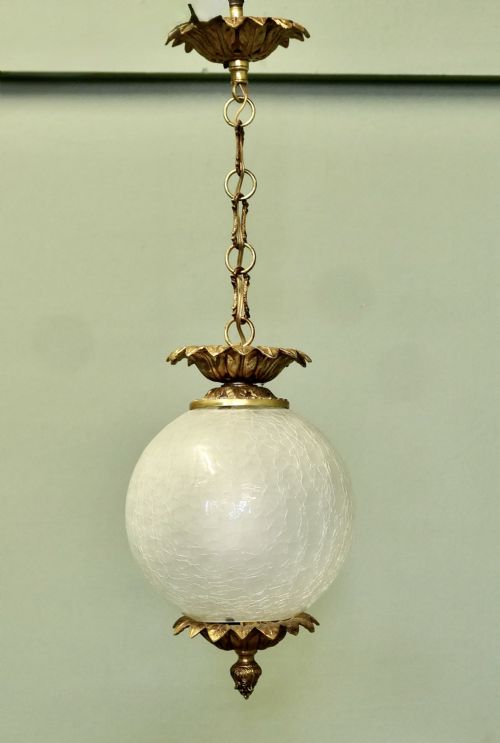
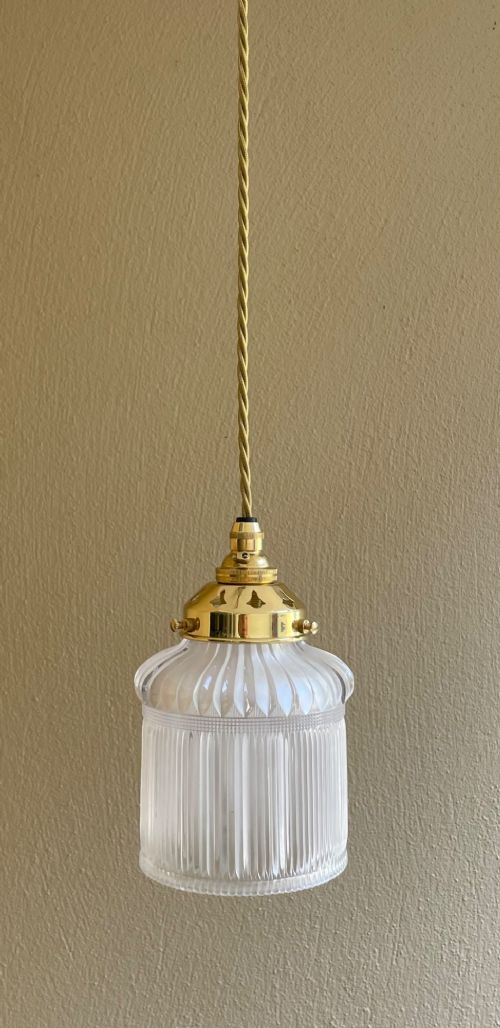
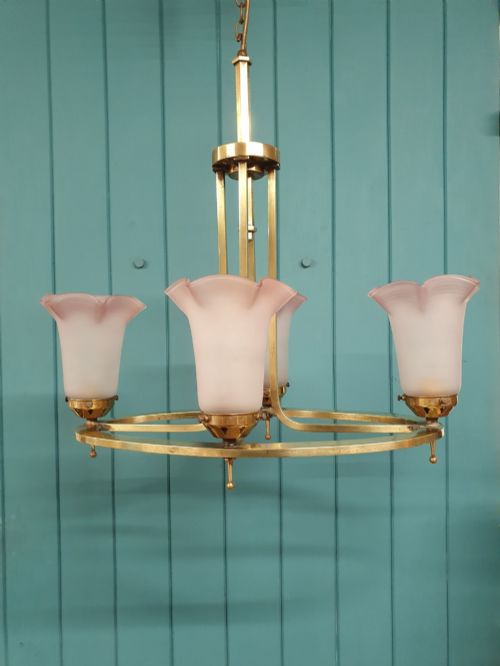
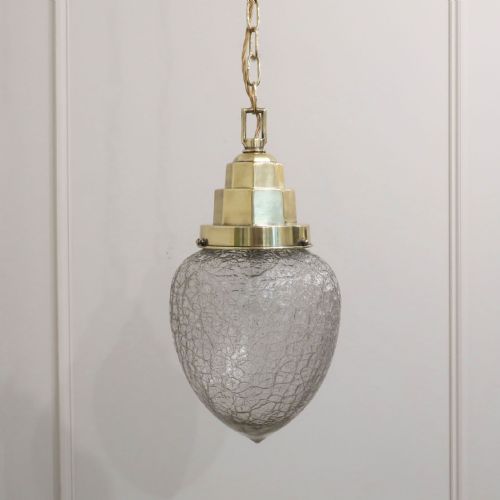
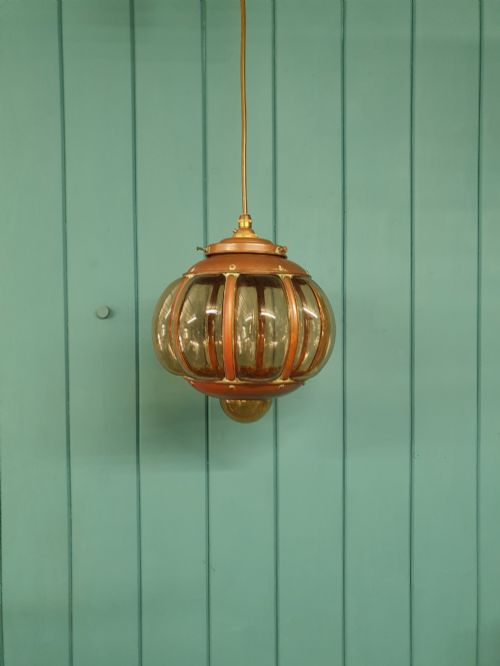
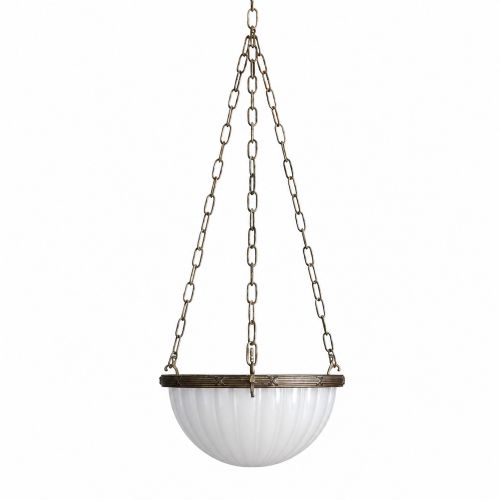
These pieces manifest as globes, bells, cones, and specialised forms suspended from ceilings, functioning as single statement pendants or multi-light chandeliers. The selection includes French and English designs, utilising shapes ranging from simple spheres to scalloped and reeded profiles.
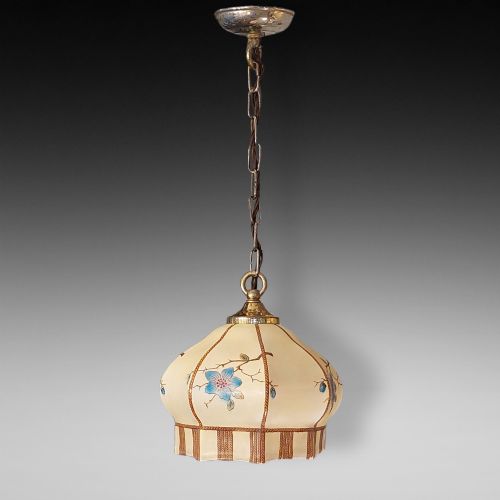
Most examples originate from the 1920s and 1930s, reflecting industrial practicality and domestic elegance alike. Buyers frequently find utilitarian opaline glass alongside decorative hand-painted and crackle finishes.
Assessing quality and craftsmanship
Quality reveals itself in the weight and thickness of the glass, the depth of its moulded or ribbed patterns, and the clarity of opaline or coloured finishes. Superior examples show refined handling at the fitter rim and consistent material density throughout the body.
The accompanying metalwork dictates overall excellence, distinguishing utilitarian workshop pieces from decorative domestic chandeliers. Original galleries cast in brass or copper demonstrate superior metallurgical quality compared to later replacements.
Retro Glass Pendant Shade Retail Price Guide 2026
Typical asking prices for retro glass pendant shade among the pieces listed under this phrase on Sellingantiques today, from the lower quarter to the upper quarter. They describe what is for sale here now, not the wider market.
Fish-scale opaline shades bring aquatic geometry indoors, proving that 1930s kitchens deserved a touch of marine inspiration.
Jean Gauthier·Holophane
The Retro Glass Pendant Shade Glossary
- Opaline glass
- A milky, translucent white glass that softens light diffusion while maintaining high luminance. This material was widely utilised for twentieth-century industrial and domestic lighting.
- Gallery
- The metal collar or ring that grips the upper rim of the glass shade and connects it to the suspension rod or chain. These mounts frequently incorporate brass, copper, or chrome.
- Plafonnier
- A ceiling light fixture mounted flush or close to the ceiling surface, often featuring a decorative glass bowl held by a metal frame. The term originates from French interior design.
- Prismatic glass
- Specially moulded glass featuring geometric ribbing or prisms designed to refract and direct light evenly across a space. Holophane manufacturers popularized this functional optical design.
- Fitter neck
- The top section of a glass shade engineered to insert securely into a metal gallery or holder. Precise sizing ensures the shade remains stable within its hardware.
Retro Glass Pendant Shade: Frequently Asked Questions
How do I hang a pendant shade?
These shades suspend from ceilings using a compatible metal gallery, wired cord, or chain attached to a ceiling rose. Proper installation requires securing the fitter neck firmly into the gallery.
Electrical wiring must match the age and capacity of the fixture, often requiring a professional electrician to ensure safe operation with modern power supplies.
What rooms suit these lights?
Pendant lights suit hallways, kitchens, and dining spaces where direct downward illumination is beneficial. Smaller globes fit compact entryways, while multi-light chandeliers illuminate larger rooms.
Matching the scale of the shade to the ceiling height ensures the fixture functions effectively without dominating the room's proportions.
How do I identify Art Deco shades?
Art Deco shades feature geometric motifs, stepped designs, and stylized symmetry typical of the 1920s and 1930s. Common forms include conical, dish, and clam-shell shapes paired with brass or chrome.
Materials from this era frequently include opaline, frosted, or crackle glass that reflects the modern machine-age aesthetic of the period.
How do I clean antique glass?
Wash glass shades gently in warm water using mild soap, avoiding harsh abrasives that might damage etched or hand-painted surfaces. Metal galleries should be cleaned separately to preserve the original finish.
Ensure all electrical components remain completely dry during cleaning and that the fixture is disconnected from the power supply.