



Retro Art Deco Glass Lamp
These retro art deco glass lamps combine geometric glass shades with polished metal and striking figural bases to define an interior.
Retro Art Deco Glass Lamp
When someone searches for a retro art deco glass lamp, they find lighting fixtures spanning table lamps, wall sconces, and hanging pendants produced primarily across the 1920s, 1930s, and 1940s. These pieces draw from distinct stylistic currents including French Art Deco, industrial design, and modernist aesthetics.
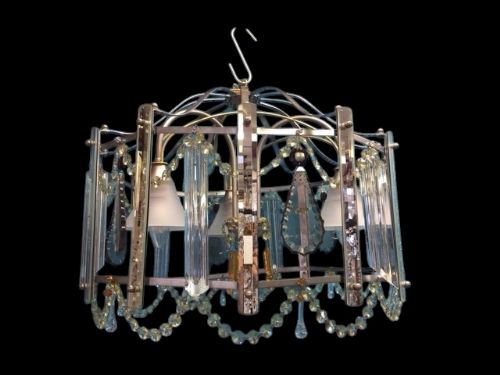
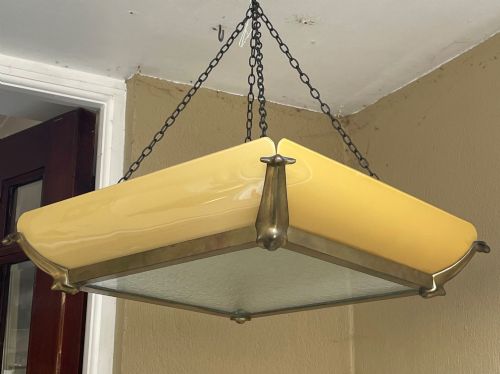
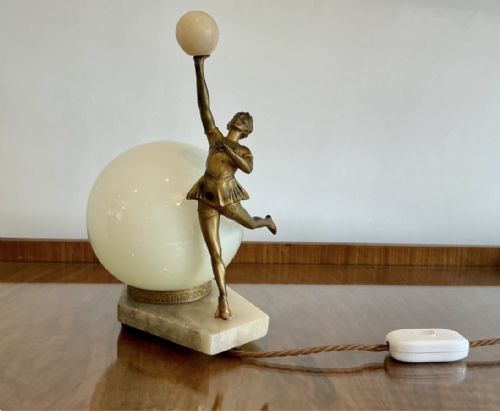
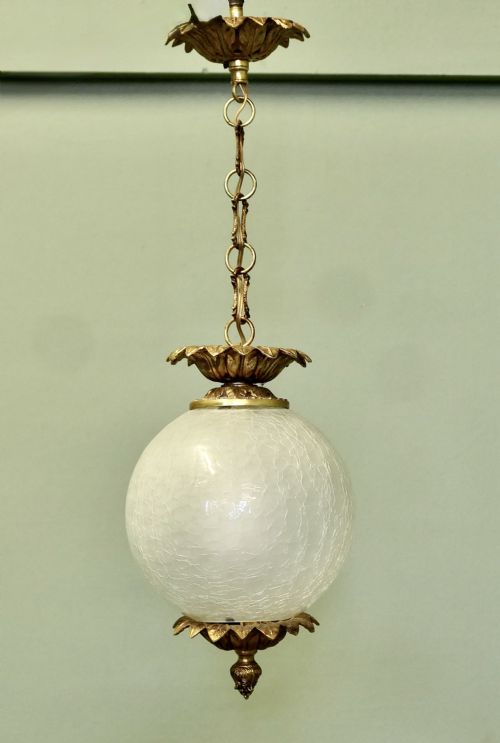
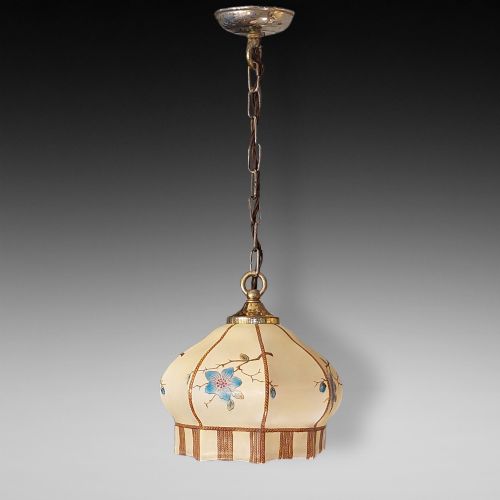
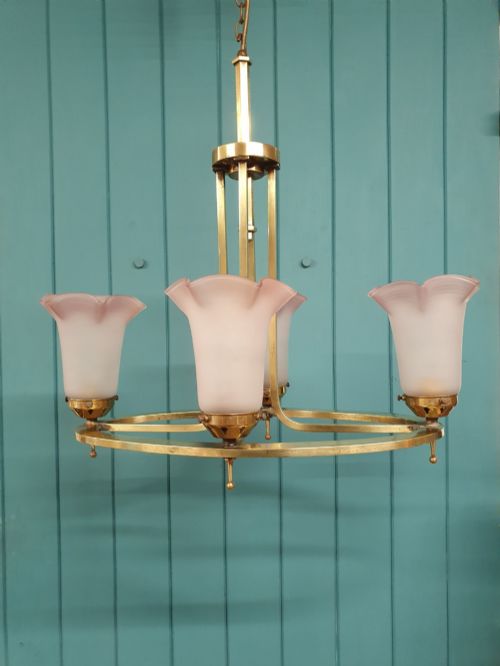
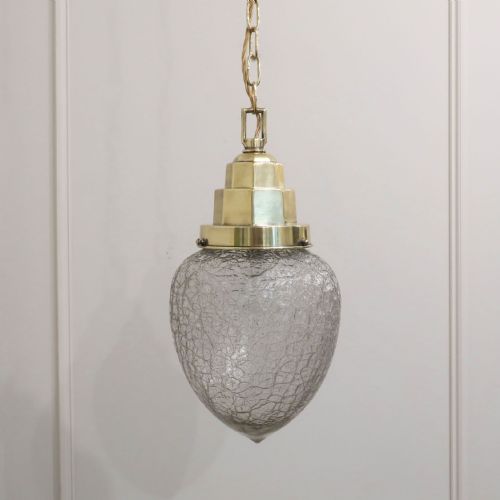
Table lamps frequently incorporate figural elements such as lady lamps, nude figures standing on spheres, or shell-shaped bases paired with mottled, crackle, or cut crystal glass shades. Hanging options range from opaline glass globes and pear-shaped pendants to multi-light brass and bronze chandeliers.
The selection on this page also includes wall lights, ceiling fixtures, and floor lamps utilising materials typical of the era. Buyers meet both British and continental European outputs, including French designs, alongside pieces crossing into Edwardian and mid-century modern idioms.
How they were made
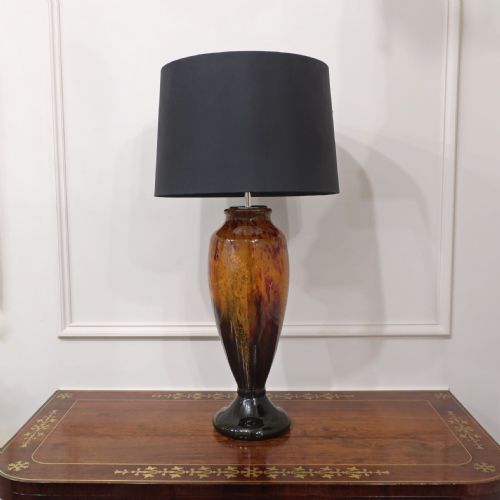
Makers combined pressed, blown, mottled, opaline, and crackle glass with structural metals such as brass, copper, chrome, and iron. Metal components were often cast, spun, or tubular, forming galleries, stems, and bases that supported the heavy glass shades.
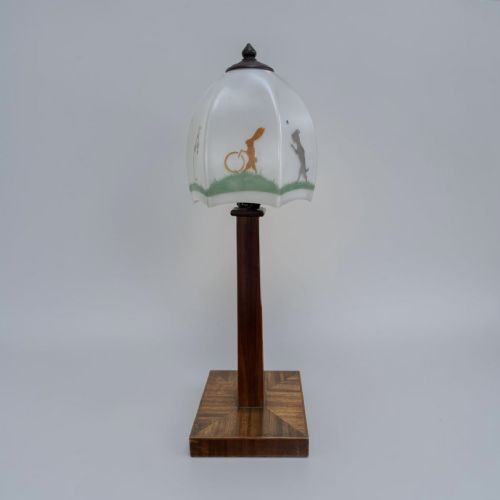
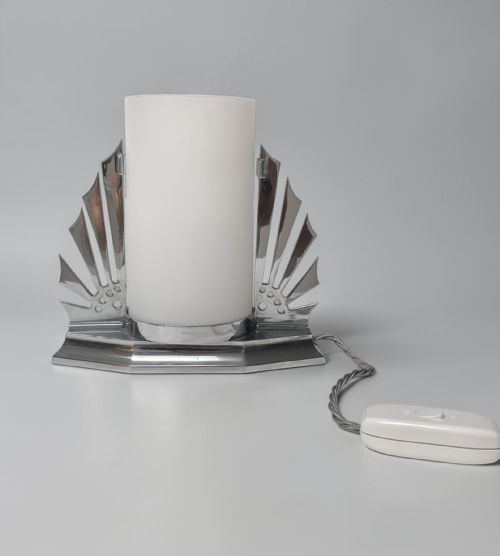
Surface decoration involved hand-painting, acid-etching, and enamelling directly onto the glass, alongside patinated or polished finishes applied to the underlying metalwork. Electrical components were integrated into standard galleries, sometimes utilising early plastics such as bakelite for switch housings and holders.
Dogs carved from marble share the catalogue with lightning flashes and dancing figures.
What varies in quality
The distinction between standard commercial lighting and exceptional examples rests upon the weight and complexity of the glasswork, the integration of sculptural figural casting, and the purity of the metal alloys used in the frame. Superior pieces utilise heavier gauge chrome, brass, or copper alongside specialised glass techniques such as layered opaline or deep acid-cut crystal.
Design execution separates basic utility lamps from works associated with named makers and distinct artistic workshops. The precision of the joinery, the subtlety of hand-painted detailing, and the architectural coherence of the shade relative to the base dictate the standing of an individual piece.
Charles Schneider·Jean Gauthier·Karl Palda
The Retro Art Deco Glass Lamp Glossary
- Opaline glass
- A milky, semi-translucent glass that diffuses light evenly across its surface. It was widely utilised for pendant shades and globes during the 1920s and 1930s.
- Gallery
- A metal ring or collar designed to secure a glass shade to a lamp base or pendant fitting. It often incorporates thumbscrews for adjustment.
- Plafonnier
- A ceiling-mounted light fixture where the glass shade sits flush or semi-flush against the ceiling plate. These typically disperse ambient light downwards.
- Bakelite
- An early form of synthetic thermosetting plastic utilised for electrical fittings, switches, and lamp bases. Its dark, durable finish characterises interwar manufacturing.
- Crackle glass
- Glass deliberately fractured during the cooling process and then reheated to fuse the interior fissures while maintaining a textured exterior surface.
Retro Art Deco Glass Lamp: Frequently Asked Questions
How do I identify a 1930s glass lamp?
Authentic pieces from this decade typically feature characteristic geometric forms, stepped bases, and specific glass treatments such as opaline, crackle, or mottled finishes combined with chrome or brass.
Examining the construction of the metal gallery and the wiring entry points can also help verify period manufacturing methods.
Where were these lamps used originally?
Table lamps were designed for desks, sideboards, and occasional tables in principal living spaces, while wall sconces and chandeliers provided central or accent illumination in hallways and salons.
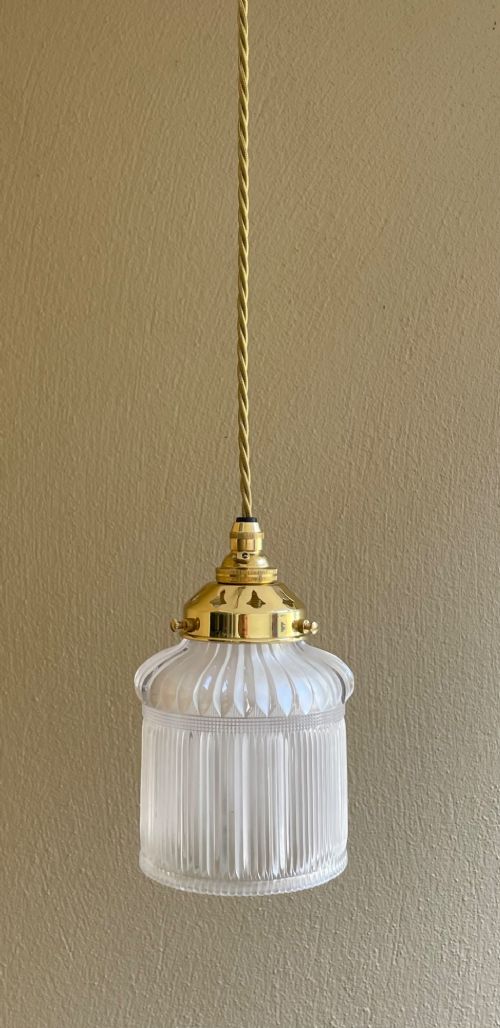
Pendant lights were frequently hung over dining tables or in stairwells to utilise the diffusing properties of opaline and frosted glass shades.
Can I use modern bulbs in these lamps?
Most vintage lamps accept standard modern bulbs provided the Edison screw or bayonet fitting matches the original internal socket. It is advisable to check the wattage limits recommended for older wiring and delicate glass shades.
Consulting a qualified electrician ensures that older brass and chrome fixtures meet contemporary safety standards before regular use.
What is a lady lamp?
A lady lamp is a figural table lamp depicting a sculpted female form, dancer, or nude figure integrated into the base or stem supporting the glass shade.
These figures were often cast in metal or carved from materials like marble, reflecting the figurative sculpture trends of the interwar period.