




Retro Art Deco Clock
These retro art deco clock designs combine geometric forms with industrial materials to tell time while anchoring a room.
Retro Art Deco Clock
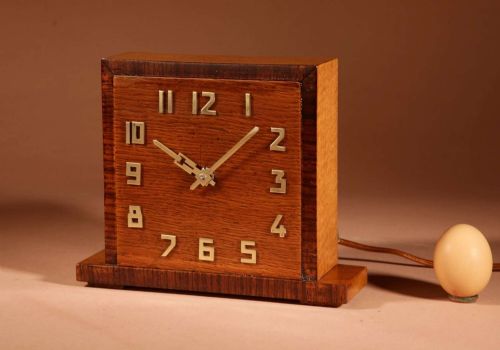
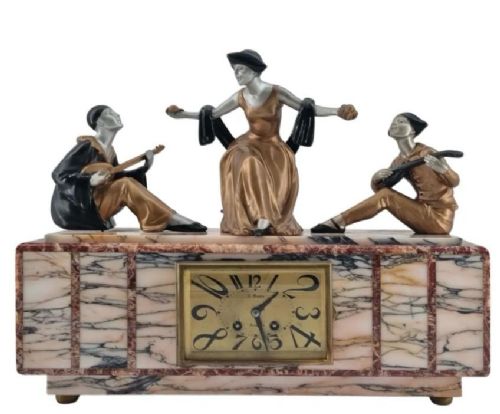
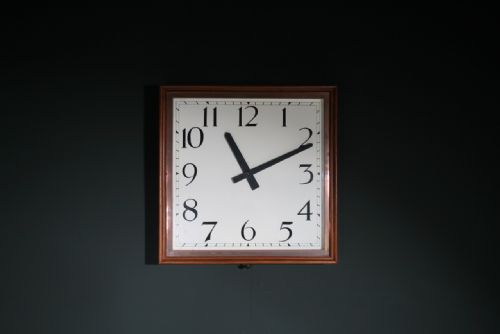
A retro art deco clock spans mantel pieces, desk designs, and wall mountings produced primarily across the 1920s, 1930s, and 1940s, with occasional later mid-century reinterpretations. The most common format met on this page is the mantel clock, often built from contrasting woods or marble with distinct geometric silhouettes.
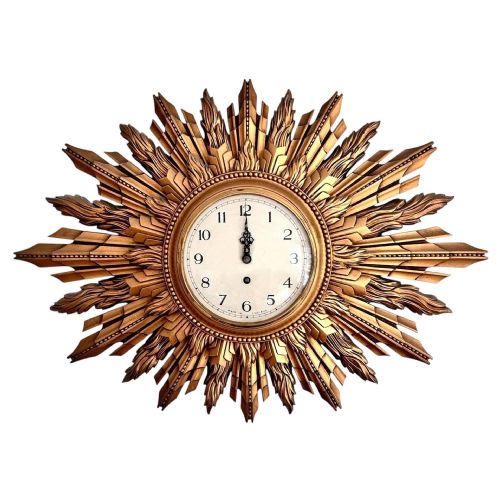
Makers in England, France, and other European regions shaped these objects into everything from simple bedside alarms to complex chiming wall regulators and mechanical desk pieces. Architectural influences dominate, resulting in octagonal, star burst, and stepped rectilinear profiles that capture the industrial spirit of the period.
Materials and Construction
Makers utilised a diverse palette of materials, pairing traditional hardwoods like walnut, oak, and elm with contemporary industrial mediums such as chrome, brass, copper, and glass. Early plastics like bakelite appear frequently in desk and alarm formats, often moulded into streamlined shapes alongside polished metal bezels.
Materials recorded across the inventory include natural stone, organic resins, base metals, and multiple hardwood species.
Assessing Execution
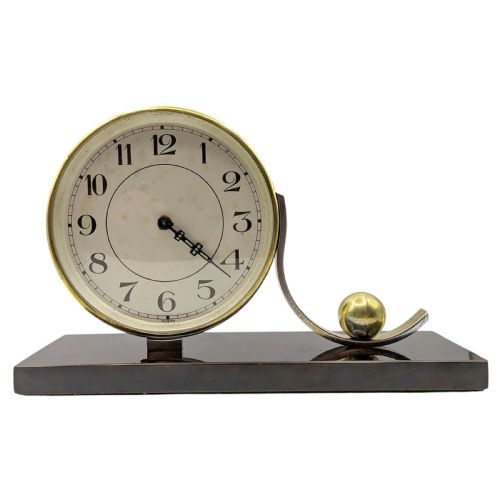
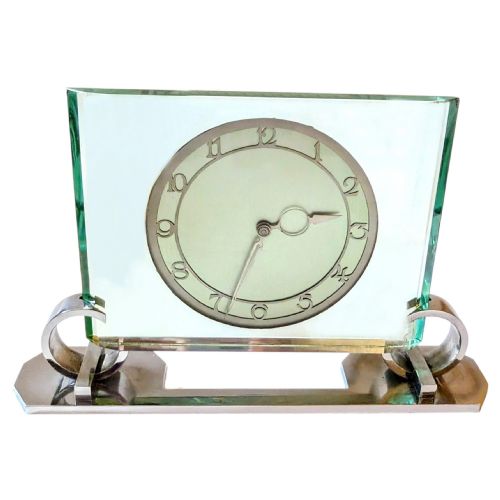
Quality rests in the precision of the case construction and the originality of the fitted movement, where signed dials and proprietary mechanisms from known makers elevate an item. The integration of mixed materials, such as inlaid veneers paired with chromium or mirrored glass, shows the ambition of the original design.
The sophistication of the dial layout and the condition of decorative elements like figural bronzes or etched glass determine the standing of individual pieces. Heavy stone bodies, such as French marble or onyx, require crisp bevelling and unblemished surfaces to separate standard production items from finer studio outputs.
Smiths·Zenith·Elliott of London·Vitascope
The Retro Art Deco Clock Glossary
- Bakelite
- An early synthetic thermosetting phenol formaldehyde resin. Makers moulded this durable material into smooth, dark clock cases and desk accessories during the interwar years.
- Mantel clock
- A portable timekeeper designed to sit on a fireplace mantel or shelf. These pieces rely on balanced rectangular, arched, or stepped wooden and marble housings.
- Westminster carillon
- A mechanical chiming arrangement that plays a four-note melody on gongs. This system is typically found in larger wooden wall and mantel timepieces.
- Automaton
- A mechanical device featuring moving parts that animate scenes beyond the dial. Examples include moving ships or figures integrated into the clock face.
Retro Art Deco Clock: Frequently Asked Questions
How do I wind an eight day clock?
Insert the key into the appropriate winding arbor on the dial face and turn it gently clockwise until resistance is felt. Take care not to overwind the mainspring.
Most mechanical examples on this page require this weekly attention to maintain accurate timekeeping across the movement.
Where should I place a heavy marble mantel clock?
Select a sturdy, level surface that can support considerable weight, such as a sideboard, heavy shelf, or dedicated mantelpiece. Stone and marble variants require stable placement to protect both the surface and the heavy case.
Keep the piece away from direct sunlight and damp environments to preserve the internal metallic components and exterior finish.
How can I tell a 1930s piece from a 1960s reproduction?
Examine the materials and back plates for manufacturing techniques typical of the interwar period, such as heavy cast metals, real wood veneers, and stamped brass movements. Later reinterpretations often utilise simplified modern plastics and lighter assembly methods.
Typography on the dial and the specific style of the numerals also offer strong clues to the decade of manufacture.
Did all these clocks run on batteries?
No, the vast majority relied on mechanical spring-driven movements that required manual winding using a key. Some wall and desk variations utilised electrical mains wiring or early electric motors.
Battery operation is uncommon among period originals unless converted later by restorers.