


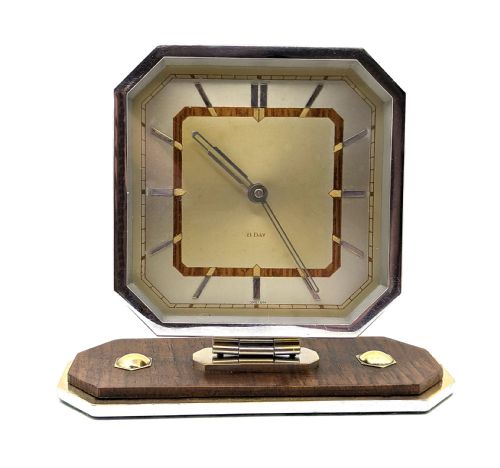


Vintage Geometric Clock
A vintage geometric clock brings structural form and period engineering into a room.
Vintage Geometric Clock
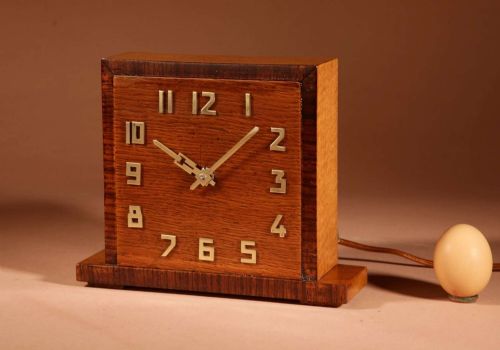
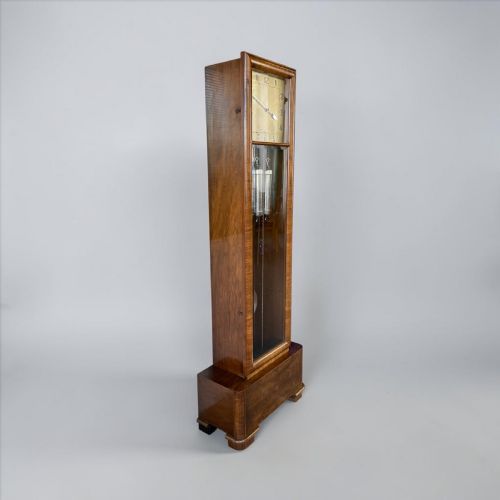
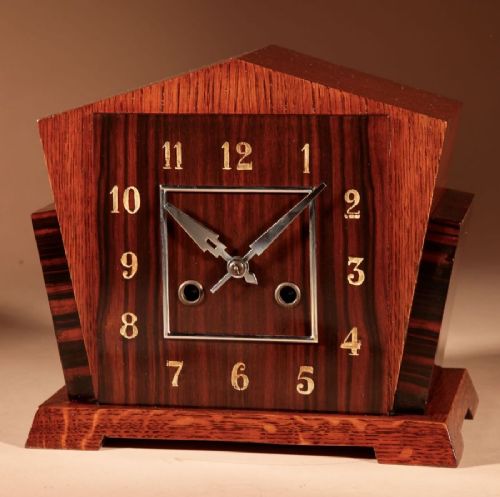
When you search for a vintage geometric clock, you encounter timepieces shaped by the distinct architectural lines of the early twentieth century. Most examples date from the 1920s, 1930s, and 1940s, embodying the prominent aesthetics of the period.
The selections span mantel clocks, wall clocks, desk clocks, and larger grandfather clocks. Many pieces emerge from specific design movements such as Art Deco, Amsterdam School Art Deco, and Bauhaus traditions.
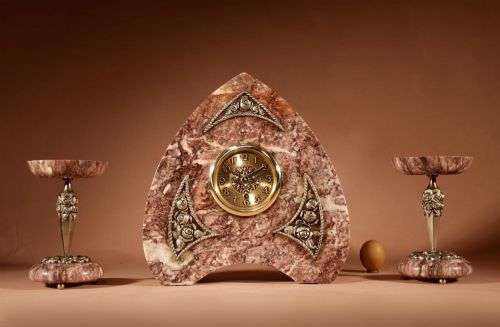
Forms range from compact easel and skyscraper desk models to elaborate clock garnitures and chiming mantel designs. These objects reflect the structural ambition of domestic timekeeping from the interwar decades.
Materials and Construction
Maker workshops utilised a diverse palette of hard materials, pairing metals like chrome, brass, and copper with natural stones including marble and onyx. Glass and mirror elements appear frequently alongside timber species such as oak, walnut, rosewood, and macassar ebony.
Construction techniques combined cabinetmaking with precision metalworking and internal mechanical or electrical movements. Dials often incorporated contrasting geometric chapters, Bakelite details, and enamel work to emphasise angular forms.
Greyhounds and elephants occasionally guard the dial.
Distinctions in Standard
Quality rests in the precision of the housing and the integrity of the internal movement. Pieces housing signed mechanical or electrical mechanisms from established makers display superior assembly.
The choice of materials dictates refinement, where solid hardwoods and polished metal or marble create a heavier, more resolved silhouette than simpler veneered constructions.
Smiths Clockmakers·Mappin & Webb·P.M.Favre·Blangy Clockmakers·Asprey·Junghans·Garrards
The Vintage Geometric Clock Glossary
- Mantel clock
- A domestic timekeeper designed to sit upon a fireplace mantelpiece or shelf. These pieces usually feature decorative wooden or marble housings.
- Garniture
- A set comprising a central clock flanked by matching decorative objects such as urns, candelabra, or sculptural figures. These arrangements created a unified display on furniture.
- Bakelite
- An early form of synthetic plastic utilised for clock bezels, dials, and structural cases during the interwar period. It allowed for moulded geometric contours.
- Movement
- The internal mechanical or electrical mechanism that drives the gears and measures time. Movements ranged from eight-day spring-driven systems to early electrical setups.
- Skyscraper clock
- A desk or mantel clock designed with stepped vertical setbacks that mimic contemporary metropolitan architecture. This form is particularly associated with Art Deco design.
Vintage Geometric Clock: Frequently Asked Questions
How do I wind an eight day clock?
Eight day clocks require a key or winding lever inserted into the dial holes to tension the mainspring.
Care must be taken not to overwind the mechanism, stopping as soon as resistance is felt.
Where should I place a mantel clock?
Mantel clocks suit flat surfaces like sideboards, desks, and shelves where their structural profile remains visible.
Ensure the surface is level so the pendulum or escapement beats evenly.
Are these clocks mechanical or electric?
The evidence shows both traditional mechanical eight day movements and early electrical systems.
Some surviving pieces feature modern battery conversions while retaining their original exterior housing.
How do I identify an Art Deco clock?
Art Deco timepieces rely on symmetrical stepped lines, geometric wooden veneers, and contrasting metal accents.
Materials like chrome, Bakelite, and polished marble frequently define the era's geometric aesthetic.