




Retail Glass Case
A retail glass case turns daily merchandise into theatre, housing everything from apothecary jars to confectionery.
Retail Glass Case
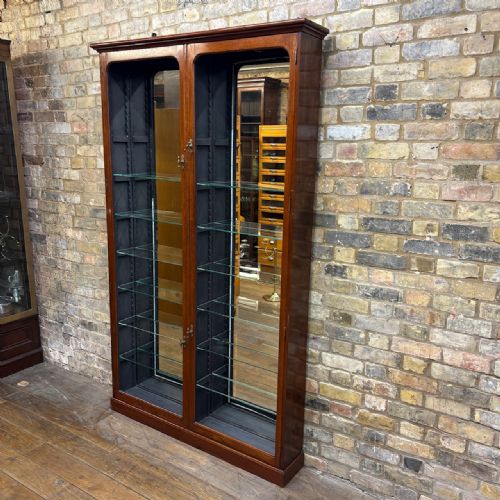
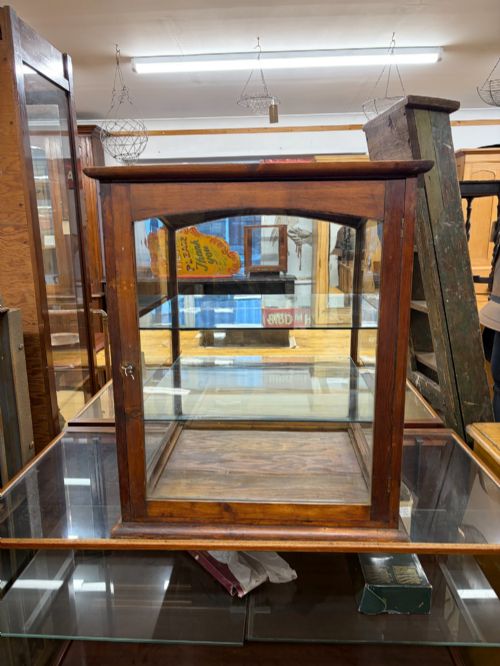
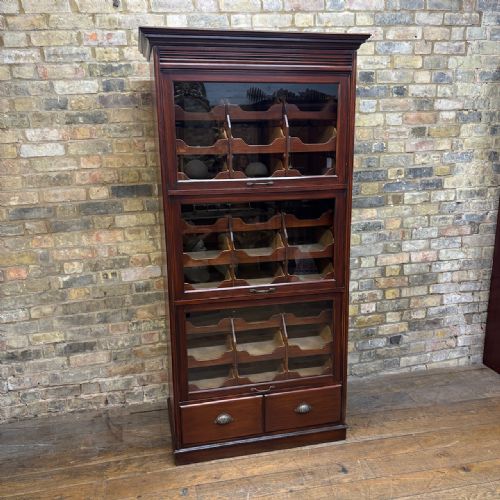
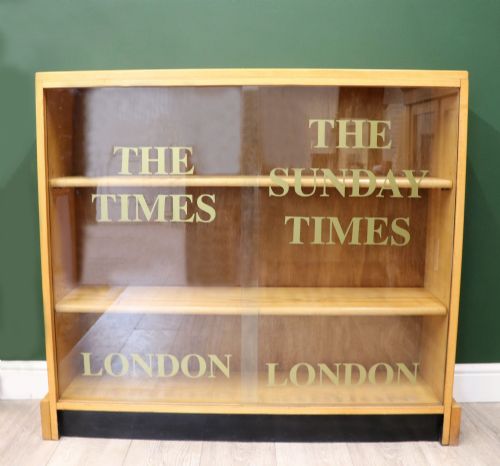
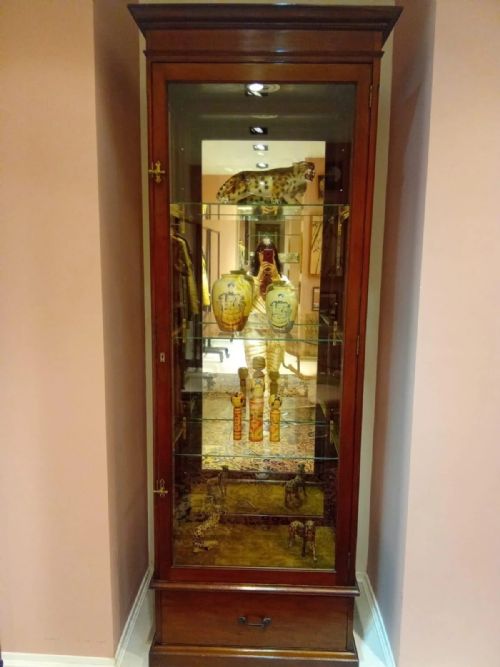
A retail glass case brings commercial history directly into domestic or trade spaces, serving primarily as a display vehicle for small goods. When searching for a retail glass case, buyers encounter utilitarian counters, tall tower cabinets, and countertop vitrines designed originally for shops, pharmacies, and museums. Most examples originate from the Victorian and Edwardian eras through to the Art Deco period of the 1930s.
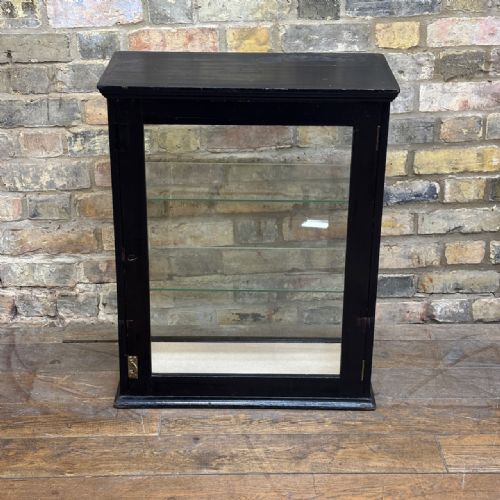
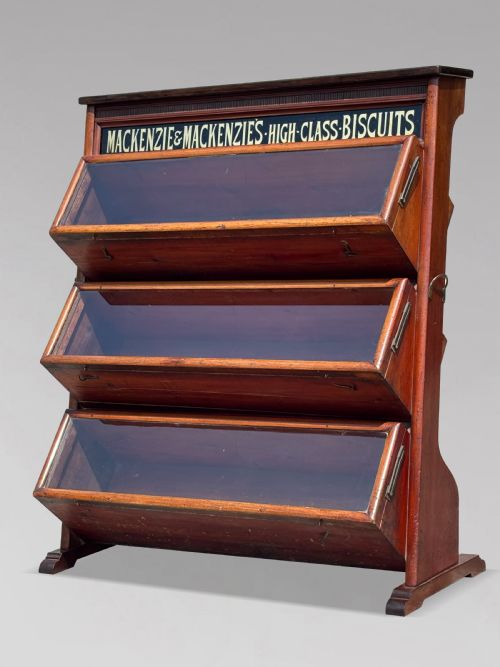
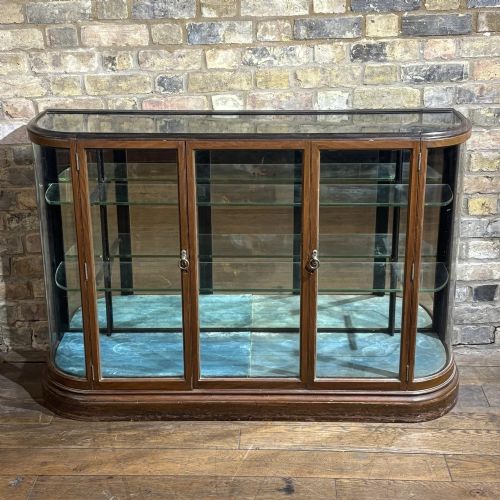
The assortment on this page relies heavily on commercial timber frames combined with generous panes of glass. Mahogany and oak dominate the selection, often taking the form of shop counters, tabletop units, or specialised advertising cabinets for brands like Fry's, Cadbury, and Rowntree's. Structural formats range from bow-ended floor standing units to pentagonal counters and compact ebonized tabletop displays.
Makers such as F. Sage & Co., John Stow Ltd of Bradford, and Saml. Elliott & Sons appear among the records, representing professional shopfitters of the late nineteenth and early twentieth centuries. These commercial pieces frequently feature adjustable glass shelving and mirrored interiors designed to maximise light penetration and product visibility. Buyers select them to organise collections securely while maintaining unobstructed all-round views.
How they were made
Makers constructed these commercial fixtures using durable hardwoods like mahogany and oak to withstand heavy daily use in busy retail environments, occasionally incorporating ebonized finishes or brass and aluminium frames. Glazing formed the core of the construction, utilising large transparent panes alongside mirrored interior backs to reflect ambient light through the stored goods.
Joinery techniques focused on rigidity and clean sightlines, accommodating heavy plate glass within rebated wooden frames or metal extrusions. Specialised hardware such as mechanical dispensing mechanisms, adjustable shelf brackets, and lockable hinged or sliding doors ensured both security and functional utility for shopkeepers.
Retail Glass Case Retail Price Guide 2026
Typical asking prices for retail glass case among the pieces listed under this phrase on Sellingantiques today, from the lower quarter to the upper quarter. They describe what is for sale here now, not the wider market.
Materials recorded across the inventory include mahogany, oak, brass, ebonized wood, mirror glass, and aluminium framing.
What varies in quality
The caliber of a retail glass case depends largely on the ambition of its original commission, moving from utilitarian apothecary boxes up to bespoke architectural counters by established shopfitters. Finer examples display sophisticated timber selection, such as figured mahogany or quarter-sawn oak, coupled with integrated mirror glass backs and refined brass or aluminium hardware.
Originality defines the upper tier of survivals, where surviving maker stamps, intact advertising lettering, and unaltered glass shelving remain undisturbed. Restorations vary in sensitivity, and pieces retaining their working locks, original timber patination, and undamaged glazing command greater interest among collectors of commercial antiques.
F. Sage & Co.·John Stow Ltd of Bradford·Saml. Elliott & Sons
The Retail Glass Case Glossary
- Vitrine
- A glass-sided cabinet or display case designed specifically for exhibiting objects of vertu, ceramics, or retail goods. These cases prioritize visual access through glazed panels on multiple sides.
- Bijouterie table
- A low display table featuring a glazed top and shallow compartment intended for small ornaments, jewellery, or curiosities. They often stand on slender legs and lift open from above.
- Countertop display cabinet
- A compact glazed case built to sit upon a shop service counter for point-of-sale merchandising. These units frequently incorporate rear sliding doors for serving staff.
- Shopfitter
- A specialist firm or artisan responsible for designing and installing commercial interiors, counters, and display fittings. Companies like F. Sage & Co. set high standards in this trade.
- Ebonized
- Wood finished with a dark stain or paint process to imitate expensive ebony. This technique gained popularity during the Victorian and Art Deco periods for dramatic contrast.
Retail Glass Case: Frequently Asked Questions
What were retail glass cases used for?
Shopkeepers utilised these glazed enclosures to protect delicate merchandise, confectionery, and pharmaceuticals from dust and handling while keeping them visible to customers.
They stood upon service counters or occupied floor space to encourage impulse purchases through clever internal lighting and mirrored backs.
How do I date a display cabinet?
Dating relies on architectural styles, timber choices, and construction methods matching Victorian, Edwardian, or Art Deco manufacturing norms.
Maker stamps, brass hardware designs, and the presence of early aluminium or ebonized framing further narrow down the production decade.
Can I adjust the shelves inside?
Many surviving commercial cabinets feature original internal rack systems or adjustable brackets supporting thick plate glass shelves.
This adaptability allowed Victorian and twentieth-century shopkeepers to reconfigure interiors for goods of varying heights.
How do I care for wooden retail cases?
Maintain the timber using appropriate beeswax or polishes while avoiding excessive moisture near joints and mirrored backings.
Glass panels require gentle cleaning with standard solutions, taking care to protect fragile painted advertising lettering or aged foil mirrors.