

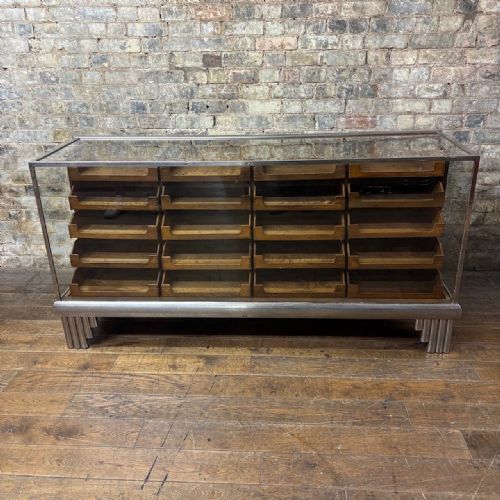


Retail Display Unit
A retail display unit brings authentic commercial heritage into a room, offering robust construction and generous glazing designed to showcase collections.
Retail Display Unit
A retail display unit encompasses the heavy-duty counters, cabinets, and shelving systems built for commercial premises during the nineteenth and early twentieth centuries. These pieces range from substantial Edwardian oak haberdashery cabinets to brass-framed counters and painted pine shop fittings.
Buyers browsing this selection will frequently encounter items originating from the Victorian era up to the 1930s. Forms include multi-drawer shop fittings, wall-mounted display cabinets, and freestanding drapers counters designed for heavy daily use.
Originating from commercial settings, these units combine practical storage with transparent viewing areas. They suit domestic interiors seeking functional display space with genuine period character.
Materials and construction
Makers utilised dense timbers such as mahogany, oak, walnut, and pine for the main carcasses and drawer structures. These durable woods provided the necessary structural integrity to support heavy commercial stock.
Glazing and metalwork define the visual character of these pieces, incorporating brass frames, chrome details, cast iron supports, and bronze shelving. Glass panels were integrated to maximise visibility for merchandise.
Construction techniques prioritised durability, resulting in multi-drawer configurations, robust joinery, and fitted commercial hardware. Painted finishes also appear, particularly on pine shop fittings and specialised advertising units.
Retail Display Unit Retail Price Guide 2026
Typical asking prices for retail display unit among the pieces listed under this phrase on Sellingantiques today, from the lower quarter to the upper quarter. They describe what is for sale here now, not the wider market.
Factors of quality
The distinction between tiers rests upon the choice of timber and the complexity of the hardware utilised. Pieces featuring solid mahogany or oak framing with original brass fittings represent superior commercial craftsmanship compared to utility pine builds.
Hardware integrity and operational fittings dictate the standard of a piece. Original handles, smooth-running drawer sets, and intact structural metalwork indicate a higher grade of original manufacture.
The degree of commercial specialisation influences the build. Purpose-built haberdashery counters and maker-attributed cabinets demonstrate finer detailing than generic storage units.
F. Sage & Co·Dudley & Co·Saml. Elliott & Sons
The Retail Display Unit Glossary
- Haberdashery cabinet
- A multi-drawer storage unit traditionally used for small sewing goods and textiles. These cabinets typically feature numerous shallow drawers, often with glass fronts.
- Drapers counter
- A long shop counter designed for measuring and selling fabrics. They usually incorporate substantial timber framing and display space.
- Shop fitting
- Custom-built furniture integrated into a retail interior. These pieces were constructed to fit specific commercial floor plans.
- Display shelving
- Open or enclosed tier systems designed for merchandise presentation. They utilise materials like bronze and iron for structural support.
Retail Display Unit: Frequently Asked Questions
What is a retail display unit?
A retail display unit is a piece of commercial furniture built to showcase and store merchandise. These items originate from shops and include counters, cabinets, and shelving.
They were constructed using durable materials like oak, mahogany, glass, and brass to withstand heavy daily use in busy trading environments.
How were haberdashery cabinets used?
Haberdashery cabinets were used in shops to organise and display small items such as buttons, ribbons, and threads. The numerous shallow drawers allowed merchants to sort stock efficiently.
Customers could view items through glass panels while the contents remained protected from handling and dust.
How do I date a shop display cabinet?
Dating relies on observing the prevailing styles, timber choices, and construction methods of specific periods. Victorian pieces often use walnut and pine, while 1930s examples introduce chrome and distinct Art Deco lines.
Maker stamps and metal hardware configurations also provide reliable chronological markers for identification.
Can I use commercial display units at home?
These units integrate well into modern domestic interiors as storage and display furniture. Their deep drawers and glass cabinets suit the exhibition of collections, books, or tableware.
Their robust commercial build ensures they handle everyday household use easily while providing distinct historical character.