



Restoration Style Table
A restoration style table brings the grand domestic forms of nineteenth-century France and seventeenth-century Britain into a modern room.
Restoration Style Table
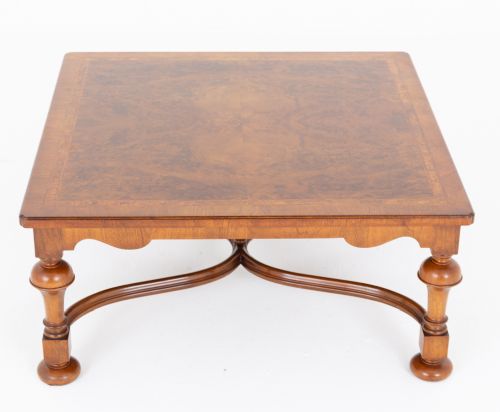
A restoration style table encompasses diverse forms such as French gueridons, centre tables, and side tables spanning centuries of cabinet making. Buyers seeking a restoration style table will encounter seventeenth-century revival designs alongside nineteenth-century French mahogany and marble-topped pieces.
The selection ranges from round gueridon occasional tables in mahogany and burr walnut to carved walnut coffee tables and console tables. These pieces draw on French Empire, Charles X, and Carolean design traditions.
Originating primarily from nineteenth-century French workshops or later revival periods, these tables serve as functional centrepieces or occasional stands in contemporary interiors. Their construction reflects the heavy influence of earlier monarchical styles adapted for later domestic use.
How they were made
Makers utilised dense timbers including mahogany, walnut, and cherrywood as the structural foundation for tops, pedestals, and frames. Veneers such as burr walnut and exotic coromandel were applied to create decorative surfaces on tables and occasional pieces.
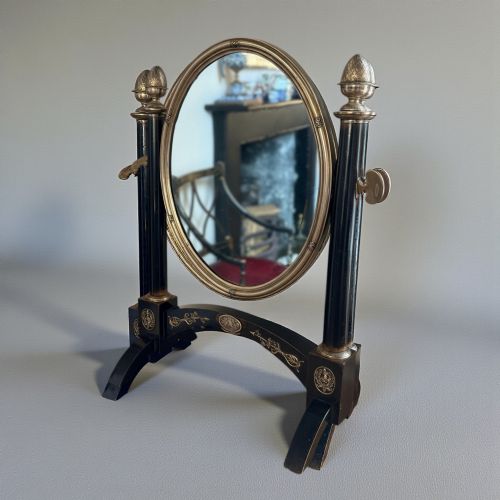
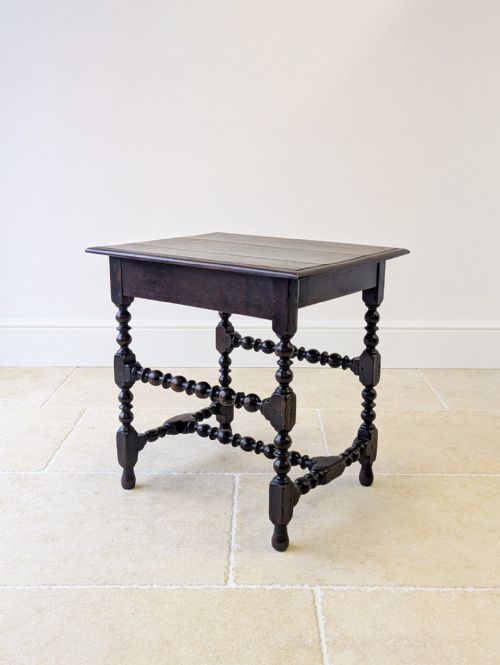
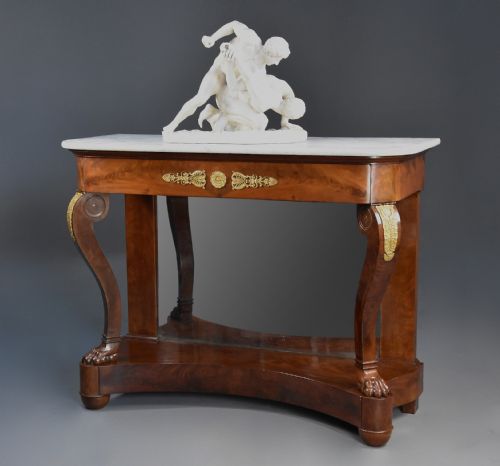
Surface ornamentation frequently incorporated white marble tops, gilt bronze, and ormolu mounts fixed to mahogany or walnut framing. Joinery techniques varied from tilt-top mechanisms to bobbin turnings and intricate marquetry inlay in woods like olive and holly.
Restoration Style Table Retail Price Guide 2026
Typical asking prices for restoration style table among the pieces listed under this phrase on Sellingantiques today, from the lower quarter to the upper quarter. They describe what is for sale here now, not the wider market.
Object forms recorded in the inventory include centre tables, side tables, occasional tables, coffee tables, and console tables alongside matching clocks.
What varies in quality
The distinction between tiers of quality rests on the selection of timber figures and the crispness of applied metalwork mounts. Heavy mahogany and figured burr walnut veneers demonstrate superior material choice compared to plainer secondary woods.
Execution of decorative elements such as gilt bronze mounts, carved walnut legs, and marble top thickness determines the grade of a piece. Finer examples display meticulous attention to proportion and integration of brass or ormolu detailing.
Gillion
The Restoration Style Table Glossary
- Gueridon
- A small circular table on a central pillar, frequently topped with marble and supported by three legs. This French form served various occasional purposes in the nineteenth-century interior.
- Ormolu
- Gilded bronze ornamentation applied to furniture and clock cases. The technique involves creating a finely chased bronze base finished with a layer of gold amalgam.
- Console table
- A table designed to stand against a wall, often secured with brackets. These pieces frequently feature marble tops and elaborate nineteenth-century French framing.
- Bobbin-turned
- A method of turning timber on a lathe to produce a series of spherical or cylindrical shapes resembling bobbins. This decorative turning appears on seventeenth-century English side tables.
- Marquetry
- The art of applying pieces of veneer to a structure to form decorative patterns and pictures. Craftsmen utilised contrasting woods like olive and holly for intricate geometric or floral designs.
Restoration Style Table: Frequently Asked Questions
What is a gueridon table?
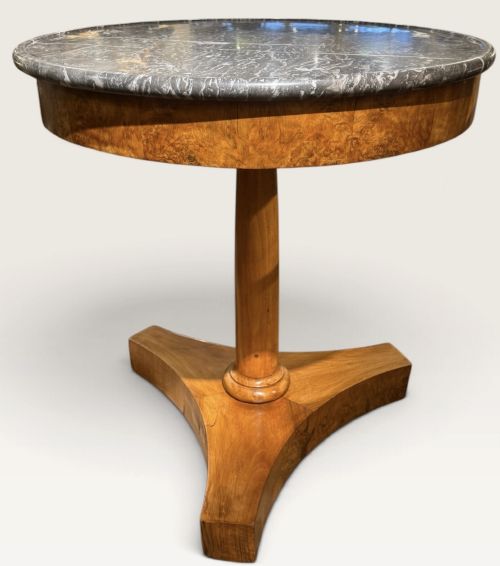
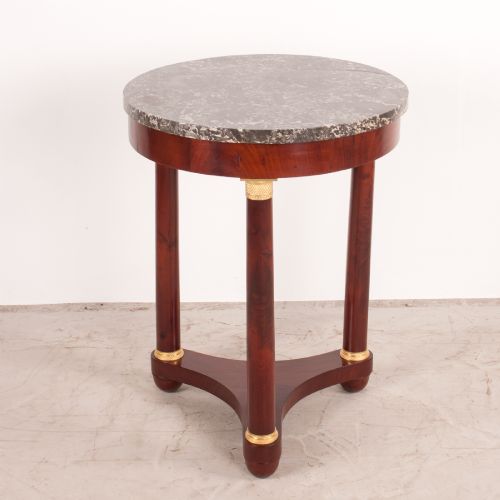
A gueridon is a round occasional or centre table, typically supported by a central column and a tripod base. Many examples feature a heavy marble top fitted within a mahogany or walnut frame.
Originating in France during the nineteenth century, these tables function well as freestanding display pieces or drink tables in sitting rooms.
How do I identify a Carolean style table?
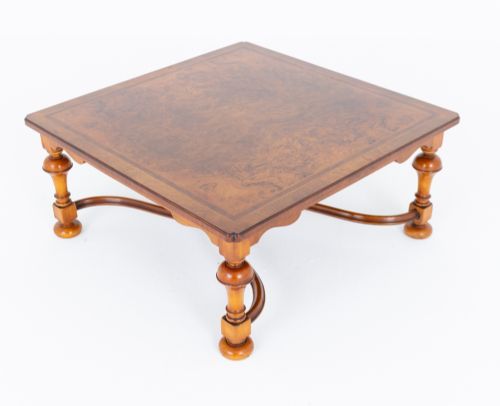
Carolean style tables draw inspiration from the late seventeenth-century reign of Charles II, featuring turned timber supports and rich walnut or oak construction. They often include bobbin-turnings and linear stretcher bases.
These revival pieces bring seventeenth-century motifs into later nineteenth and early twentieth-century domestic settings.
Where were these tables made?
The listings show pieces originating predominantly from French and British workshops, spanning the seventeenth through the early twentieth centuries. French makers specialised in mahogany and marble-topped gueridons.
British cabinet makers focused on oak and walnut styles reflecting seventeenth-century revival movements.
How should I care for a marble top?
Marble tops require gentle cleaning with a damp cloth and mild soap to protect the polished stone surface from staining. Avoid acidic liquids and harsh chemical cleaners that can etch the material.
Regular dusting keeps the stone and the surrounding mahogany or walnut frame in good condition.