



Restoration Revival Chair
A restoration revival chair brings seventeenth-century carved grandeur into nineteenth-century interiors.
Restoration Revival Chair
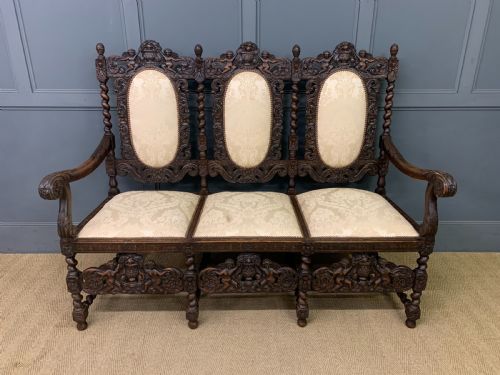
A restoration revival chair reimagines the ornate decorative vocabulary of the seventeenth century through nineteenth-century craftsmanship. When searching for a restoration revival chair, collectors encounter armchairs, dining chairs, side chairs, and settees originating from the nineteenth century.
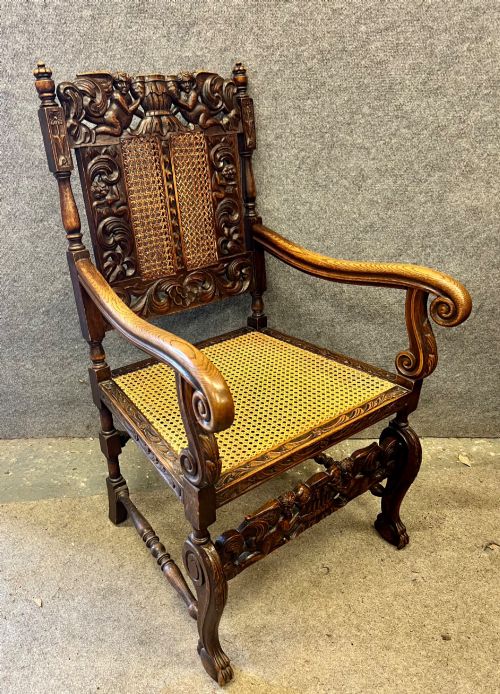
The material record shows robust frames executed in walnut and oak, often paired with brass details and textile coverings including velvet, tapestry, and damask fabric. These seating forms draw heavily on Carolean and Jacobean revival idioms, displaying high-back profiles and heavy carving.
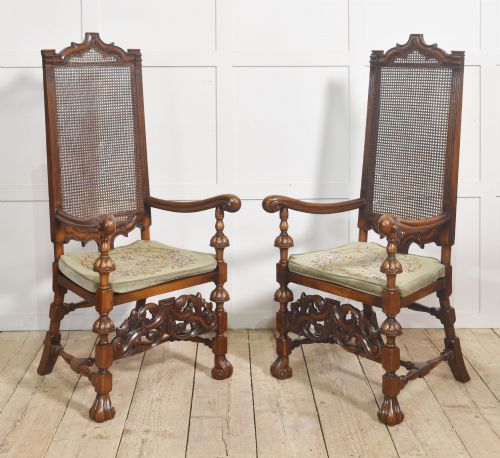
Most examples date across the nineteenth century, including Victorian interpretations and specific years like eighteen hundred, eighteen seventy, and eighteen eighty. Buyers meet both single pieces and matched pairs or small sets intended for principal rooms.
How they were made
Cabinetmakers constructed these frames using solid hardwoods, predominantly walnut and oak, selected for their structural stability and capacity to hold deep sculptural relief. Timbers were shaped into high-back profiles, open arms, and turned supports characteristic of revival seating.
Carvers worked directly into the wooden framework to produce the elaborate scrollwork, crests, and foliage associated with Carolean and Jacobean styles. Upholstered variants integrated supportive foundations covered in velvet, tapestry, or damask fabric, sometimes secured with brass tacks.
Restoration Revival Chair Retail Price Guide 2026
Typical asking prices for restoration revival chair among the pieces listed under this phrase on Sellingantiques today, from the lower quarter to the upper quarter. They describe what is for sale here now, not the wider market.
Carvers clearly enjoyed adding extra scrolls to eighteenth-century designs whenever nineteenth-century clients requested more historic grandeur.
What varies in quality
The depth and crispness of the hand-carving distinguish finer seating from simpler production, particularly on the crest rails and front stretchers where scrollwork dominates. Deeply undercut foliage and crisp mouldings reflect greater artisan skill than shallow, mechanical indentation.
Selection of timber density and grain figure dictates the physical presence of the frame, with rich walnut and figured oak carrying more visual weight than plain stock. The integration of period-appropriate textiles such as tapestry or patterned damask also elevates the finished piece.
The Restoration Revival Chair Glossary
- Carolean Style
- A seventeenth-century aesthetic revived in the nineteenth century, characterised by rich wood carving, scroll legs, and pierced crest rails. It takes inspiration from the reign of Charles the Second.
- Jacobean Revival
- An earlier seventeenth-century revival style featuring stern rectangular geometry, heavy turning, and sombre oak construction. It references the architecture and furniture of the reign of James the First.
- Damask Fabric
- A reversible figured textile woven on a jacquard loom, frequently utilised for upholstery on revival armchairs and settees. Its glossy patterns catch the light against carved wooden frames.
- High-Back Side Chair
- A tall seating form designed to stand against walls or accompany formal dining tables, dominating the vertical space of a room. These chairs emphasise carved crests above upholstered or panelled backs.
Restoration Revival Chair: Frequently Asked Questions
What is a restoration revival chair?
A restoration revival chair is a nineteenth-century seating piece that copies seventeenth-century Carolean or Jacobean designs. These chairs feature heavy wood carving, turned legs, and high backs.
They draw on historical aesthetics while utilising nineteenth-century manufacturing methods and materials such as walnut, oak, and cane.
How do I date these chairs?
Dating relies on stylistic markers and material combinations pointing to the nineteenth century, specifically Victorian periods and decades like eighteen seventy or eighteen eighty. Makers of this era reinterpreted earlier seventeenth-century forms.
Examine the construction joints, timber preparation, and the integration of revival styles to distinguish nineteenth-century production from seventeenth-century originals.
What materials are used?
Hardwoods form the primary structure, with walnut and oak appearing frequently across surviving examples. Caning is also utilised for seats and back panels.
Upholstered versions feature textiles such as velvet, tapestry, and damask fabric, occasionally accented with brass elements.
Where were they placed?
These seating pieces served formal reception rooms, halls, and dining spaces where their grand carved appearance projected status and historical awareness. High-back side chairs and throne chairs acted as focal points.
Settees and armchairs provided substantial seating arrangements within nineteenth-century drawing rooms designed for entertaining.