


Repousse Silver Canister
These repousse silver canister pieces are chased storage vessels for tea and trinkets, offering tactile historic craftsmanship that elevates any interior table setting.
Repousse Silver Canister
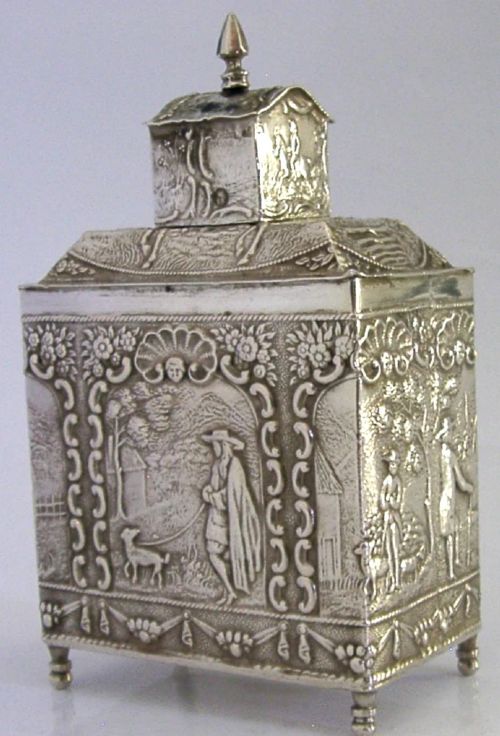
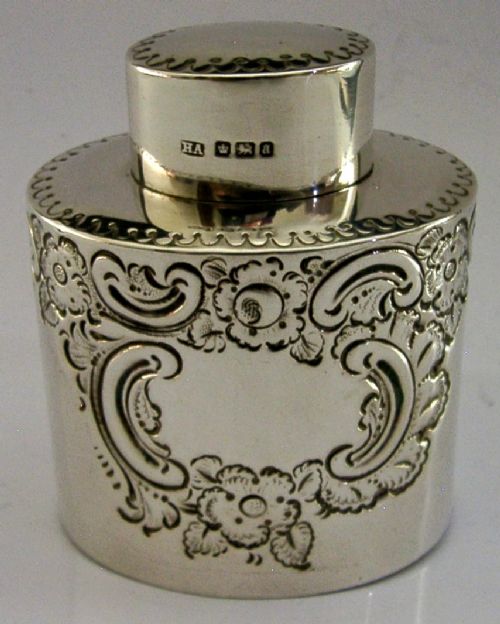
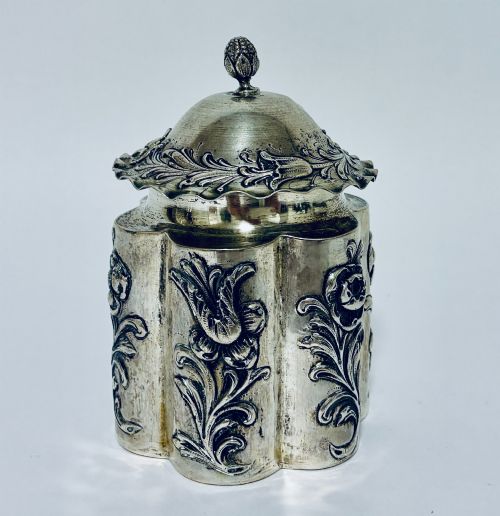
When you search for a repousse silver canister, you are looking at domestic storage containers formed primarily as tea caddies, trinket boxes, and lidded beakers. These vessels served wealthy households for storing precious loose leaf tea leaves or small personal valuables safely under lock or cover.
The selections found here span from Georgian periods through to Victorian, Edwardian, and early twentieth-century workshops. Continental origins feature strongly alongside English makers, bringing varied regional forms into the collection.
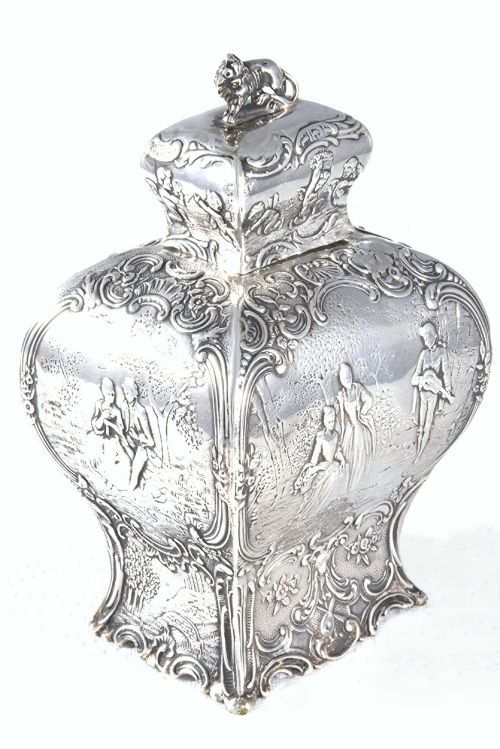
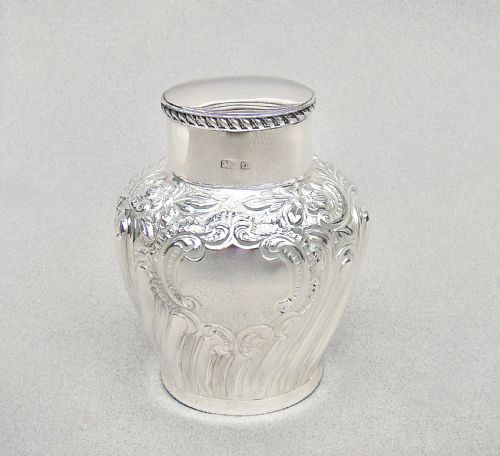
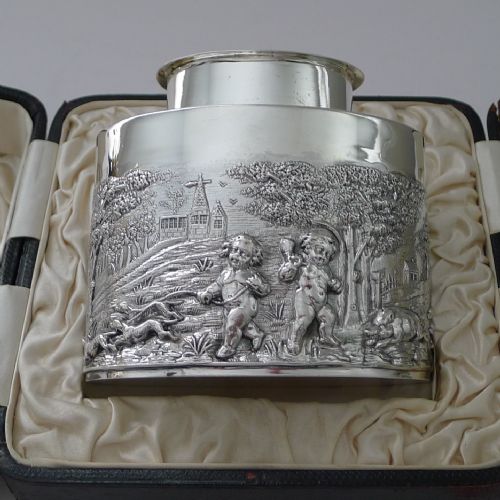
Tea caddies dominate the available object types, frequently appearing in oval, bombe, and rectangular formats. Buyers will also encounter lidded beakers and small decorative boxes alongside the primary caddy forms.
How they were made
Silversmiths constructed these vessels primarily using sterling silver, solid silver, and coinage metal, occasionally incorporating copper and ebony elements. The foundational body was shaped from sheet metal before undergoing detailed surface work.
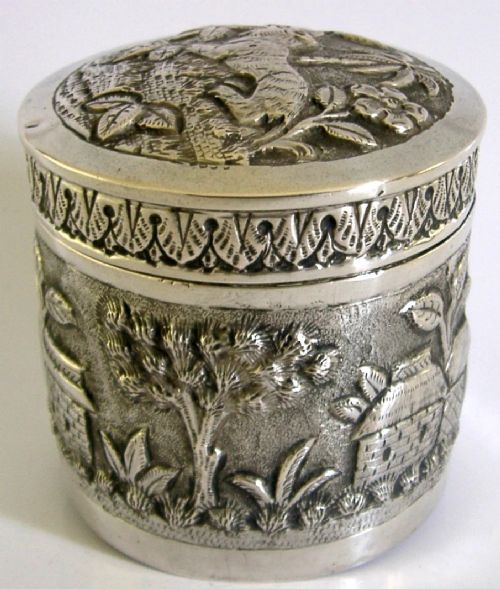
The defining characteristic is the repousse technique, where artisans hammered the metal from the reverse side to push out rich, three-dimensional decorative motifs. Chasing tools were then applied to the front face to sharpen details, scrolls, and figural scenes.
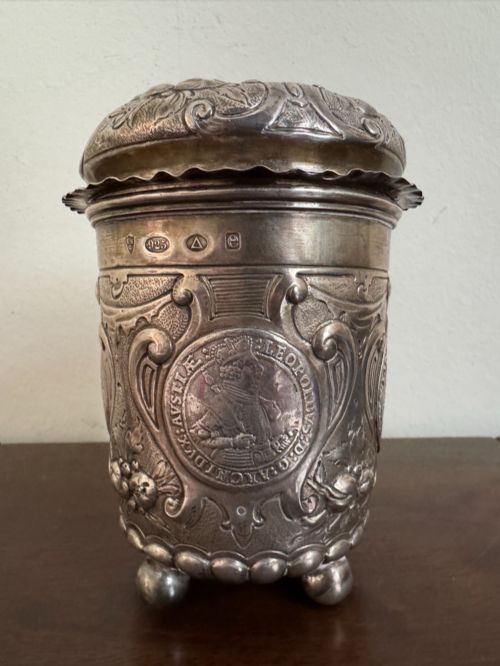
Some German silver containers were hammered straight out of historical Salzburg thaler coins, turning currency into drinking vessels.
What varies in quality
The depth and clarity of the hammered relief work distinguish superior examples from plain domestic items. Crisp, undercut details and balanced symmetry show the hand of a skilled silversmith rather than hurried mass production.
Substantial metal weight and robust structural integrity mark out the higher end of the range. Maker attribution and well-preserved hallmarks add documentary value and historical certainty to the finished piece.
Goldsmiths and Silversmiths Company·Thomas Hayes·William Hutton and Sons Ltd
The Repousse Silver Canister Glossary
- Repousse
- A metalworking technique where the artisan hammers the design from the reverse side to create a raised relief pattern on the front. This method gives the metal its tactile, sculptural quality.
- Tea caddy
- A small container designed originally to store tea leaves securely. They often featured tight-fitting lids or inner stoppers to preserve the aroma of expensive teas.
- Bombe
- A swollen or bulging convex shape associated with furniture and silver bodies. This profile creates dynamic light reflections across the hammered surface.
- Sterling silver
- A silver alloy containing a specific high proportion of pure silver mixed with other metals for durability. It is the standard metal grade for quality British silverwares.
- Coinage silver
- Silver derived or minted from actual coins, used by various international silversmiths. It carries a distinct alloy composition compared to standard sterling sheets.
Repousse Silver Canister: Frequently Asked Questions
What is a repousse silver canister?
These items are historical metal containers formed as tea caddies or boxes, decorated with raised hammered designs worked from the reverse side.
They represent a blend of functional domestic utility and decorative metalwork artistry from past centuries.
How were tea caddies used?
Households utilised these lidded vessels to store expensive tea leaves securely away from moisture and light in the dining or drawing room.
Servants or hosts would measure out portions using the inner lid or a dedicated spoon during tea services.
How do I date these silver items?
Dating relies heavily on official hallmarks stamped into the metal, which indicate the assay office, standard, and year of production.
Stylistic cues such as Art Nouveau curves or Victorian bombe shaping also help narrow down the period of manufacture.
How should I care for antique silver?
Gentle cleaning with a soft cloth helps maintain the polished highlights while preserving the darker recessed areas of the repousse work.
Avoiding harsh abrasive dips ensures the delicate hammered relief and original hallmarks remain intact over time.