

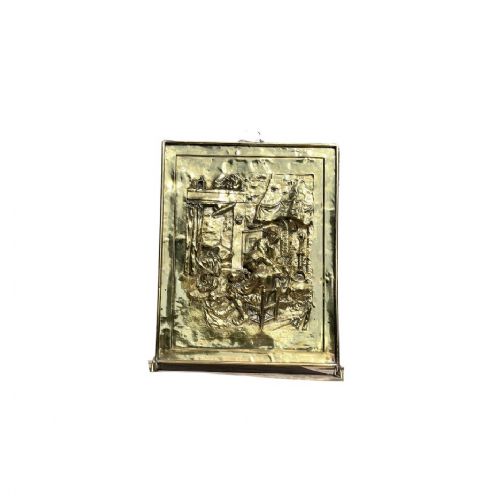

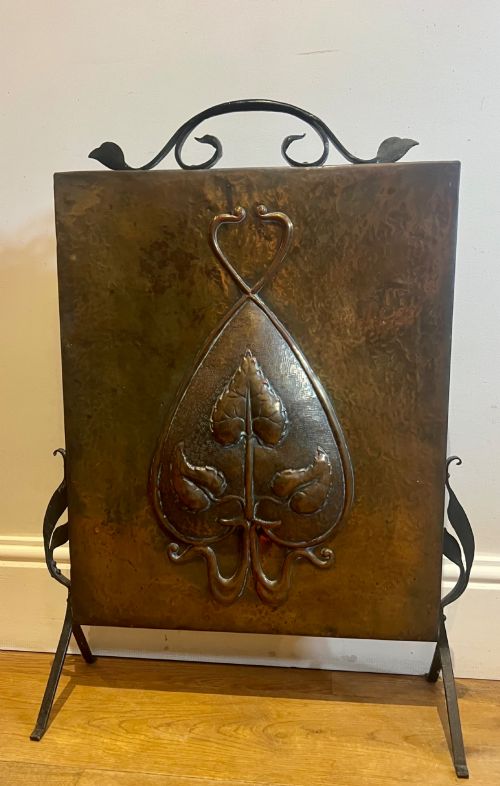
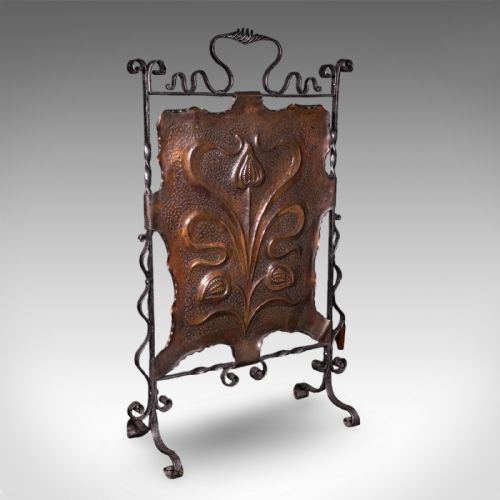


Repousse Fireplace Screen
A repousse fireplace screen brings warmth and texture to a hearth, combining hand-beaten metalwork with sturdy iron frames.
Repousse Fireplace Screen
A repousse fireplace screen is a protective hearth accessory designed to shield a room from excessive heat while adding a decorative focal point to the fireplace. When you search for a repousse fireplace screen, you encounter pieces that rely on the interplay of beaten metal panels and supporting frames.
The selections on this page span several distinct periods, notably the Victorian era and the Arts and Crafts movement, alongside Edwardian examples. You will find items that range from simple brass panels to elaborate copper designs incorporating wrought iron supports.
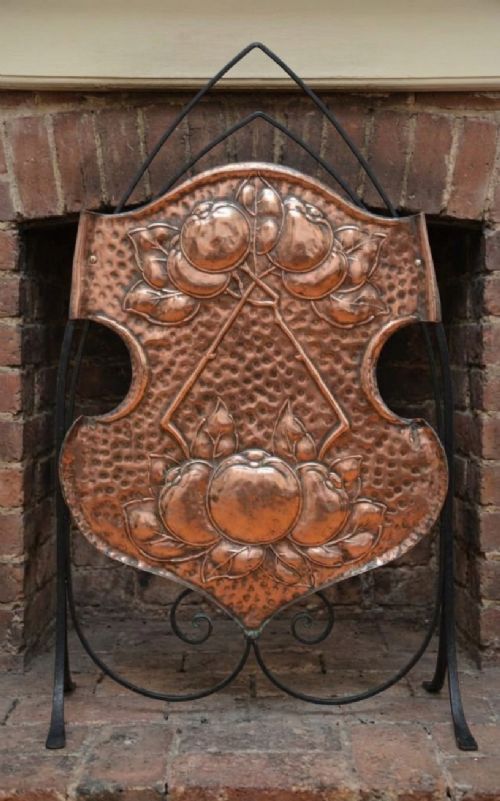
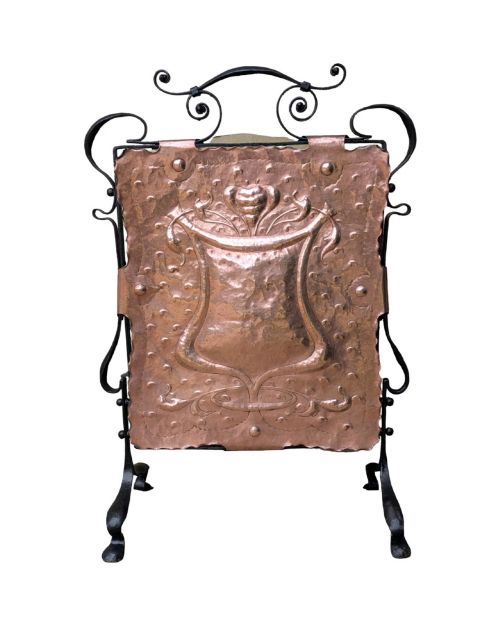
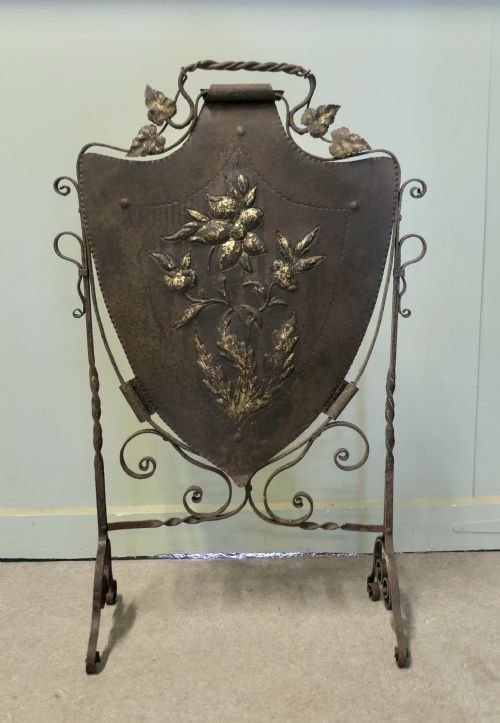
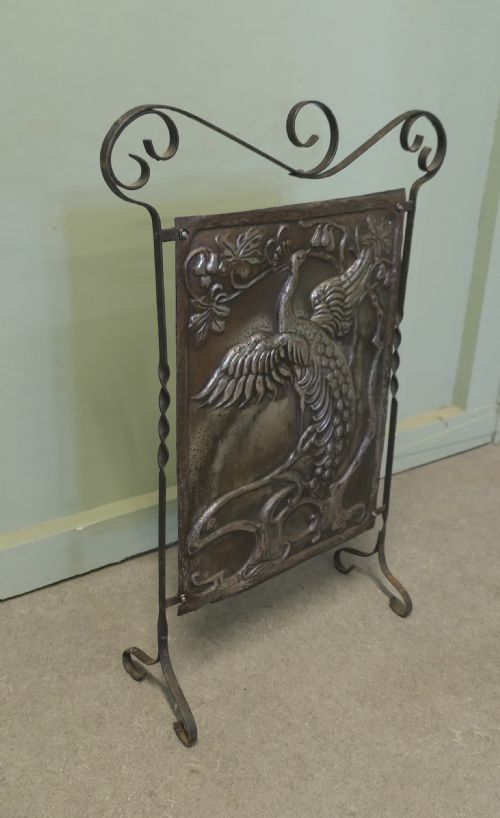
Common forms include freestanding panels and framed screens featuring motifs such as peacocks, coats of arms, and geometric shields. These objects reflect the heavy influence of Art Nouveau and Gothic Revival styles on domestic metalwork.
Materials and construction
Makers utilised sheet copper and brass for the central decorative panels, shaping the designs by hammering them from the reverse side to create raised patterns. This technique, known as repousse, was frequently combined with chasing to sharpen surface details.
The decorative panels are typically mounted within frames of wrought iron, polished iron, or occasionally oak. Additional structural elements such as wire mesh and mirror glass appear in specific configurations to enhance utility and reflection.
Repousse Fireplace Screen Retail Price Guide 2026
Typical asking prices for repousse fireplace screen among the pieces listed under this phrase on Sellingantiques today, from the lower quarter to the upper quarter. They describe what is for sale here now, not the wider market.
Some screens incorporate unexpected details like family coats of arms or cannon designs, turning a simple heat guard into a grand domestic statement.
Assessing quality and execution
Quality in these pieces rests primarily on the depth and clarity of the metalwork relief. A well-executed repousse panel displays crisp contours and deliberate hammer control, whereas lesser examples appear flat and indistinct.
The integration between the metal panel and its frame also distinguishes superior items. Robust wrought iron supports and secure joinery indicate careful workshop production, ensuring the screen remains stable beside an active hearth.
The Repousse Fireplace Screen Glossary
- Repousse
- A metalworking technique where the design is hammered into relief from the reverse side of the sheet. This process creates three-dimensional patterns that catch the light near a fire.
- Chasing
- Working the front surface of metal with punches and chisels to refine details initiated by repousse. It adds texture and sharpens lines within the beaten design.
- Wrought iron
- Iron that has been heated and shaped with tools by a blacksmith rather than cast in a mould. It provides the heavy, durable frames seen on many screens.
- Arts and Crafts
- A design movement valuing handcraftsmanship and traditional materials over industrial mass production. It heavily influences the copper and iron screens from the Victorian and Edwardian periods.
Repousse Fireplace Screen: Frequently Asked Questions
How were fireplace screens used?
Fireplace screens served a practical purpose by blocking the intense heat of an open coal or wood fire when the hearth was not fully active. They also concealed the empty grate during warmer months.
Beyond temperature control, these screens protected the surrounding room from stray sparks and added a decorative layer to the chimney breast.
What metals are most common?
Copper and brass appear most frequently across these pieces, chosen for their malleability in repousse work and their warm metallic tones. Iron is also standard for the structural frames.
Combination pieces frequently pair a beaten copper panel with a black or polished iron stand to provide necessary weight and stability.
How do I date a screen?
Dating relies on stylistic clues, construction methods, and material choices associated with periods like the Victorian era, Art Nouveau, and the Arts and Crafts movement. Aesthetic markers such as peacock motifs or stylized plant forms often point to specific decades around nineteen hundred.
Examing the fixings and the type of ironwork further helps distinguish nineteenth-century production from later revivals.
Are these screens stable?
Most screens are built with heavy iron or wooden bases designed to support the weight of the metal panel safely upright on a hearth. The robust nature of the materials ensures they remain secure during everyday domestic use.
Positioning the screen on an even floor surface maintains its balance in front of the fireplace opening.