




Repousse Fire Guard
A repousse fire guard protects a room from stray embers while bringing heavy metalwork and beaten texture directly to the hearth.
Repousse Fire Guard
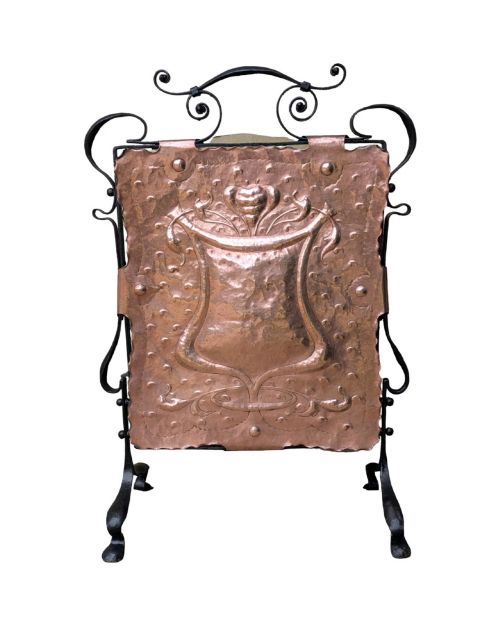
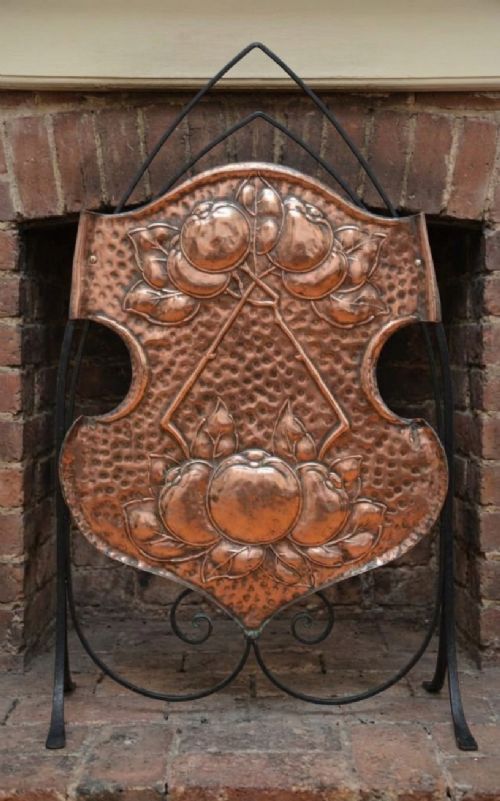
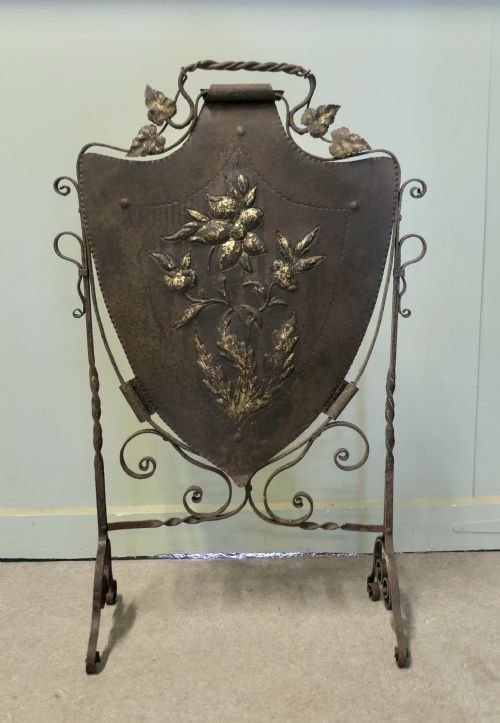
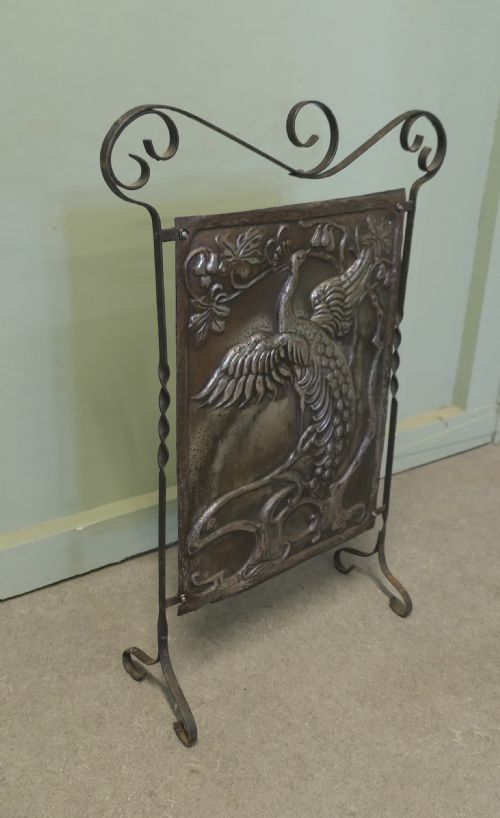
A repousse fire guard acts as a protective barrier before an open grate, using a tall metal frame to block sparks and intense heat. Most examples on this page take the form of fire screens and fireplace fenders, standing on sturdy iron or brass feet.
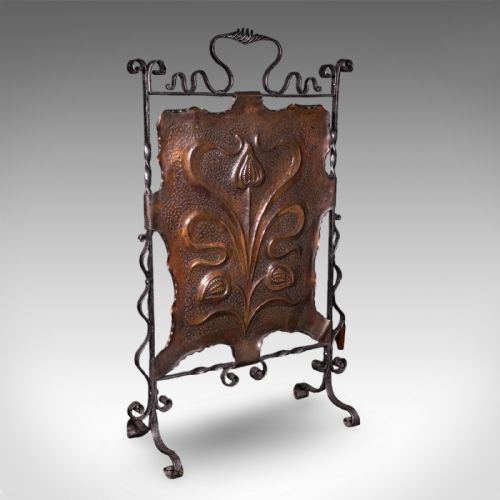
The materials span copper, brass, wrought iron, and oak, often combining a beaten metal panel with a robust iron structure. These pieces appear across Victorian, Edwardian, and nineteenth-century periods, capturing utilitarian design turned decorative.
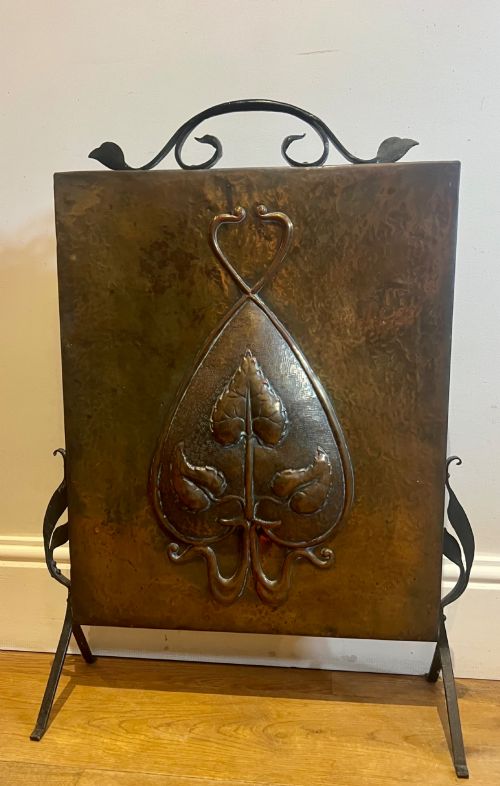
Makers and designers applied distinct movements to these functional objects, ranging from strict Gothic Revival to flowing Art Nouveau curves and robust Arts and Crafts construction. Buyers encounter everything from plain mesh guards to elaborate heraldic brass panels.
Materials and construction methods
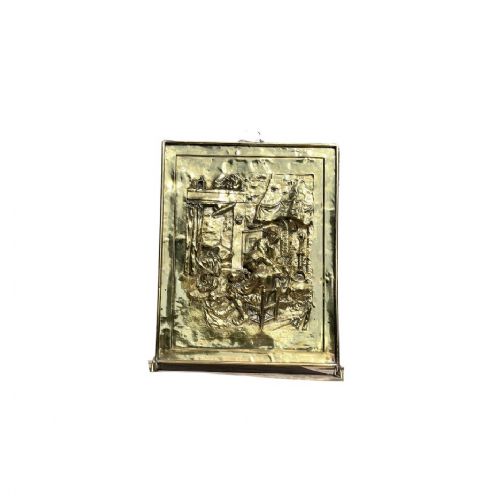
Makers formed the central panels of a repousse fire guard by hammering sheet copper or brass from the reverse side to push the design outward in relief. Artisans then chased the front surface with punches and gravers to sharpen details like feathers, foliage, and coats of arms.
The beaten metal panels sit within structural frames of wrought iron, brass, or oak, secured by rivets or simple folded edges. Wire mesh frequently backs the panel or fills the surrounding frame to catch sparks while maintaining transparency.
Repousse Fire Guard Retail Price Guide 2026
Typical asking prices for repousse fire guard among the pieces listed under this phrase on Sellingantiques today, from the lower quarter to the upper quarter. They describe what is for sale here now, not the wider market.
One Dutch family coat of arms proudly stares down stray sparks from the seventeenth century.
Judgements of quality and craftsmanship
Quality rests in the depth and crispness of the hammered relief work, distinguishing hurried workshop production from master hand-beating. Heavy gauge copper or brass holds its shape firmly under heat and pressure, whereas thin sheet metal bows easily.
The integrity of the structural frame dictates longevity, with forged iron and solid oak outlasting lighter wire and plated assemblies. Riveted joints and well-fitted panels demonstrate superior assembly compared to loose soldering or tacked metal.
The Repousse Fire Guard Glossary
- Repousse
- A metalworking technique where the artisan hammers sheet metal from the reverse side to create a raised design on the front. This method gives the fire screen its tactile, three-dimensional surface texture.
- Fender
- A low metal or stone barrier placed on the hearth around the base of a fireplace. It stops rolling coals from reaching the carpet while framing the grate.
- Chased
- Surface decoration worked into metal using punches and hammers after the initial relief form is beaten from behind. It sharpens lines and adds fine texture to leaves, figures, and heraldry.
- Gothic Revival
- An architectural and decorative style drawing on medieval forms, pointed arches, and heavy ironwork. Pieces from this movement display serious vertical lines and ecclesiastical motifs.
- Arts and Crafts
- A design movement valuing hand craftsmanship, visible construction, and honest materials over mass production. It produced many of the copper and iron screens seen on this page.
Repousse Fire Guard: Frequently Asked Questions
How do I use a fire screen safely?
Place the screen at a safe distance directly in front of the active fire grate to catch popping sparks and ash. Ensure the heavy iron or brass feet rest firmly on a flat hearth surface.
Keep combustible rugs and furnishings away from the immediate perimeter of the guard to maintain a secure clearance zone.
How do I clean antique brass and copper?
Dust the metal panels regularly with a soft, dry cloth to prevent soot accumulation. Avoid harsh chemical polishes that strip away historical patination and age.
Gentle cleaning preserves the dark recesses of the chased design while keeping the raised metal highlights clean.
How do I tell Victorian from Edwardian pieces?
Victorian examples often lean towards heavy Gothic Revival shields, dark patination, and intricate heraldic motifs. Edwardian pieces tend to show lighter construction, brighter copper tones, and flowing Art Nouveau lines.
Examine the weight of the frame and the style of the hammered motifs to determine the period of origin.