




Repousse Copper Mirror Frame
These repousse copper mirror frame pieces bring hand-worked Arts and Crafts metalwork into a room, offering tactile warmth and period character.
Repousse Copper Mirror Frame
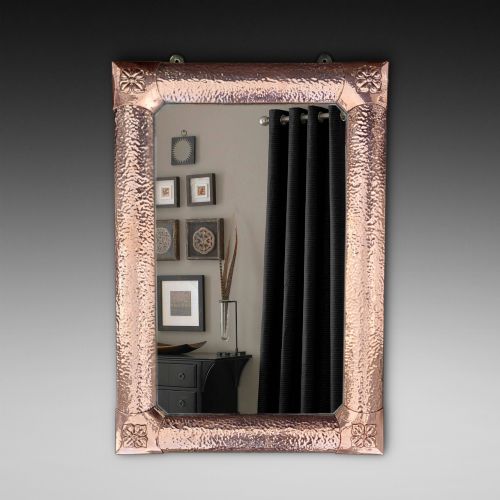
A repousse copper mirror frame is a wall-hanging domestic furnishing designed primarily during the Arts and Crafts period, spanning from eighteen ninety into the nineteen twenties. These pieces typically take rectangular or oval forms, enclosing mirror glass within beaten metal surrounds.
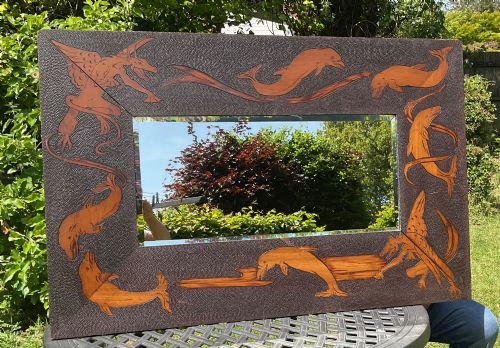
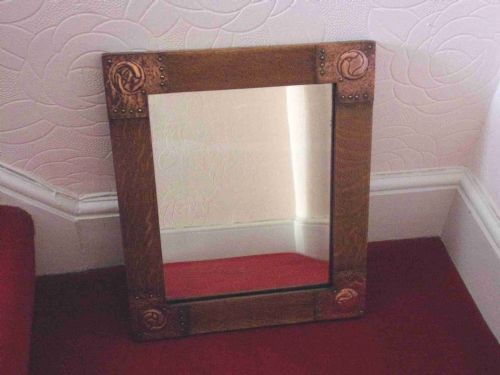
The objects listed here rely heavily on the Arts and Crafts aesthetic, often integrating wooden elements such as oak alongside the primary metalwork. Collectors encounter designs incorporating stylised trees, Celtic knots, and creature motifs like dragons and dolphins.
Most examples originate from around nineteen hundred, representing a specific era of domestic craft revival. The form serves both a practical reflective purpose and a decorative function within an interior.
How they were made
Makers constructed these pieces by beating sheet copper from the reverse side to push out decorative motifs in relief. This repousse technique required skilled manual labour to shape floral, animal, or geometric patterns across the metal surface.
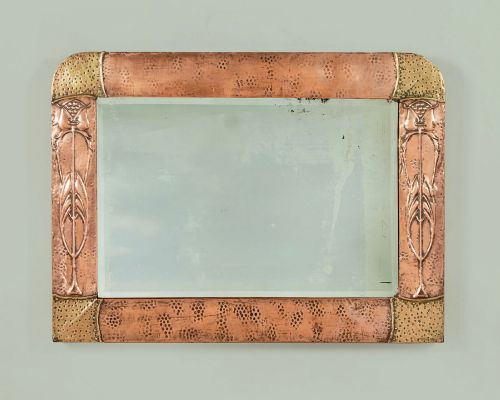
Artisans mounted the completed metal frames onto wooden structures, frequently utilising oak to provide structural rigidity behind the glass. Brass components sometimes appear alongside the copper, secured by visible fixings typical of the period.
Some copper frames keep watch over the room with embossed dragons and dolphins, proving that even a hallway mirror needs a mythical beast.
What varies in quality
Quality in a repousse copper mirror frame depends heavily on the depth and precision of the hand-beaten relief work. Stronger examples display crisp, deliberate detailing in motifs such as trees or Celtic knots rather than shallow or indistinct stamping.
The integration of the metal surround with its wooden backing, particularly where oak is utilised, distinguishes finer construction. Pieces carrying attributions to notable makers like Liberty and Company generally exhibit superior execution in both the metalwork and the overall design balance.
Liberty and Company
The Repousse Copper Mirror Frame Glossary
- Repousse
- A metalworking technique where the artisan hammers sheet metal from the reverse side to create a raised design on the front. This method defines the primary surface decoration of these frames.
- Arts and Crafts
- A design movement spanning the late nineteenth and early twentieth centuries that valued handcraftsmanship and traditional materials. This style dominates the period origins of the pieces seen here.
- Stylised tree design
- A decorative motif depicting botanical forms in a simplified, geometric manner typical of period metalwork. It appears frequently on frames associated with Liberty and Company.
- Celtic knot
- An interlaced ornamental pattern of looped bands used to decorate the copper or oak borders. This motif reflects the revival of historic British and Irish art forms during the era.
- Mirror glass
- The reflective plate fitted within the metal and wooden surround. Original glass often shows gentle ageing appropriate to pieces dating from nineteen hundred.
Repousse Copper Mirror Frame: Frequently Asked Questions
What periods do these mirrors come from?
These pieces originate primarily from the late nineteenth and early twentieth centuries, clustering around nineteen hundred. The dates span from eighteen ninety into the nineteen twenties.
This timeframe reflects the height of the Arts and Crafts movement, during which hand-beaten metal furnishings gained popularity in domestic interiors.
What materials make up these pieces?
The primary materials are copper and mirror glass, frequently mounted on wooden structures such as oak. Brass elements and ceramic details also appear across various examples.
Makers combined these elements using traditional construction methods to build durable frames suited for wall hanging.
How do I identify an Arts and Crafts frame?
Arts and Crafts pieces typically feature hand-beaten repousse surfaces, visible fixings, and motifs inspired by nature or Celtic art. Common decorative subjects include stylised trees, dragons, and dolphins.
The integration of exposed wood, particularly oak, alongside hammered metal is another strong indicator of this design aesthetic.