

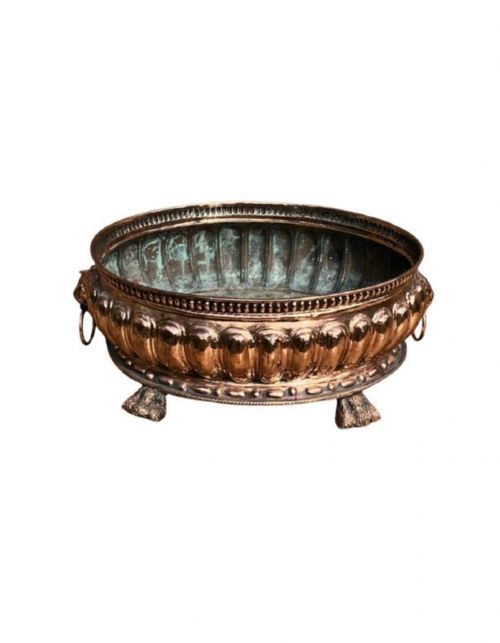


Repousse Copper Jardiniere
These repousse copper jardiniere pieces are heavy metal planters designed to display indoor foliage with decorative hammered surfaces.
Repousse Copper Jardiniere
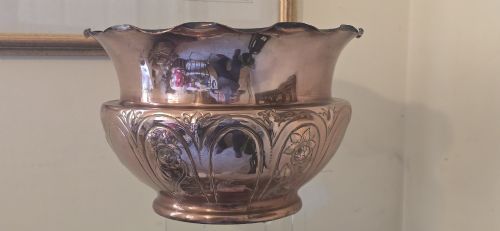
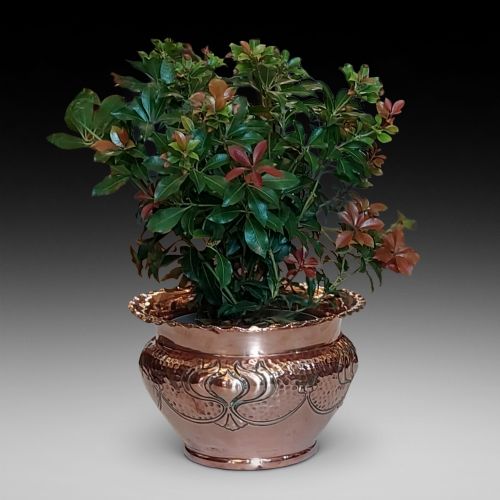
A repousse copper jardiniere is a decorative plant vessel formed from sheet metal with raised ornamentation hammered from the reverse side. The listings demonstrate that these pieces appear frequently in Arts and Crafts, Art Nouveau, and Victorian styles.
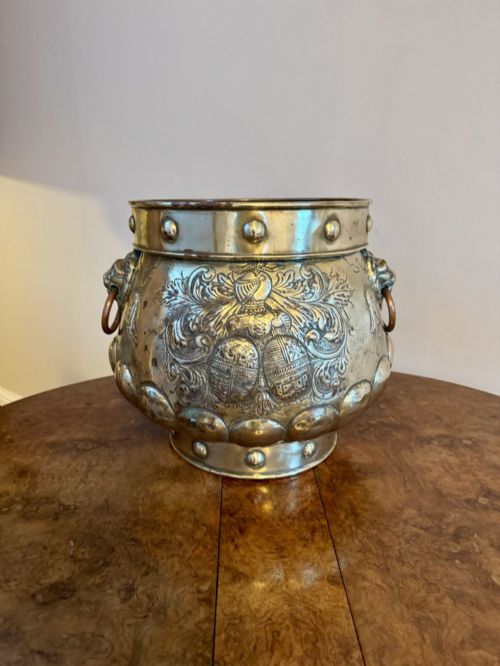
You are most likely to encounter examples dating from the late nineteenth and early twentieth centuries, alongside occasional eighteenth-century Italian and Dutch wine cisterns used for the same purpose. Forms range from simple table pots to vessels mounted on wrought iron stands.
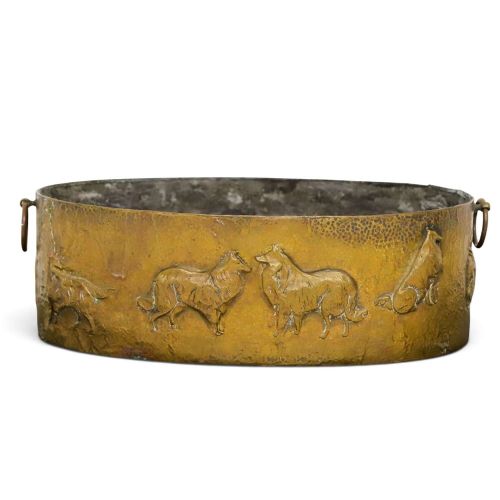
The selection includes specific functional variants such as log buckets and plant holders, produced across British, French, Italian, and Dutch workshops.
Materials and construction
Makers formed these vessels predominantly from sheet copper, sometimes combining the metal with brass elements or supporting them on sturdy wrought iron stands. The primary decorative technique involves repousse hammering, where craftsmen pushed the metal out from the inside to create relief designs.
The construction methods reflect the hand-wrought ideals of the Arts and Crafts movement and the flowing motifs characteristic of Art Nouveau design. Heavier gauge metals appear on eighteenth-century Italian and Dutch wine cisterns repurposed as planters.
Repousse Copper Jardiniere Retail Price Guide 2026
Typical asking prices for repousse copper jardiniere among the pieces listed under this phrase on Sellingantiques today, from the lower quarter to the upper quarter. They describe what is for sale here now, not the wider market.
Some vessels began life chilling wine at eighteenth-century feasts before retiring to a quiet life holding parlor ferns.
Judging quality in copper planters
Quality rests in the crispness and depth of the hammered repousse work, where deeply articulated relief patterns show superior hand skill compared to shallow stamping. The gauge of the copper sheet determines the structural rigidity of the vessel.
The sophistication of the stylistic execution, particularly within Arts and Crafts and Art Nouveau examples, separates standard production items from finer studio pieces. Original stands and mounts integral to pieces like the wrought iron plant holders add to the overall integrity.
The Repousse Copper Jardiniere Glossary
- Repousse
- A metalworking technique where the artisan hammers the design from the reverse side to produce a raised relief on the front. This process requires precise control to maintain uniform metal thickness.
- Jardiniere
- An ornamental pot or stand designed to hold growing plants or flowers indoors. The term derives from the French word for gardener.
- Wine Cistern
- A large vessel originally used for cooling wine bottles that often serves as a jardiniere in later contexts. Eighteenth-century examples frequently feature heavy decorative casting or hand-beaten surfaces.
- Arts and Crafts
- A design movement emphasising handcraftsmanship, traditional materials, and simple forms. Objects from this period often display visible hand-hammered marks on the copper surface.
Repousse Copper Jardiniere: Frequently Asked Questions
How do I clean a copper jardiniere?
Wash the metal gently with warm soapy water and a soft cloth to remove surface dirt without stripping the natural aged surface.
Avoid abrasive metal polishes that remove the historic dark patina valued by collectors.
Can I plant directly inside the copper?
Placing soil directly against the metal can accelerate corrosion and damage the antique interior over time.
Insert a separate plastic or ceramic pot inside the jardiniere to catch drainage and protect the copper.
How do I date an antique planter?
Examine the construction seams, mounting hardware, and hammering style to align the piece with known decorative periods like Art Nouveau.
Stylistic motifs and material thickness often provide the clearest indication of nineteenth or eighteenth-century manufacture.
Where did these planters originate?
The listed items originate from British, French, Italian, and Dutch workshops spanning the eighteenth through the early twentieth centuries.
Regional differences appear in the decorative motifs and the presence of auxiliary stands or brass mounts.