

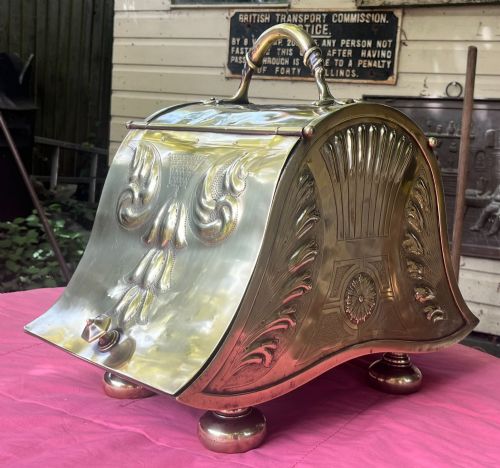


Repousse Brass Coal Scuttle
A repousse brass coal scuttle brings bright metalwork and practical fuel storage to the hearth, offering decorative domestic utility from earlier centuries.
Repousse Brass Coal Scuttle
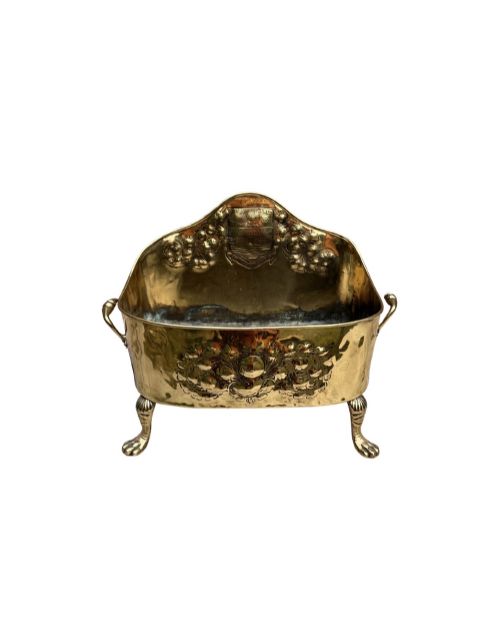
A repousse brass coal scuttle forms part of the broader category of fireside accessories, designed to hold coal or logs beside an open fire. These items appear in various forms including coal boxes, buckets, bins, and hods originating from the nineteenth century and the Edwardian era.
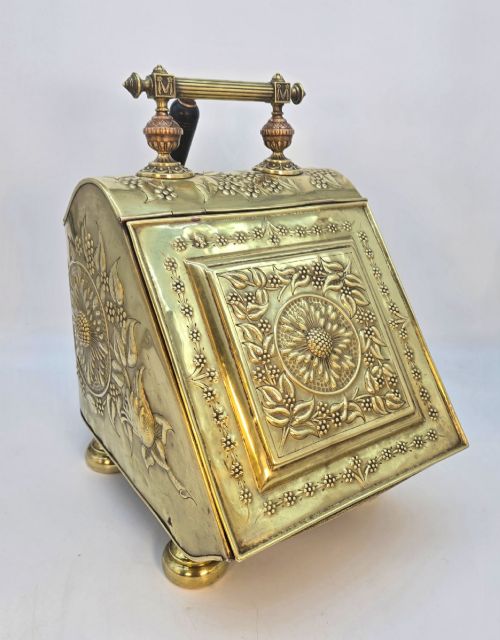
The most common examples on this page date from the Victorian period through to the early twentieth century, incorporating styles such as Arts and Crafts, Adam, and Dutch Antique. Many feature raised embossed patterns hammered from the reverse side of the metal sheet.
Makers often shaped these containers as lidded boxes, open buckets, or helmet-shaped scuttles, frequently paired with wooden components or carrying handles. Their dual role combined heavy daily fuel storage with polished metal display for the Victorian drawing room.
Judgements of quality
Quality depends heavily on the crispness and depth of the hammered relief work, where finer examples display sharp, detailed motifs rather than shallow or machine-pressed stamping. The gauge of the metal sheet also dictates durability, with thicker brass resisting distortion during daily hearth use.
Integrity of construction separates standard utility pieces from finer decorative examples, particularly in the survival of original shovels, internal liners, and sturdy riveted joints. The quality of finishing, such as hand-polished surfaces and well-fitted lids, marks the distinction between workshop production and mass manufacture.
Repousse Brass Coal Scuttle Retail Price Guide 2026
Typical asking prices for repousse brass coal scuttle among the pieces listed under this phrase on Sellingantiques today, from the lower quarter to the upper quarter. They describe what is for sale here now, not the wider market.
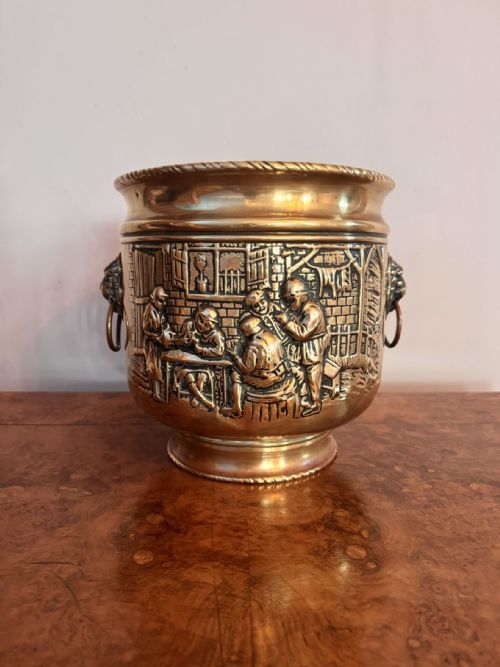
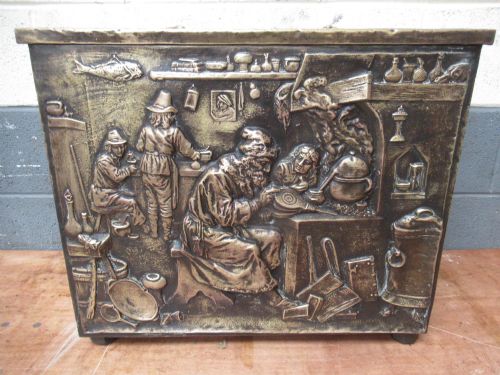
Some coal buckets proudly display tavern scenes hammered into the metal, bringing rowdy alehouse figures straight to the polite Victorian hearth.
Petrus Ramus
The Repousse Brass Coal Scuttle Glossary
- Repoussé
- A metalworking technique where the artisan hammers a design from the reverse side to create a raised relief on the front surface. This method allows for intricate pictorial or floral ornamentation on thin sheets of brass or copper.
- Coal purdonium
- A specialised box or cabinet designed specifically for storing coal beside a fireplace, often featuring a sloping front or drop-down lid. These items usually contained a removable metal liner for easy refilling.
- Dinanderie
- A medieval and later term for objects made of hammered or cast brass and bronze, originating from the Belgian town of Dinant. The description is often applied to heavy, decorative nineteenth-century brass vessels and bins.
- Coal helmet
- A metal container shaped like an upturned classical helmet, featuring a wide mouth and a carrying handle. This specific silhouette was popular throughout the Victorian era for transferring fuel to the grate.
Repousse Brass Coal Scuttle: Frequently Asked Questions
How do I clean a brass coal scuttle?
Dust the surface regularly with a soft cloth to prevent grime buildup in the recesses of the repousse work. Avoid harsh abrasive cleaners that strip the aged patina from the brass.
Apply a mild metal cleaner sparingly if polishing is necessary, taking care not to get polish trapped in the hammered grooves. Preserving the natural warmth of the metal often matters more than achieving a mirror shine.
Were these containers used only for coal?
While designed primarily for holding domestic coal or peat near the hearth, these vessels also served as log boxes and fuel baskets. Their robust metal construction easily accommodated heavier firewood.
Many examples now find alternative uses as large planters, jardiniere stands, or general fireside storage for kindling. Their decorative exterior suited them for display even when empty of fuel.
How do I date a Victorian coal bucket?
Examine the construction methods, such as the type of rivets, hinges, and internal liners used to assemble the piece. Machine-rolled sheet metal and machine stamping usually point towards the later nineteenth or early twentieth century.
Stylistic cues also offer clues, with ornate floral scrolls appearing across the Victorian era while stylized geometric motifs often suggest Arts and Crafts influence. Hallmarks or maker stamps, when present, provide definitive dates.
Can I use an antique scuttle by an active fireplace?
Most antique brass and copper scuttles remain structurally capable of holding fuel beside a working hearth. Ensure the internal liner is intact if storing damp logs or unwashed coal.
Placing the container directly against extreme heat sources should be avoided to protect wooden components and soldered joints. Regular inspection of the handle attachments ensures safe carrying of heavy fuel loads.