




Repousse Brass Coal Bin
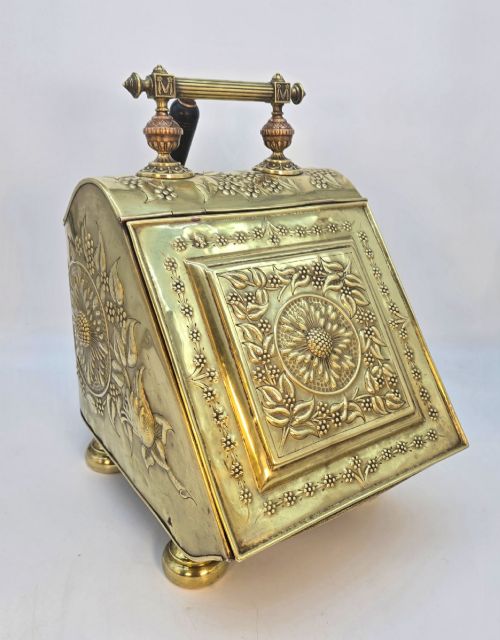
These repousse brass coal bin pieces are heavy metal hearth vessels designed to hold fuel with decorative raised surface work.
Repousse Brass Coal Bin
A repousse brass coal bin is a functional fireside container designed to hold solid fuel such as coal, logs, or peat beside a fireplace. Buyers searching this phrase encounter sturdy metal receptacles used in domestic interiors since the nineteenth century.
The most common examples on this page date from the Victorian era and the Arts and Crafts period, featuring hammered surface decoration or plain polished metal finishes. These utilitarian objects double as decorative items for the hearth.
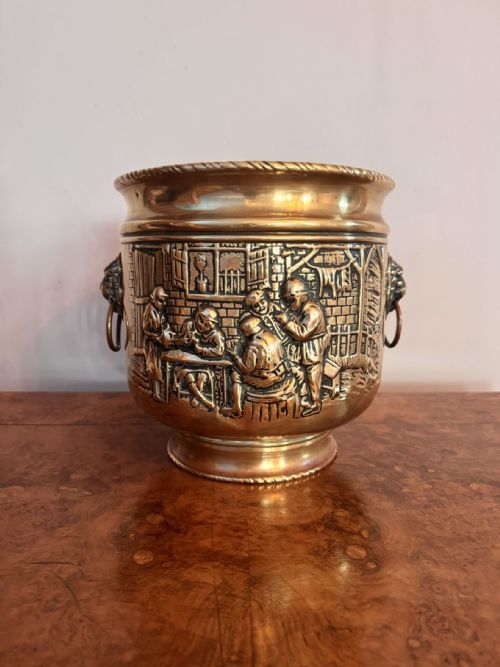
Forms vary from lidded boxes and buckets to scuttles and purdoniums, often accompanied by matching shovels or fitted with copper bands. Some items serve dual purposes as large jardinières or general fireside fuel baskets.
Materials and construction methods
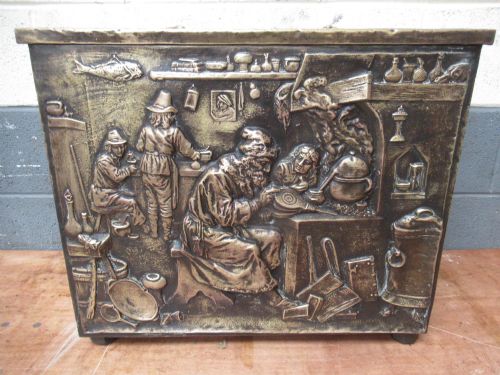
Metalworking techniques dictate the construction of these items, utilising sheet brass and copper formed into cylindrical or bucket shapes. Artisans employed repousse and embossing methods to push the metal from the reverse side, creating raised pictorial scenes or repeating patterns.
Makers integrated contrasting materials such as wood for handles or internal linings, alongside copper bands to reinforce the brass bodies. Surface treatments range from high polish to patinated finishes that highlight the hammered relief work.
Repousse Brass Coal Bin Retail Price Guide 2026
Typical asking prices for repousse brass coal bin among the pieces listed under this phrase on Sellingantiques today, from the lower quarter to the upper quarter. They describe what is for sale here now, not the wider market.
Assessing quality and craftsmanship
Superior examples display crisp, deeply hammered repousse work where tavern scenes, floral motifs, or spade decorations show clear manual definition rather than shallow mechanical pressing. The weight of the brass and the robustness of the joints determine durability.
Design sophistication separates standard utility boxes from artistic pieces, particularly in items influenced by the Arts and Crafts or Art Nouveau movements. Integrated handles, secure hinges, and well-fitted lids indicate careful original manufacture.
Henry Loveridge·Petrus Ramus
The Repousse Brass Coal Bin Glossary
- Repousse
- A metalworking technique where the artisan hammers metal from the reverse side to create a raised design on the front. This method gives decorative coal bins their characteristic textured surface relief.
- Purdonium
- A specialised type of coal box featuring a sloping front door and a shovel stored in a compartment at the back. It allows clean access to fuel while keeping domestic dust contained.
- Scuttle
- A metal bucket with a movable handle designed for carrying coal to the fire. Versions often include a tipped lip to facilitate pouring fuel cleanly into the grate.
- Jardiniere
- An ornamental pot or container originally intended for holding plants. Large brass examples frequently double as log or peat bins beside the hearth.
Repousse Brass Coal Bin: Frequently Asked Questions
What fuels do these bins hold?
These metal containers store solid fuels such as coal, logs, and peat for use in an open fireplace or stove.
Historically, they sat directly on the hearth to keep fuel accessible and tidy within the domestic interior.
How do I clean brass safely?
Maintenance involves gentle dusting and occasional cleaning with a specialised metal polish to preserve the finish.
Aggressive scrubbing should be avoided on repousse surfaces to protect the raised hammered details from wear.
Are these bins waterproof?
Most historic coal bins feature riveted or soldered seams intended for dry solid fuel rather than holding standing water.
If used as a jardiniere for plants, a protective internal liner is typically required to prevent moisture damage.
How are different periods identified?
Victorian and Arts and Crafts examples are distinguished by specific decorative motifs, such as tavern scenes or stylized floral patterns.
Construction methods like hand-beating versus machine-stamping also help indicate the era of manufacture.