


Repeating Table Clock
A repeating table clock sounds the hour on demand, bringing precise mechanical artistry and rich timber or metal cases into any room.
Repeating Table Clock
When you search for a repeating table clock, you encounter two distinct traditions: substantial British bracket clocks housed in timber and refined French carriage clocks executed in brass and glass. These pieces span from the late seventeenth century through the Victorian era and into the early twentieth century.
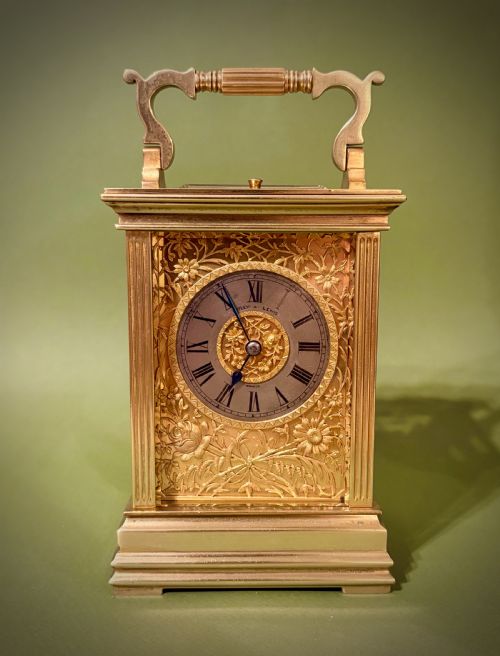
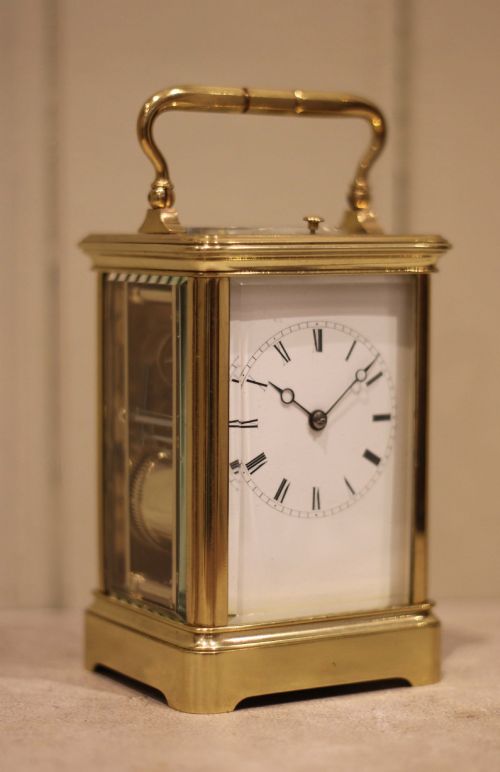
The British examples frequently feature ebonised wood or mahogany cases paired with fusee movements and quarter-repeating mechanisms. The French examples commonly take the form of brass carriage clocks with enamel dials, glass panels, and push-repeat functions originating from the nineteenth and early twentieth centuries.
Materials and construction
Makers constructed the housings of timber such as mahogany and ebonised wood for British bracket clocks, while French makers utilised brass, gilt brass, and gilded metal for gorge cases enclosing glass panels.
The internal mechanics rely on steel components driving gear trains, fusee chains, and striking mechanisms. White enamel dials display the Roman or Arabic numerals, sometimes complemented by enamel paintings or engraved brass masks.
At least one nineteenth-century carriage clock in the collection carries an unusual connection to race horse interest.
Quality variations in repeating mechanisms
Quality rests in the precision of the repeating mechanism and the crispness of the strike. Superior movements engage smoothly when activated by hand, delivering clear tones for the hours and quarters.
The finishing of the exterior case also separates standard examples from exceptional ones. Finely chased gilt brass, crisp engraving on the mask, and unblemished enamel dials indicate a higher grade of craftsmanship.
Joseph Windmills·Andrew Marchant·Richard Peckover·John Seddon·Joseph Knibb·Anthony Harrison·Henry Jacot·Alfred Drocourt·L Epee·Richard and Co·Hunt and Roskell
The Repeating Table Clock Glossary
- Repeating mechanism
- A complication that sounds the last hour or quarter-hour when a button or cord is depressed. This function allowed owners to check the time in darkness.
- Bracket clock
- A portable spring-driven clock designed to sit on a bracket or table. These British timepieces often feature wooden cases and handles.
- Carriage clock
- A small, spring-driven timepiece developed for travel with glass sides and a top handle. Many incorporate striking and repeating functions.
- Fusee
- A conical pulley used in older clocks to maintain even power as the mainspring unwinds. This ensures consistent timekeeping across the duration of the wind.
- Gorge case
- A stepped, pillared brass case characteristic of many fine French carriage clocks. The design allows glass panels to fit snugly within the metal framework.
Repeating Table Clock: Frequently Asked Questions
How does a repeating clock work?
A repeating clock uses a train of gears separate from the main timekeeping mechanism to sound the hours and quarters on command. Pressing a plunger or pulling a cord activates hammers that strike bells or gongs inside the case.
This complication meant owners did not need to wait for the hourly chime or squint at a dial in the dark. The mechanism gathers information from the motion works to count out the correct time.
What is the difference between a bracket clock and a carriage clock?
Bracket clocks are typically larger British timepieces housed in wooden cases like mahogany or ebonised wood. They were designed to sit securely on furniture or wall brackets.
Carriage clocks are smaller French pieces featuring brass frames and glass panels designed for travel. Both styles can include repeating mechanisms, but their aesthetic and construction differ completely.
How do I wind my repeating table clock?
Most antique spring-driven clocks require a key to wind the mainspring barrels through the dial face or backplate. Care must be taken not to overwind the springs, which can cause damage to older teeth.
Repeating mechanisms generally wind separately or run on their own tension springs depending on whether they strike on demand or function as a grand sonnerie. Consulting the specific movement layout ensures proper handling.
How can I tell the age of a repeating clock?
Dating relies on stylistic clues such as case materials, dial signatures, and escapement types. Early models often feature verge escapements and wooden ebonised cases, while later nineteenth-century examples display platform escapements and gorge brass cases.
Makers' signatures engraved on the backplate or painted on the enamel dial provide direct links to active working periods. Hallmarks or stamps on brass components also help narrow down the decade of production.