




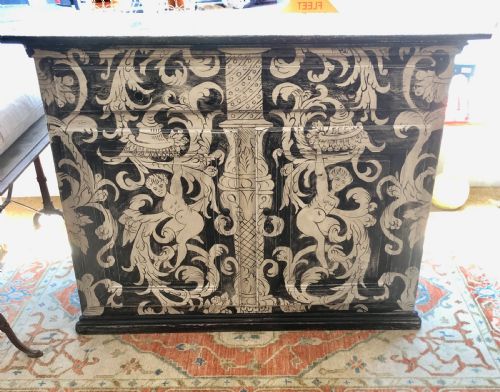


Renaissance Style Cupboard
A renaissance style cupboard brings bold architectural carving and rich wood into a room, offering both heavy presence and practical storage.
Renaissance Style Cupboard
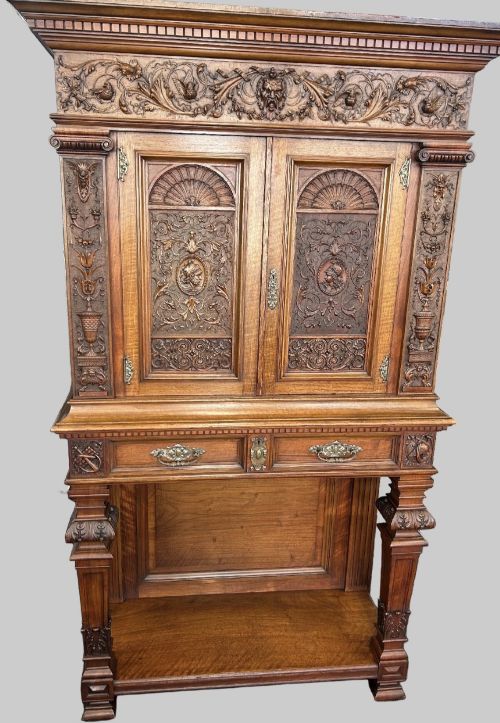
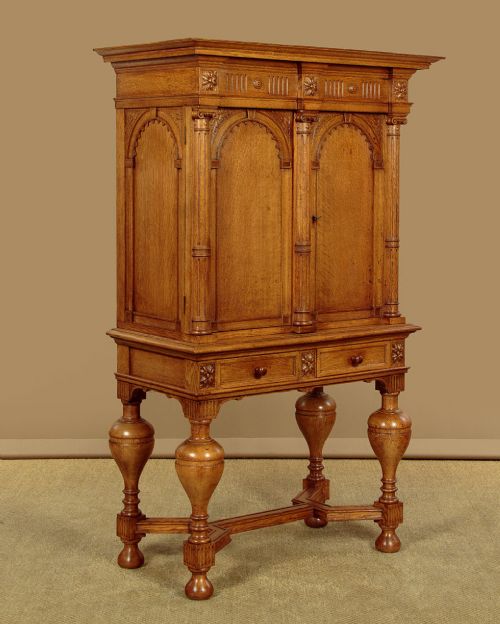
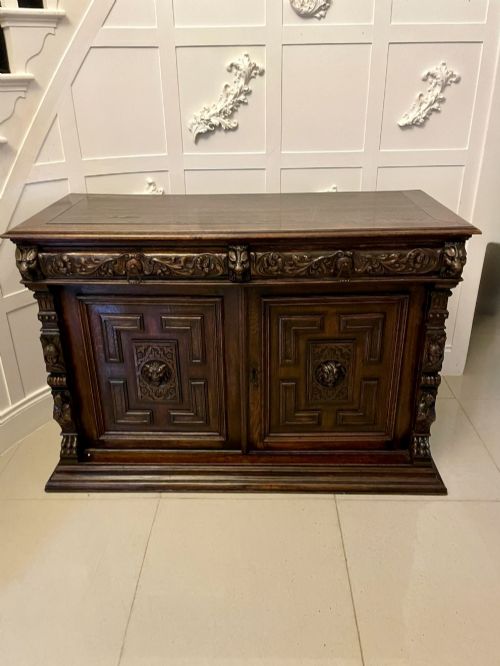
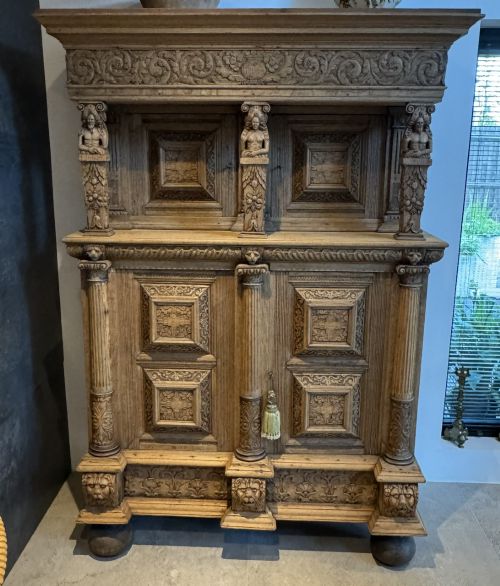
A renaissance style cupboard draws on 16th and 17th-century architectural forms, featuring robust proportions and heavily carved panels. Buyers seeking this phrase encounter pieces that range from genuine period furniture to later revival works built during the Victorian era and the early twentieth century.
The selections on this page span several distinct regional interpretations, including French, Dutch, Flemish, and Italian designs. Sideboards, buffets, cabinets on stand, and hall cupboards make up the primary forms available.
Oak and walnut dominate the offerings, occasionally supplemented by rosewood or painted surfaces. These woods provide the dense structural foundation necessary for deep relief carving and panelled doors.
Materials and Construction
Solid oak and walnut provide the heavy timber framework for these cupboards, chosen for their strength and ability to hold crisp chisel work. Cabinet makers utilised traditional frame and panel construction to accommodate natural wood movement over time.
Carving serves as the primary decorative technique, executed directly into the solid timber of doors, friezes, and stiles. Metal elements such as brass and iron appear selectively as hinges, key escutcheon plates, and drop handles.
Surface treatments vary from polished natural grain to painted and hand-decorated finishes. Some cabinets incorporate marble tops or contrasting dark woods to accentuate the structural mouldings.
Renaissance Style Cupboard Retail Price Guide 2026
Typical asking prices for renaissance style cupboard among the pieces listed under this phrase on Sellingantiques today, from the lower quarter to the upper quarter. They describe what is for sale here now, not the wider market.
Listings feature oak, walnut, and rosewood across periods from the seventeenth century through the early twentieth century.
Judging Quality
Depth and crispness of the hand-carved detail separate standard production from superior craftsmanship. The finest examples show undercut relief and sharply defined figures or foliage rather than shallow, machine-routed patterns.
Timber selection and grain matching across large doors indicate the maker's intent and budget. Superior pieces use well-seasoned heartwood that remains stable and maintains tight joints across decades of environmental shifts.
Integration of hardware and internal shelving reveals the level of finish. Original brass or iron mounts that fit flush and operate smoothly elevate a piece above those fitted with later or generic replacements.
Gillows·Melissa White
The Renaissance Style Cupboard Glossary
- Cabinet on Stand
- A tall enclosed storage unit raised upon an open frame or base with legs. This form lifts the main decorative body off the floor.
- Grotesque
- A style of decorative ornament involving fanciful human and animal forms intertwined with foliage. It appears frequently in Renaissance revival carvings.
- Renaissance Revival
- A 19th-century architectural and decorative movement that reinterprets 16th-century classical motifs. It produced heavily carved dark wood furniture.
- Stile
- A vertical framing member of a panelled door or wall. It provides structural integrity and receives the hinges.
Renaissance Style Cupboard: Frequently Asked Questions
What is a renaissance style cupboard?
A renaissance style cupboard is a heavy wooden storage piece decorated with classical architectural motifs, columns, and deep relief carvings. These pieces echo the grandeur of the sixteenth century while serving as functional furniture.
Most examples found today date from nineteenth-century revival periods or earlier centuries, utilising solid oak or walnut construction.
How do I date an antique cabinet?
Dating requires examining the wood species, tool marks, construction joints, and hardware style. Revival pieces often combine period forms with nineteenth-century manufacturing methods.
Secondary woods, nail types, and the wear patterns on hinges and feet offer further clues to the exact decade of manufacture.
Where should I place a large oak sideboard?
These substantial pieces require a room with adequate scale and wall space to balance their visual weight. Dining rooms and large hallways provide traditional settings that complement their storage capacity.
Keep them away from direct heat sources and strong sunlight to protect the aged timber and prevent the wood from splitting.
How do I maintain carved wood furniture?
Maintenance involves dusting the carved recesses regularly with a soft brush and applying appropriate beeswax sparingly. Avoid silicone sprays or modern household polishes that can build up on the wood.
Maintaining stable indoor humidity levels prevents the solid oak or walnut panels from shrinking or cracking over time.