




Renaissance Revival Sculpture
Renaissance revival sculpture brings the heroic forms of the fifteenth and sixteenth centuries back to life through nineteenth-century hands.
Renaissance Revival Sculpture
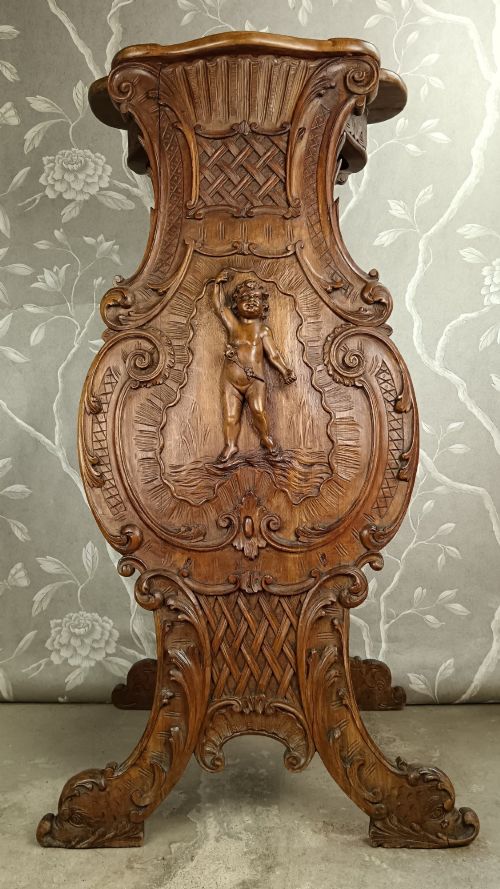
When you search for renaissance revival sculpture, you are looking at nineteenth-century interpretations of earlier masterpieces, drawing heavily on Italian and French models of the past. These pieces range from grand tour bronze reductions of famous monuments to carved walnut pedestals and decorative wall plaques.
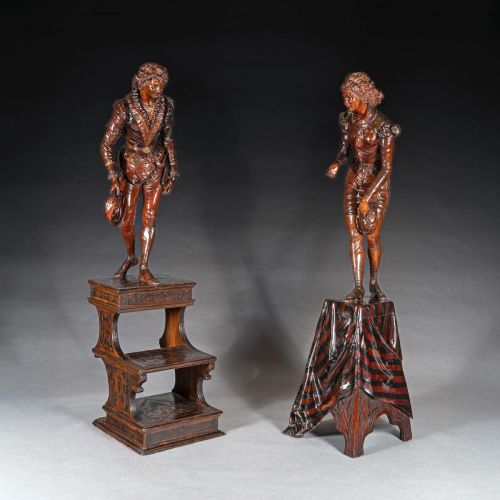
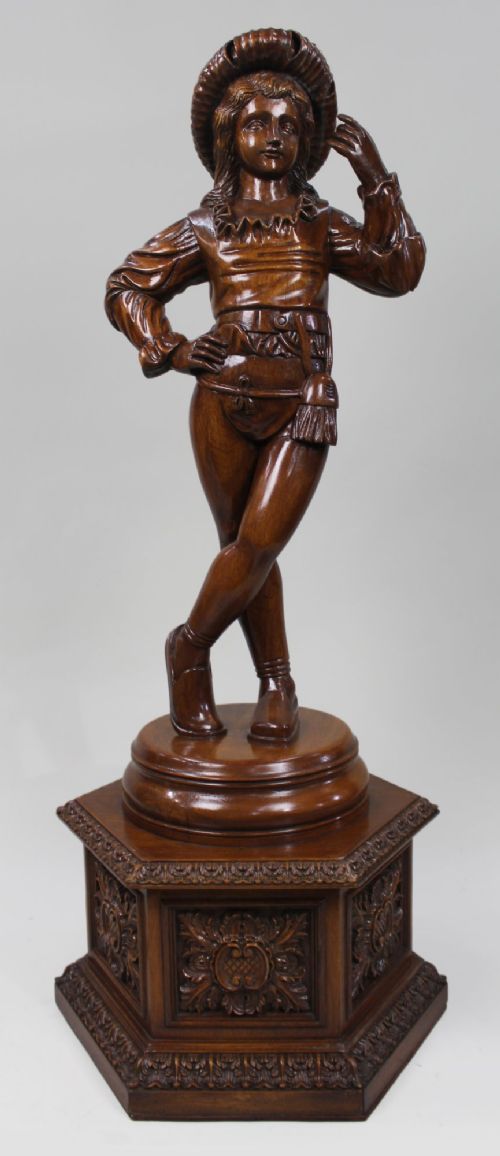
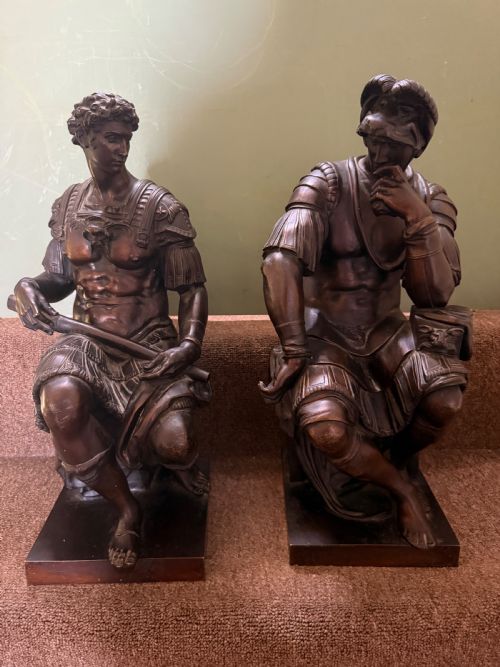
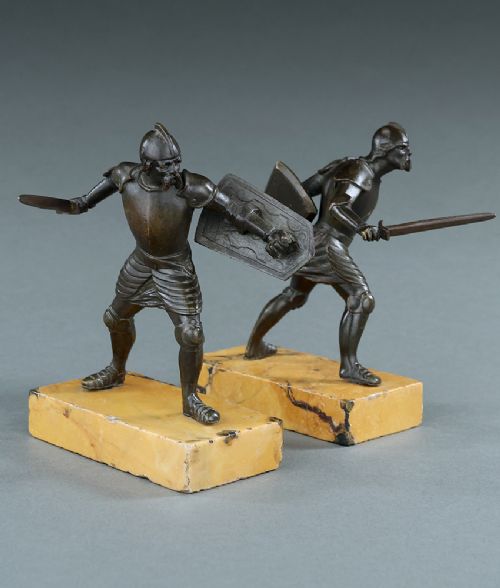
The most common examples on this page are nineteenth-century bronze figures and busts cast after Michelangelo and other Renaissance masters, often created as souvenirs for travellers on the grand tour. Alongside these metal castings, you will find carved hardwood figures, lime wood reliefs and elaborate architectural woodwork.
Originating across Europe, these works capture the dramatic poise and classical proportions of earlier periods while employing the refined casting and carving techniques of the Victorian era. They serve as tangible links to the revival movements that dominated nineteenth-century interior decoration.
Materials and Technique
The materials recorded in these listings rely heavily on cast bronze, carved walnut, marble, and gilt bronze, often combined within a single piece such as a mantel clock or pedestal stand. Bronze elements are typically cast with fine detail before receiving patination or gilding, while wooden pieces showcase intricate hand-carving in lime wood, ebony, and amboyna.
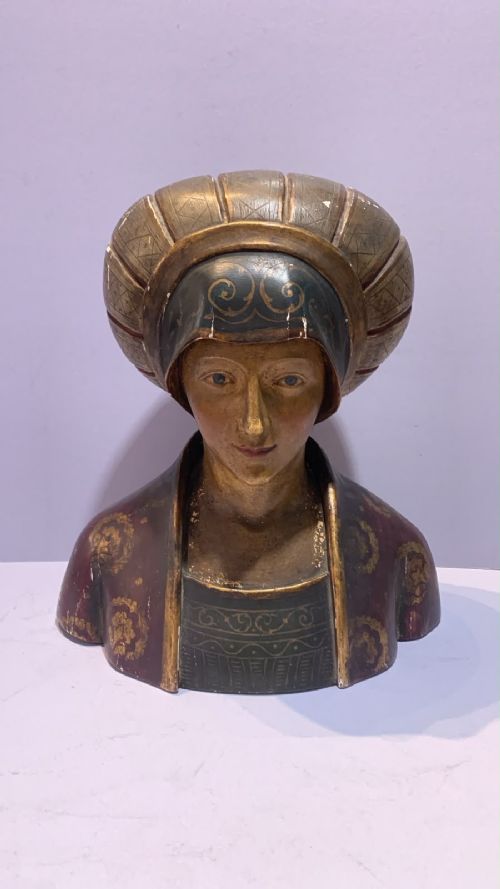
Sculptors and founders utilised traditional methods including lost-wax casting for metal figures and deep relief carving for wooden panels, wall plaques, and architectural decorations. Plaster was also employed for detailed copies of historical reliefs, capturing the texture and nuance of Renaissance originals.
Renaissance Revival Sculpture Retail Price Guide 2026
Typical asking prices for renaissance revival sculpture among the pieces listed under this phrase on Sellingantiques today, from the lower quarter to the upper quarter. They describe what is for sale here now, not the wider market.
Listings feature works from the eighteenth and nineteenth centuries, spanning materials from marble and bronze to leathermaché and gilt wood.
Assessing Quality
The choice of materials and the reputation of the workshop or founder heavily influence the standing of a piece. Works bearing foundry stamps or attributed to master carvers demonstrate a higher level of artistic ambition and technical execution.
Barbedienne·Eurotrope Bouret·Luigi Frullini
The Renaissance Revival Sculpture Glossary
- Grand Tour
- A nineteenth-century tradition where wealthy travellers collected art and bronze souvenirs across Italy. These small-scale bronzes frequently reproduced famous Renaissance sculptures found in Florentine and Roman collections.
- Lost-wax casting
- A metal-casting method where a molten metal is poured into a mould that has been created by means of a wax model. This technique allows for exceptionally fine detail and undercut forms in bronze sculptures.
- Patination
- The chemical or natural process that alters the surface colour of bronze over time. Founders manipulated this process to achieve rich brown, green, or black tones on nineteenth-century figures.
- Gesso
- A plaster-based mixture used as a smooth surface preparation for painting, gilding, or relief work on wood panels. It provides a crisp foundation for intricate surface decoration.
- Chasing
- The manual finishing of a metal casting using hammers and punches to refine details and remove surface flaws. High-quality bronzes show extensive hand-chasing after the initial pour.
Renaissance Revival Sculpture: Frequently Asked Questions
What is a grand tour bronze?
Grand tour bronzes are nineteenth-century souvenir sculptures created for travellers visiting cultural sites in Italy and France. They typically reproduce famous Renaissance monuments and classical statues on a smaller scale.
These pieces allowed collectors to bring the artistic heritage of Europe back into their homes, serving as decorative table objects or mantel centrepieces.
How do I care for carved wooden figures?
Carved wooden figures and pedestals require stable indoor humidity levels to prevent the timber from splitting or warping. Dust them gently with a soft, dry cloth rather than using liquid polishes.
Keeping them away from direct sunlight and heat sources preserves the natural finish of woods like walnut, ebony, and lime wood.
Are these sculptures original Renaissance pieces?
No, these works date from the nineteenth century and are part of the revival movement. They reinterpret the styles, subjects, and techniques of the fifteenth and sixteenth centuries.
Makers of this era used historical models, such as the works of Michelangelo and Donatello, to create new sculptures for Victorian interiors.
Where were wall plaques displayed?
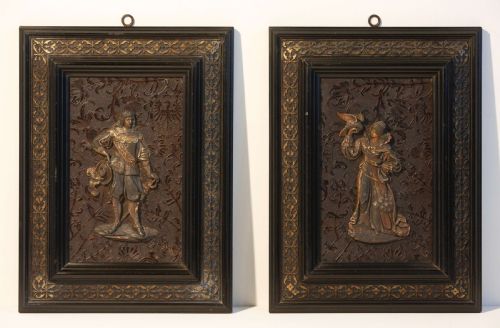
Carved wooden wall plaques and relief panels were designed to adorn the panelled rooms and libraries of nineteenth-century homes. They added architectural depth and historical character to domestic interiors.
Many pieces incorporate figures in seventeenth-century or Renaissance dress, reflecting a broader fascination with historical costume and narrative art.