
Renaissance Revival Carving
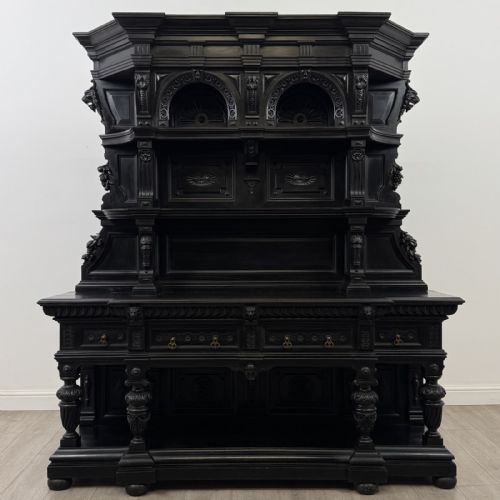
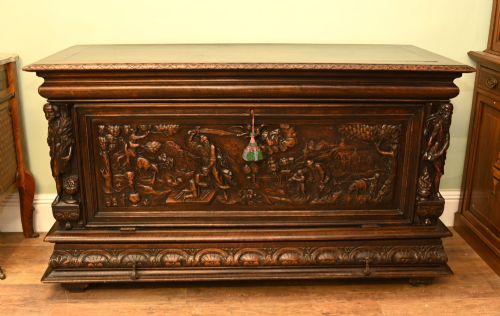
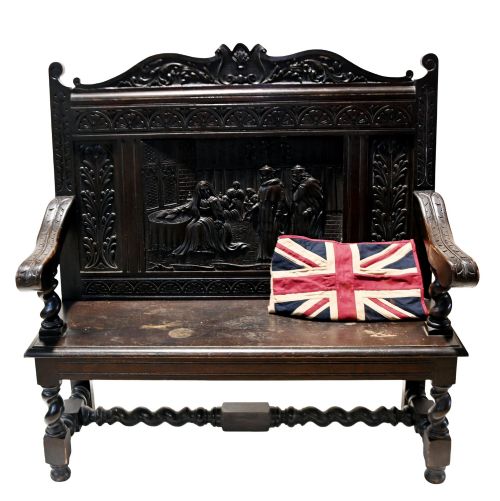
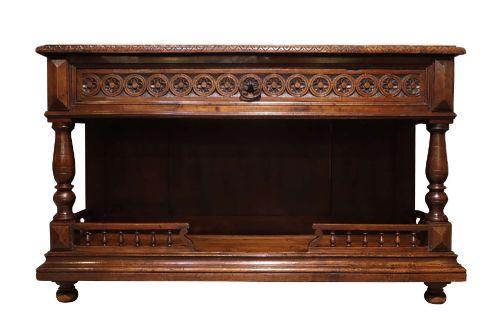
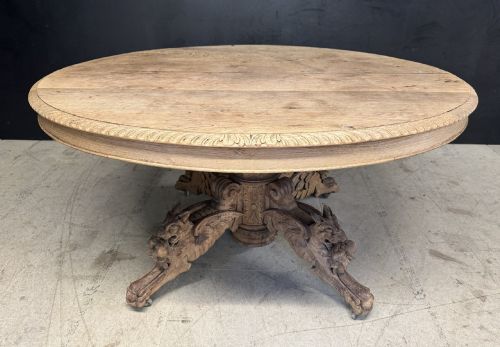
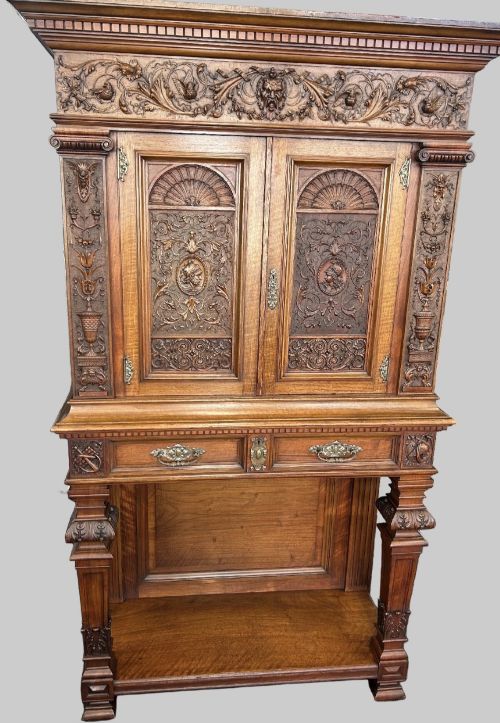
Renaissance revival carving brings heavy architectural presence and deep figural relief into domestic interiors through heavily ornamented furniture and mirrors.
Renaissance Revival Carving
Renaissance revival carving encompasses nineteenth-century furniture and decorative objects that draw directly on sixteenth-century classical and Mannerist motifs. Buyers encounter substantial sideboards, bookcases, wall mirrors, and armchairs built primarily during the Victorian era. These items replicate the grand scale and elaborate ornamentation of earlier European courts.
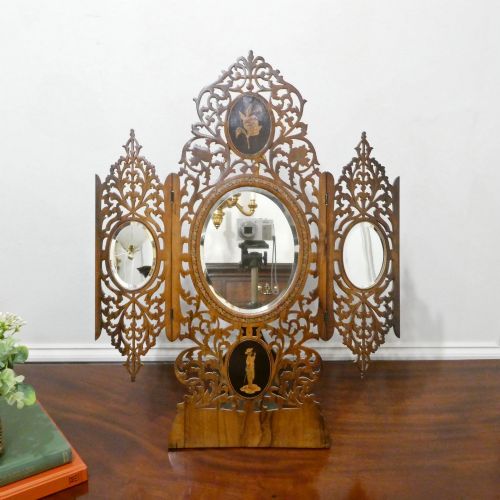
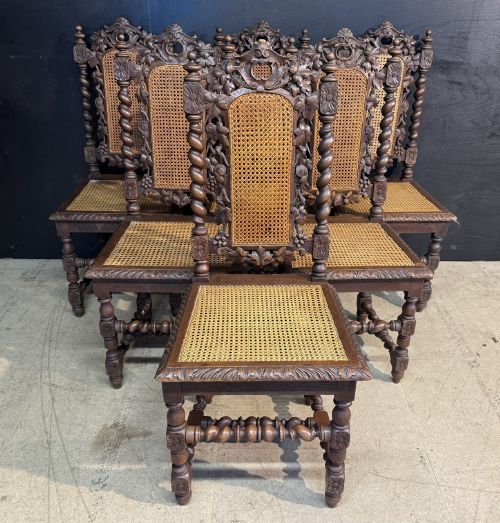
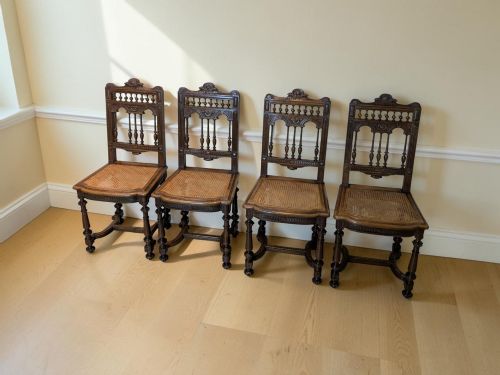
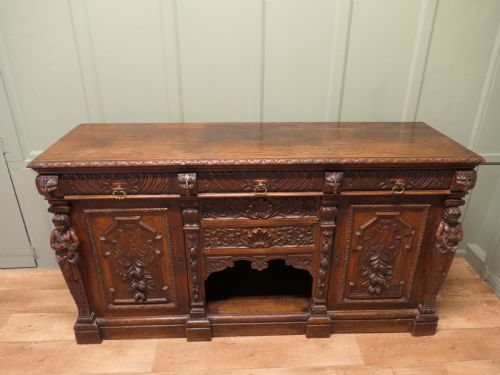
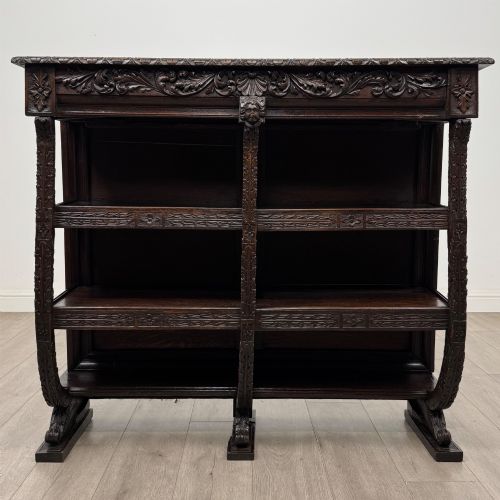
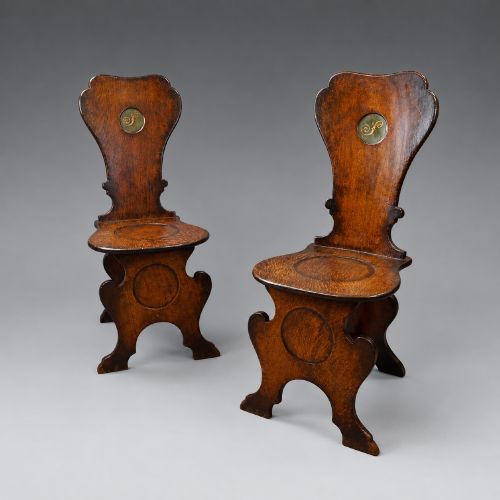
Oak and walnut dominate the selection, shaped into heavy sideboards, hall chairs, and large wall mirrors with deep figural or botanical relief. Pieces span from English and French interpretations to Italian works modelled after earlier designers. The aesthetic relies on dark timber, architectural pediments, and bold sculptural details.
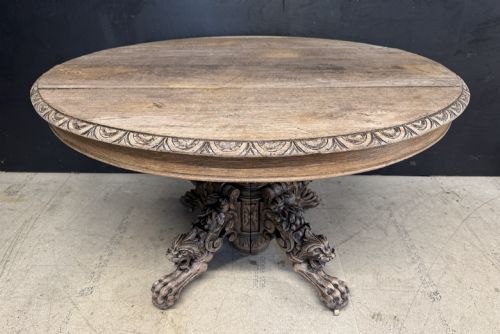
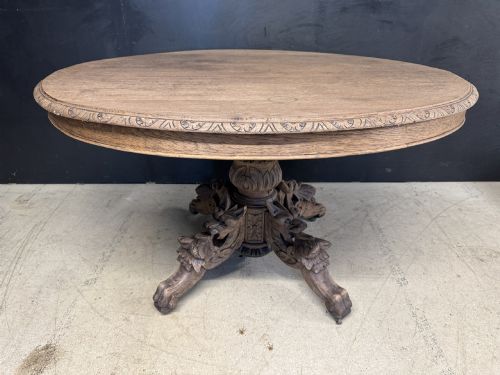
Forms range from functional domestic items like writing tables and bedside cabinets to decorative armchairs and Italian audience chairs. Many incorporate stylistic crossovers including Gothic, Jacobean, and French Henri II influences. The resulting inventory offers sturdy, ornamental furnishings designed to anchor a room.
How they were made
Cabinetmakers utilised solid oak and walnut as the primary substrates for heavy relief work, allowing deep undercutting without compromising structural integrity. Timber was seasoned, joined with traditional mortise and tenon construction, and then shaped by hand. Secondary elements incorporated glass, brass fittings, and upholstered inserts of leather, fabric, or velvet.
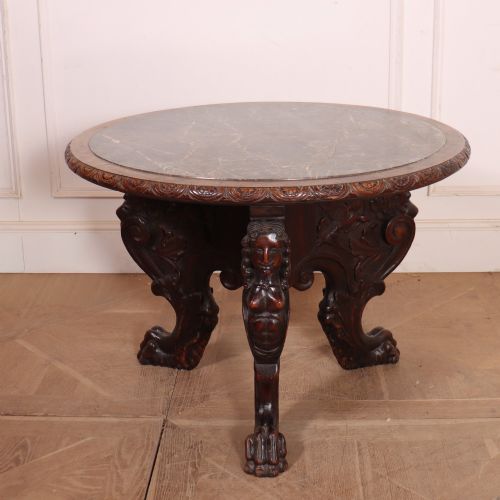
Carvers employed chisels and gouges to build up high-relief ornamentation, creating scrolling foliage, caryatids, and grotesque masks directly from the timber. Surfaces were finished with wax or polish to highlight the grain and rich colour of the wood. Gilding occasionally appeared on specialist items such as easel table mirrors.
Listings feature items primarily from the Victorian era and the late nineteenth century, dominated by solid oak and walnut constructions.
What varies in quality
The distinction between standard production items and exhibition pieces lies entirely in the depth and crispness of the hand-carved detail. Superior examples display undercut figures, intricate mythological or hunting motifs, and balanced architectural proportions that require advanced woodcarving skill. Simpler pieces rely on shallow machine routing or repetitive stamped ornament.
Material selection and structural weight dictate the overall calibre of the furniture. Denser walnut and quarter-sawn oak support more elaborate structural elements like figural arms and heavy pediments without warping. The integration of secondary materials, such as bevelled mirror glass and hand-tooled leather, further separates standard domestic furniture from exceptional workshop pieces.
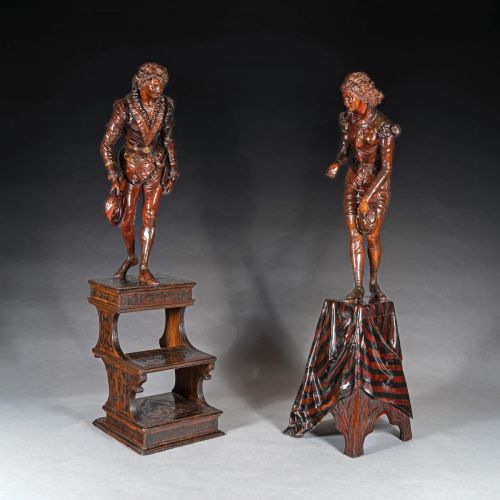
Andrea Brustolon
The Renaissance Revival Carving Glossary
- Renaissance Revival
- A nineteenth-century design movement that reinterpreted sixteenth-century classical architecture, ornamentation, and furniture forms. It manifests in heavy timber pieces covered in carved strapwork and figures.
- Sgabello
- A light, high-backed wooden chair with solid trestle supports instead of legs. This Italian form is typically narrow and heavily carved along the edges.
- Cassapanca
- An Italian wooden bench featuring a storage box beneath the seat and an upright back with armrests. These pieces frequently display extensive armorial or figural carving.
- Green Man
- A decorative architectural motif depicting a human face surrounded by or sprouting from foliage. It appears frequently in nineteenth-century revival carvings.
- Caryatid
- A sculpted female figure serving as an architectural support in place of a column or pilaster. They often appear on the corners of sideboards and cabinets.
Renaissance Revival Carving: Frequently Asked Questions
What is renaissance revival carving?
Renaissance revival carving is a nineteenth-century artistic style that copies sixteenth-century European design motifs, featuring heavy sculptural wood elements.
Craftsmen drew inspiration from Italian, French, and English sources to create ornate furniture with classical figures, strapwork, and deep relief.
How do I identify a reproduction?
Identification relies on examining timber ageing, tool marks, and construction methods used by nineteenth-century cabinetmakers.
Genuine pieces show period-appropriate joinery, hand-carved tool inconsistencies, and patinated wood surfaces consistent with Victorian manufacture.
Where were these pieces used?
These large, ornate items were designed for grand Victorian dining rooms, libraries, and entrance halls.
Their heavy presence and dark wood suited formal public reception rooms rather than private informal chambers.
How do I care for carved wood?
Maintenance involves keeping pieces away from direct heat sources and sudden humidity changes to prevent wood splitting.
Regular dusting with a soft cloth and occasional application of traditional wax preserves the timber finish without building up residue.