



Renaissance Blanket Chest
A renaissance blanket chest brings profound historical depth and heavy timber storage into a modern interior.
Renaissance Blanket Chest
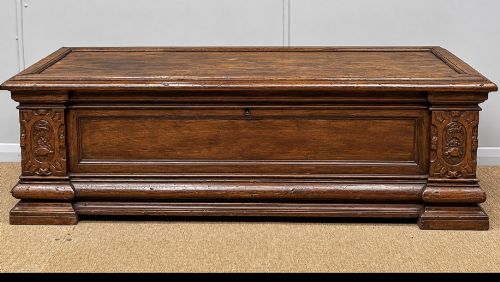
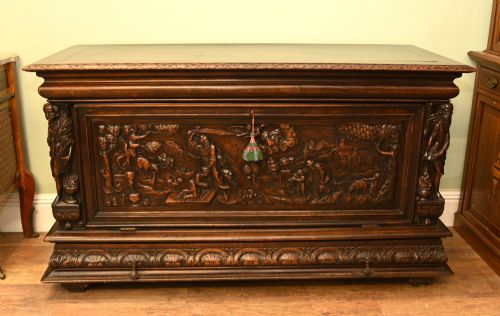
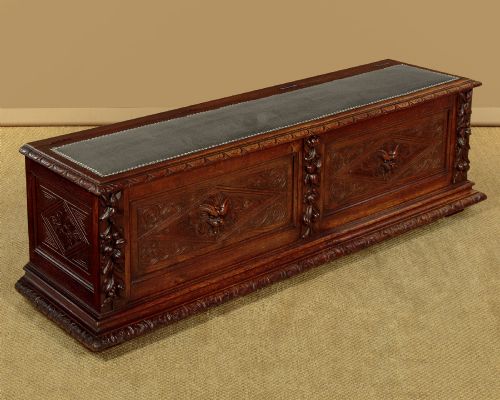
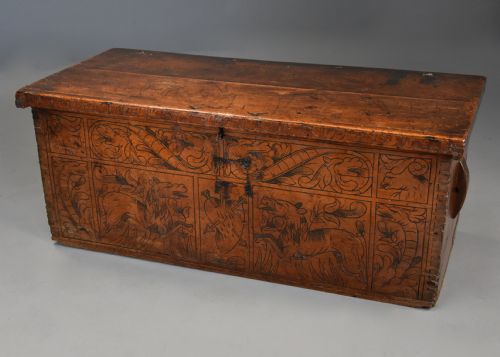
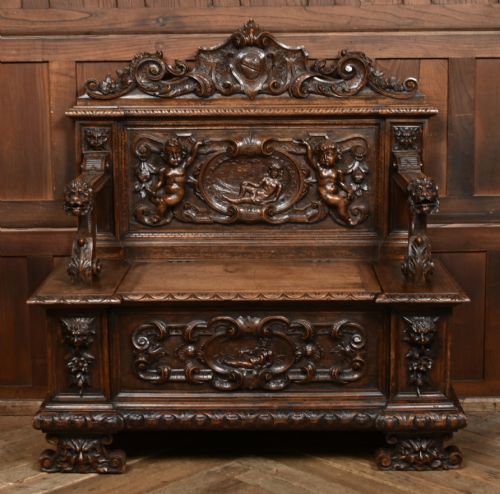
A renaissance blanket chest is a substantial timber storage piece encompassing heavy coffers, cassapanca benches, and cassone chests originating primarily from the sixteenth and seventeenth centuries, alongside nineteenth-century revival interpretations. These pieces serve as functional storage and striking focal points, drawing on Italian, Flemish, and Spanish design traditions.
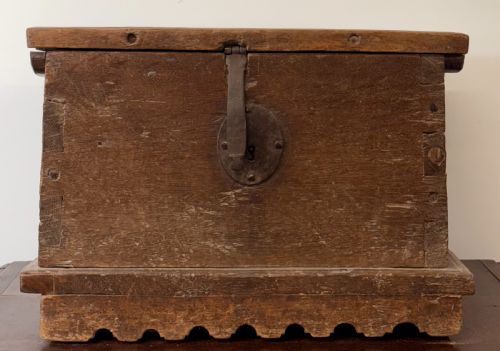
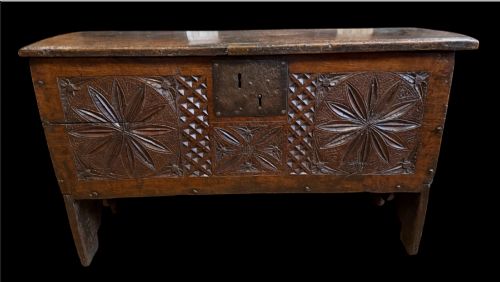
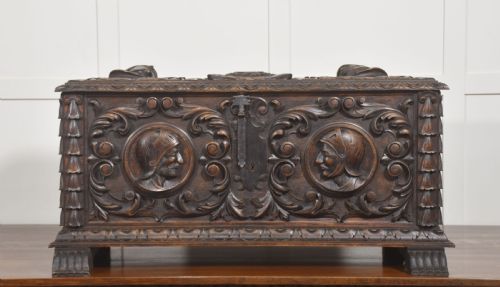
Buyers frequently encounter robust oak plank coffers from the sixteenth century and carved walnut Italian cassone chests, alongside later nineteenth-century revival pieces that echo earlier craftsmanship. These objects range from stark, iron-bound utility boxes to elaborate receptacles adorned with figural medallions and gilt gothic decoration.
How they were made
Makers constructed these chests using durable native timbers such as oak, walnut, cypress, and cedarwood, joined with traditional framing and planking techniques. Surfaces often display deep relief carving, figural medallions, and architectural panelling executed by hand.
Iron and wrought iron provided structural reinforcement through strapwork, hinges, and heavy locks, while leather and brass occasionally added decorative contrast. Gilt decoration and original patination developed over centuries on Italian and Flemish examples.
Renaissance Blanket Chest Retail Price Guide 2026
Typical asking prices for renaissance blanket chest among the pieces listed under this phrase on Sellingantiques today, from the lower quarter to the upper quarter. They describe what is for sale here now, not the wider market.
Some sixteenth-century iron-bound coffers survived centuries of use simply because they were too heavy for anyone to steal.
What varies in quality
Quality rests in the integrity of the timber, the depth and crispness of the hand carving, and the preservation of original surfaces like patina and gilding. Early sixteenth-century examples with untouched ironwork and unaltered structures command attention for their historical survival.
Revival pieces from the nineteenth century vary according to the fidelity of their historical revival style and the quality of the walnut or oak utilised in their construction. Finer pieces maintain structural coherence and authentic decorative detailing without excessive modern intervention.
The Renaissance Blanket Chest Glossary
- Cassone
- A traditional large Italian chest, often highly decorated with carving, gilding, or painting, used historically for storing valuable wedding trousseau items. These chests sat proudly in grand palazzos.
- Cassapanca
- An Italian bench formed from a cassone chest fitted with a back and armrests, combining seating with secure storage. It functions as a substantial hallway or antechamber fixture.
- Coffer
- A heavy wooden chest traditionally used for holding valuables, documents, or textiles. Early examples feature simple plank construction or iron binding for enhanced security.
- Patina
- The surface sheen and colour acquired by wood and metal through age, handling, and light exposure over centuries. Original patination is a key indicator of authenticity.
- Revival
- A nineteenth-century artistic movement that recreated historical styles, such as the Renaissance or Gothic periods. Revival pieces adapt earlier forms for Victorian interiors.
Renaissance Blanket Chest: Frequently Asked Questions
What did they store inside?
These chests originally safeguarded valuable textiles, household linens, personal garments, and important documents away from dampness and pests. Their heavy timber walls and secure iron locks protected precious belongings in wealthy households.
In modern settings, they serve the exact same practical purpose while anchoring a room with centuries of historical presence.
How do I spot a revival piece?
Nineteenth-century revival pieces often display machine-assisted jointing alongside hand carving, and the timber shrinkage patterns differ from sixteenth-century originals. Examining the interior construction and the nature of the wood ageing reveals the true period of manufacture.
Comparing the decorative motifs against genuine sixteenth and seventeenth-century standards helps clarify whether a piece is an early original or a later homage.
Where should I place one?
A heavy timber chest suits entryways, spacious landings, or living rooms where its substantial weight and decorative carving can be fully appreciated. Placing them away from direct heat sources protects the old walnut or oak from drying out.
They also function effectively at the foot of a bed or beneath large windows as statement seating and storage.
Are iron mounts original?
Iron strapwork and mounts on early coffers were essential for structural strength and security against theft. Surviving ironwork often shows hand-beaten characteristics and period-appropriate corrosion that matches the age of the timber.
Inspect how the iron integrates with the wood to determine if the hinges and straps have remained intact since the sixteenth or seventeenth century.