



Religious Narrative Art
Religious narrative art brings scripture and sacred history into visual focus, offering collectors devotional depth and dramatic storytelling.
Religious Narrative Art
Religious narrative art comprises paintings, prints, etchings, and tapestries depicting scenes from biblical texts and sacred history. When exploring religious narrative art, buyers encounter works spanning the seventeenth and nineteenth centuries, alongside a Georgian engraving and a piece dated to nineteen forty.
The selection here encompasses oil paintings on canvas, framed prints, and textile art such as a Flanders tapestry. Styles range from Baroque and Dutch Golden Age to Gothic Revival, Victorian, and Neoclassical, reflecting centuries of devotion.
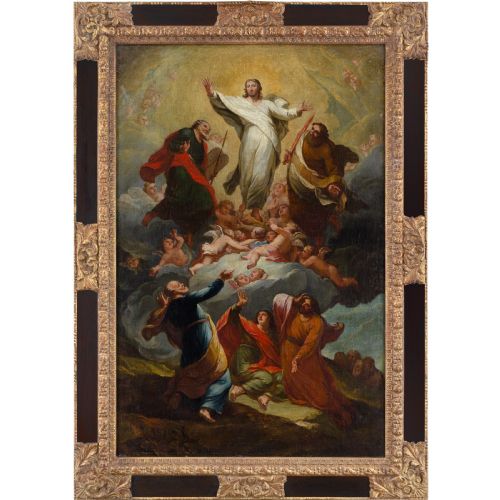
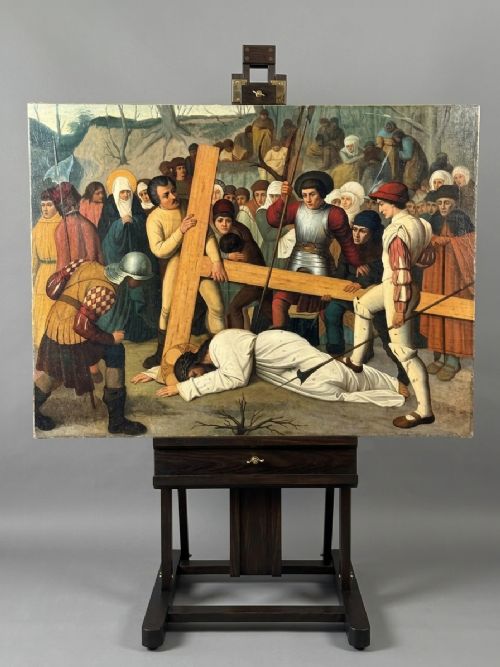
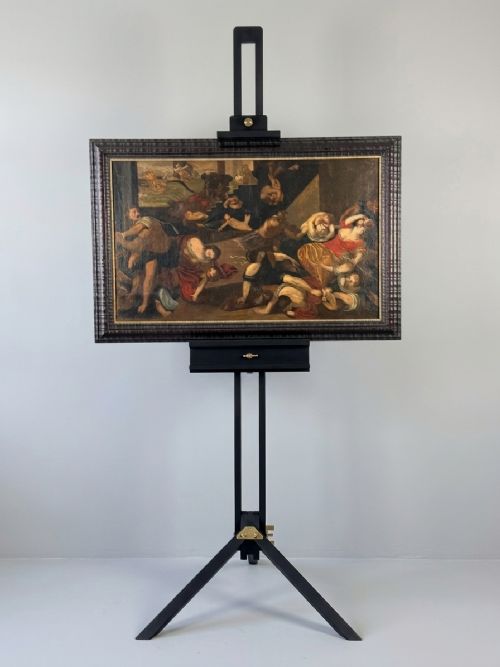
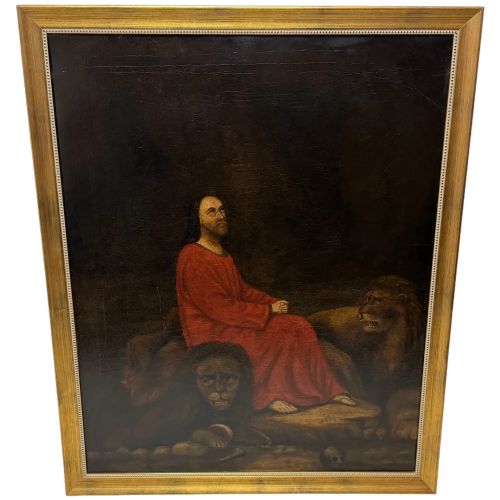
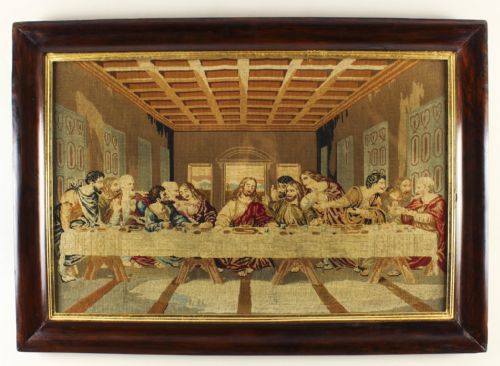
Pieces from the seventeenth century portray dramatic biblical events like the massacre of the innocents and the capture of Samson. Nineteenth-century examples include devotional oil paintings, etchings, and tapestries depicting the Last Supper and Daniel in the lions den.
Materials and Techniques
Makers utilised oil paint on canvas to build rich, layered compositions with deep shadows and luminous highlights, characteristic of seventeenth-century baroque and nineteenth-century academic works. Canvas provides a durable support that allows for large-scale storytelling, seen in works depicting David and Goliath.
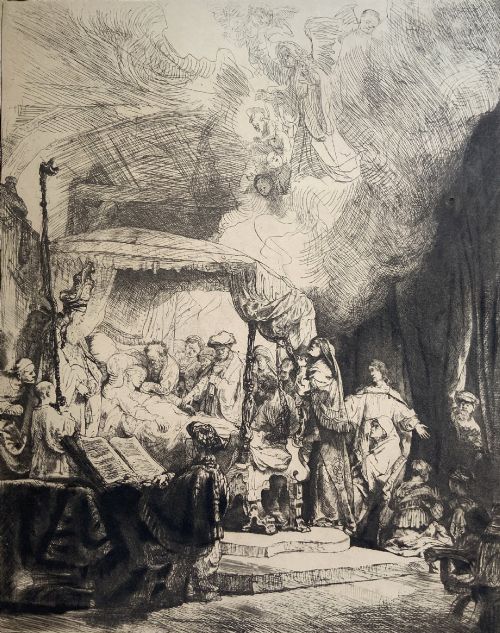
Printmakers employed engraving and etching techniques on paper, using ink to achieve fine lines and tonal gradations. These printed works reproduce complex compositions by masters, allowing biblical narratives to reach wider audiences.
Textile artisans wove tapestries using traditional looms to create detailed narrative scenes such as the Last Supper. This medium combines structural warp and woof threads with dyed materials to produce substantial wall hangings.
Listings feature works spanning the seventeenth century, the Georgian era, the nineteenth century, and nineteen forty.
Assessing Quality in Religious Narrative Art
Quality rests upon the compositional strength and the expressive handling of the figures within the narrative scene. Works executed with confident brushwork or precise etching lines convey dramatic tension and emotional weight more successfully.
The handling of light and shadow, particularly in oil paintings, dictates the spatial depth and atmosphere of the piece. Finer examples demonstrate a nuanced understanding of anatomical proportion and narrative pacing.
Jozef Jansessens·Rembrandt·Amand Durand·Michelangelo·Pietro D Asaro·Eugene Hindle
The Religious Narrative Art Glossary
- Etching
- A printmaking process where lines are bitten into a metal plate with acid before ink is applied. This technique allows for delicate, painterly lines on paper.
- Baroque
- An artistic style from the seventeenth century characterised by dramatic movement and deep chiaroscuro. Works in this style heighten the emotional intensity of biblical narratives.
- Giltwood
- Wood that has been treated with a thin layer of gold leaf. This material frequently appears on the frames surrounding historical paintings and prints.
- Tapestry
- A form of textile art woven on a loom with coloured threads to form a picture. These heavy hangings depict complex religious scenes across fabric.
- Neoclassical
- A style drawing inspiration from the classical art of antiquity, prioritising clarity and restraint. It appears alongside historicist revivals in nineteenth-century interpretations of sacred themes.
Religious Narrative Art: Frequently Asked Questions
What subjects do these artworks depict?
These pieces illustrate key scenes from biblical texts, including Old Testament stories like Daniel in the lions den and David and Goliath. New Testament themes and martyrdoms also feature prominently across the paintings and prints.
Artists drew from sacred history to create compelling visual narratives designed to inspire contemplation or devotion. Each work captures a specific moment of dramatic tension within the scriptural account.
How were these pieces displayed historically?
Paintings and framed prints adorned churches, private chapels, and domestic devotional spaces to aid prayer and religious instruction. Larger works served as focal points for contemplation in grand rooms.
Textile art like tapestries provided both insulation for stone walls and visual splendour for ecclesiastical or aristocratic interiors. Smaller etchings allowed individuals to engage with sacred narratives in a personal format.
How do I care for oil paintings on canvas?
Oil paintings require stable indoor humidity and temperature to prevent the canvas from slackening and the paint layer from cracking. Keep them away from direct sunlight to avoid fading the pigments.
Dust the surface gently with a soft, dry brush and avoid using liquid cleaners on the paint or giltwood frames. Professional conservation should be sought if the canvas requires cleaning or structural repair.
How do I distinguish seventeenth-century art from nineteenth-century revivals?
Seventeenth-century works often exhibit the dramatic lighting and rich palette typical of baroque or Dutch golden age traditions. Their canvases and stretchers frequently show the age-related oxidation and wear expected of older materials.
Nineteenth-century pieces, including historicist revivals and Victorian interpretations, often employ brighter pigments or display academic precision influenced by contemporary Salon standards. Examining the preparation of the canvas and the style of the frame aids in dating.