



Religious Medallion
A religious medallion brings devotional art into wearable form, offering small-scale portraits of saints, angels and holy figures cast in gold.
Religious Medallion
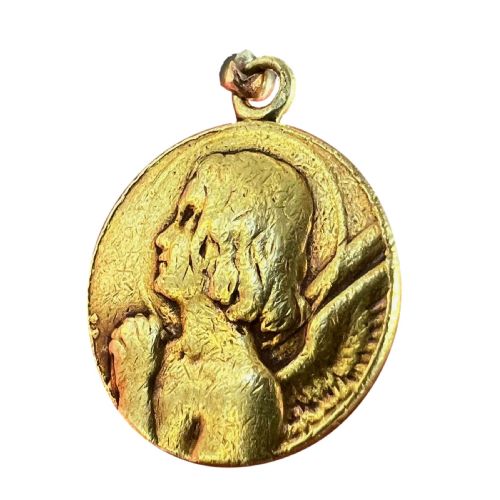
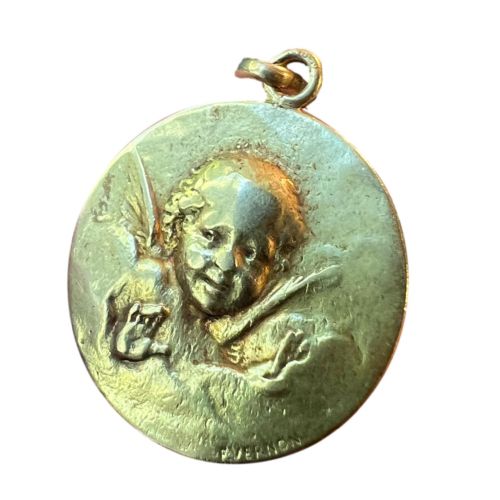
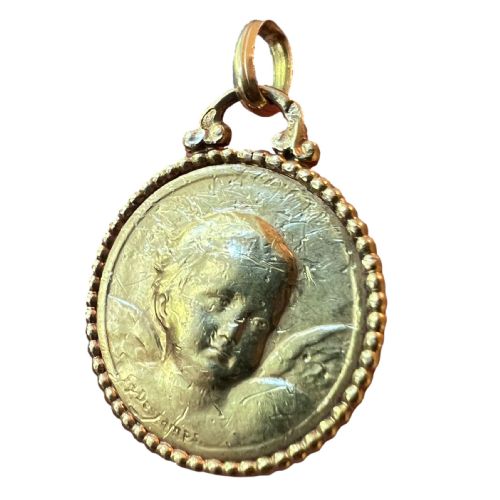
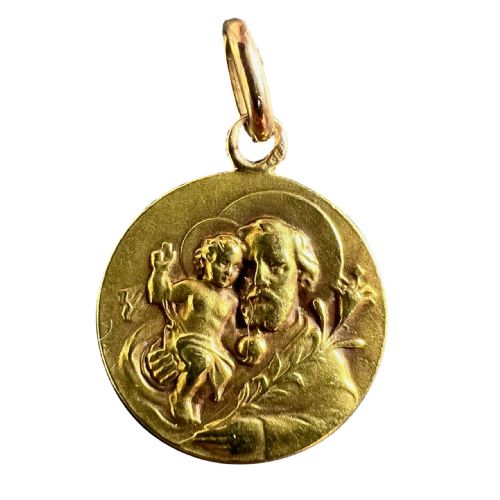
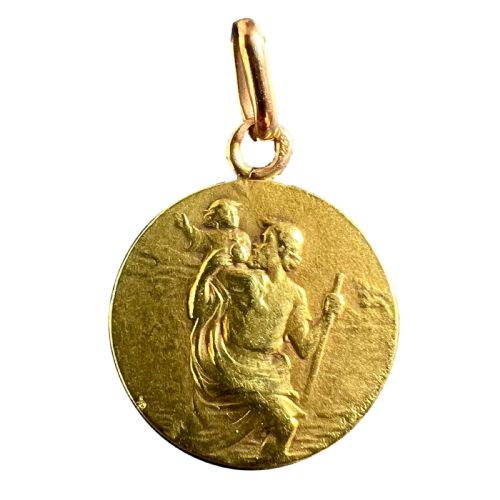
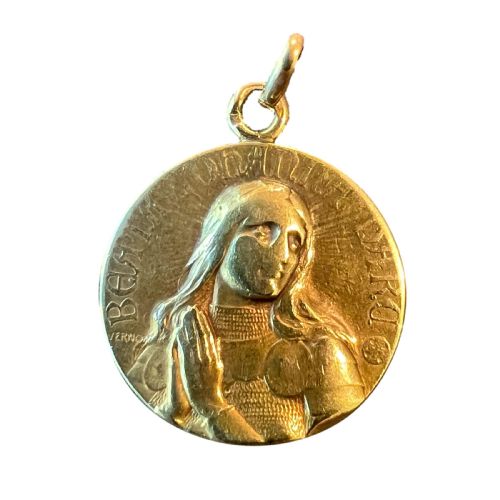
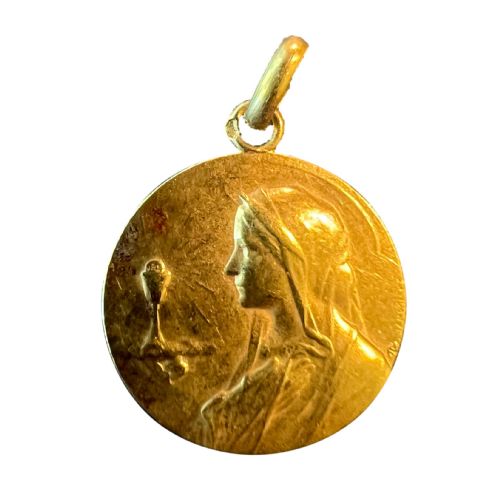
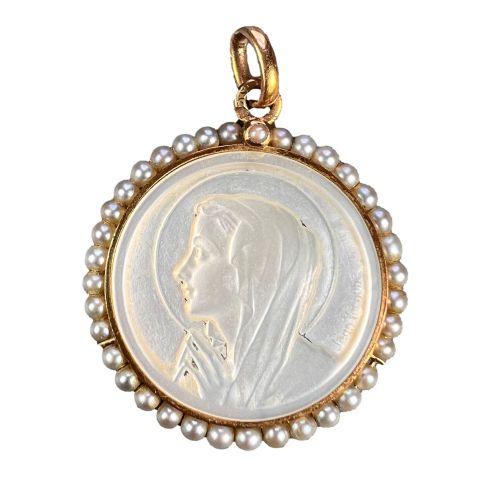
A religious medallion typically takes the form of a small pendant or charm designed to be worn close to the body. The pieces seen here span the late nineteenth century through to the middle of the twentieth century, with a strong concentration of French devotional items.
Most examples present sacred imagery on one side and a smooth reverse suitable for personal engraving. Common subjects include the Virgin Mary, various saints such as Christopher and Joseph, and winged cherubs rendered in low relief.
How they were made
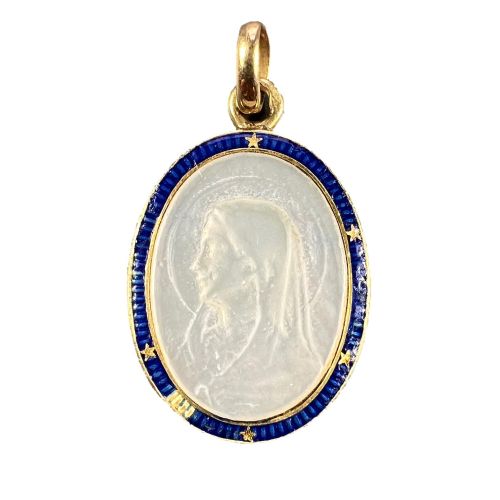
Metalsmiths worked predominantly in yellow gold, alongside variations in rose and white gold, often shaping the metal through stamping and delicate hand engraving. Many items incorporate natural materials like mother of pearl as a shimmering background for raised metallic figures.
Colour is introduced through enamel work, including translucent plique-a-jour techniques that let light pass through the decorative segments much like stained glass. Tiny pearls are frequently set into the borders to frame the central devotional scene.
Religious Medallion Retail Price Guide 2026
Typical asking prices for religious medallion among the pieces listed under this phrase on Sellingantiques today, from the lower quarter to the upper quarter. They describe what is for sale here now, not the wider market.
Materials span yellow, rose, and white gold alongside enamel, mother of pearl, and seed pearls.
What varies in quality
The distinction between standard production and superior craftsmanship lies in the crispness of the sculptural relief and the finesse of the artist's signature. Medals designed by named modellers display finer facial expressions and more intricate drapery folds on garments.
Material embellishments also define the tier of the piece, with complex enamel work and well-matched seed pearls requiring greater technical skill than simple polished metal surfaces.
Vernon·Descamps·Rasumny·Jampolsky·Emile Monier·Paul Brandt·Mazzoni·Pageli Perriat·Guilbert·Emile Dropsy·Sellier·Ovide Yencesse·Tairac
The Religious Medallion Glossary
- Plique-a-jour
- An enamelling technique where the pigment is fired in open cellular frameworks without a backing, creating a translucent, glass-like effect. This method allows light to illuminate the coloured details from behind.
- Relief
- A sculptural technique where the figures project from a flat background surface rather than standing alone. High relief creates deep shadows, while low relief offers a subtle, flatter profile.
- Mother of pearl
- The iridescent internal layer of mollusc shells used as a backing plaque for gold figures. It provides a pearlescent play of light behind the devotional imagery.
- Devotional
- Pertaining to religious worship, prayer or piety. These objects served as personal aids to spiritual devotion.
- Charm
- A small decorative pendant suspended from a bracelet or chain. These often share the same commemorative function as larger medals.
Religious Medallion: Frequently Asked Questions
What are religious medallions made of?
These pieces are constructed primarily from various carats of yellow, rose, and white gold. Artisans frequently combined these precious metals with mother of pearl, enamel, and seed pearls.
Enamelling techniques such as plique-a-jour add translucent colour to the metallic framework. The materials reflect the decorative tastes of the late nineteenth and early twentieth centuries.
How were these medals worn?
They were designed as pendants to hang from chains around the neck, or attached to bracelets as charms. Some travelled as personal pocket items for protection during journeys.
The small loop at the top of each piece allowed for easy attachment to various types of jewellery.
How can I tell the period of a medal?
Dating relies on stylistic movements such as Art Nouveau, Belle Epoque, and Art Deco present in the design. The lettering styles, border motifs, and mounting techniques also provide clues to the era of manufacture.
Many pieces carry artist signatures or hallmarks that help narrow down the specific decades of production.
Who are the figures shown on the medals?
The iconography centres on Christian figures, most notably the Virgin Mary, Jesus Christ, and various saints. Cherubs and holy angels also appear frequently in the sculptural compositions.
Specific titles often reference regional devotions, such as Notre Dame of Lourdes, or patron saints associated with particular occupations and protective duties.