


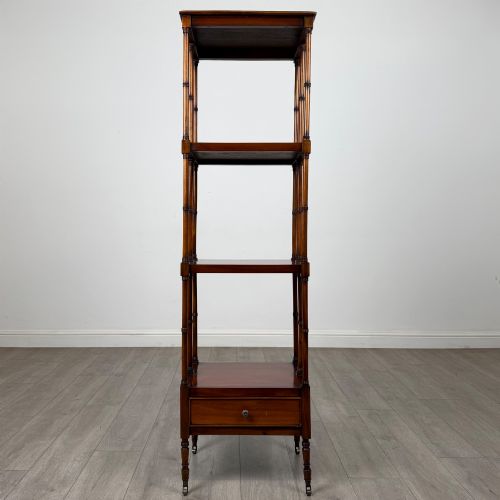
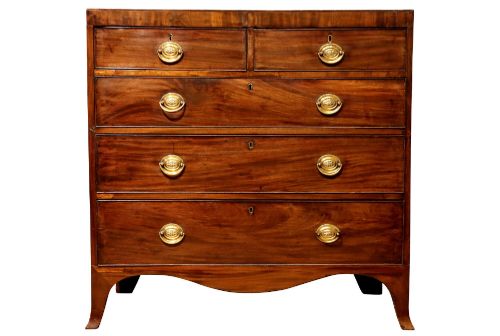
Regency Wooden Drawers
Regency wooden drawers bring timeless British craftsmanship and rich mahogany grain into a room, offering both practical storage and sculptural elegance.
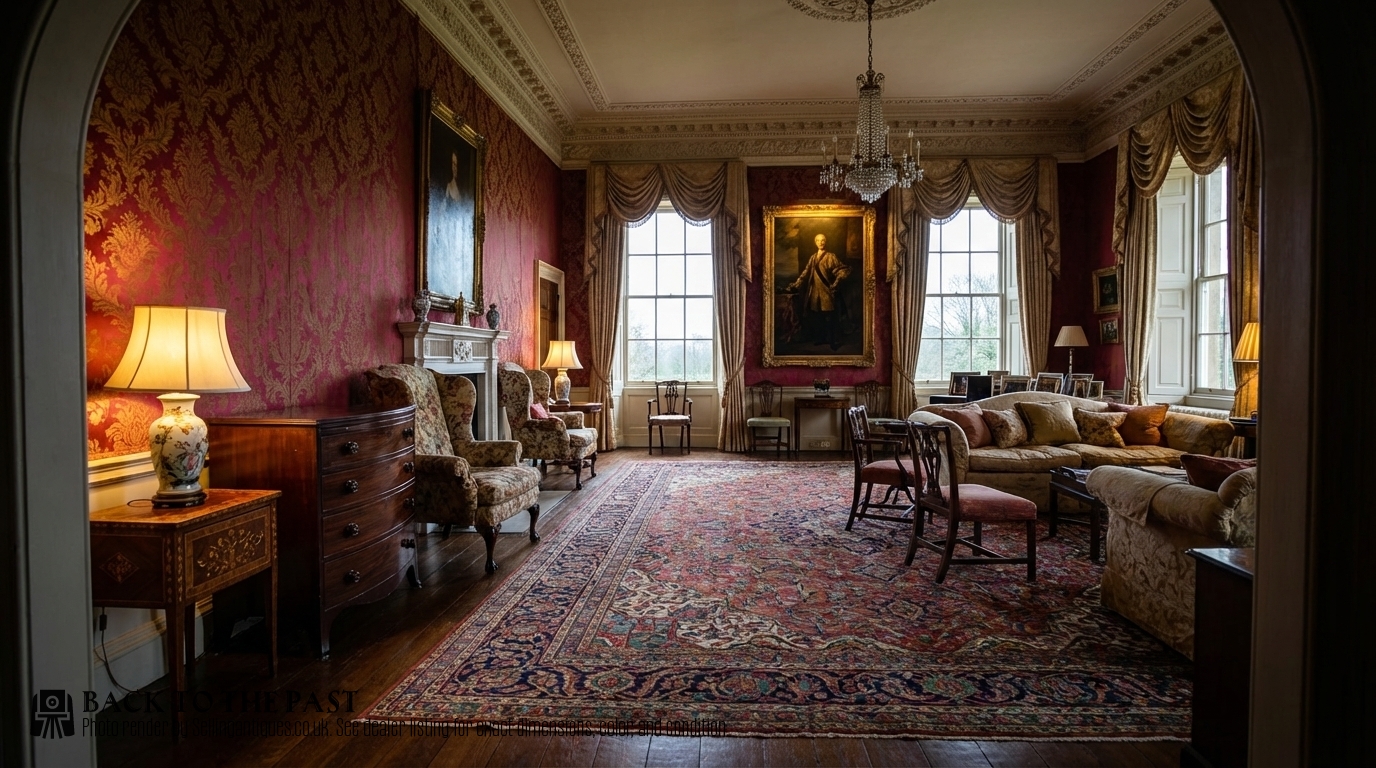
Regency Wooden Drawers
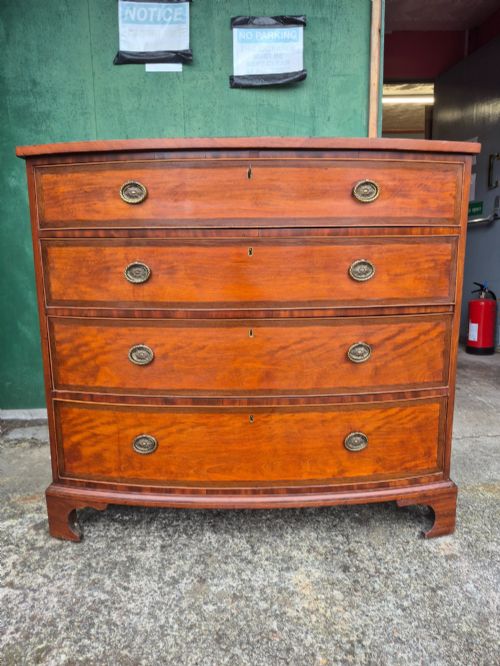
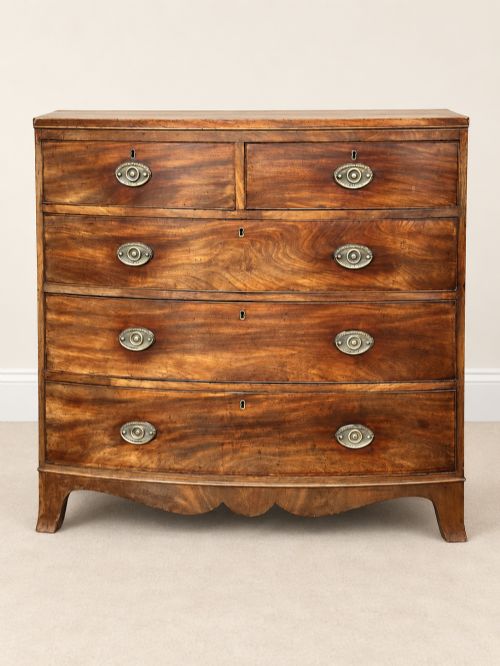
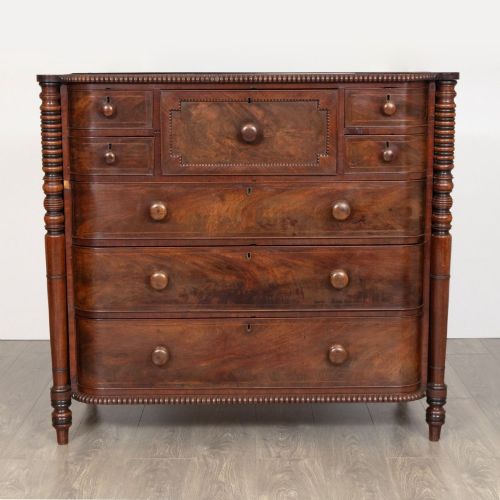
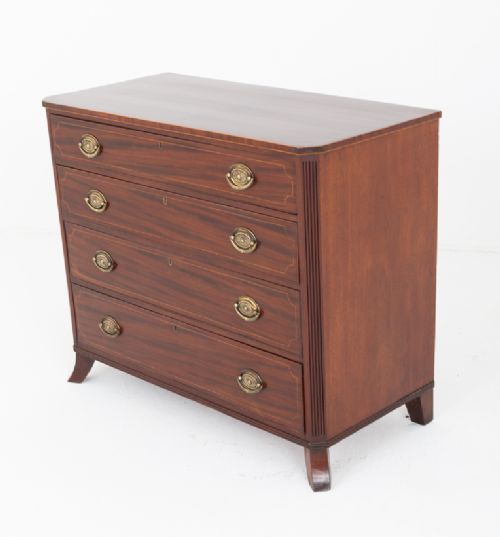
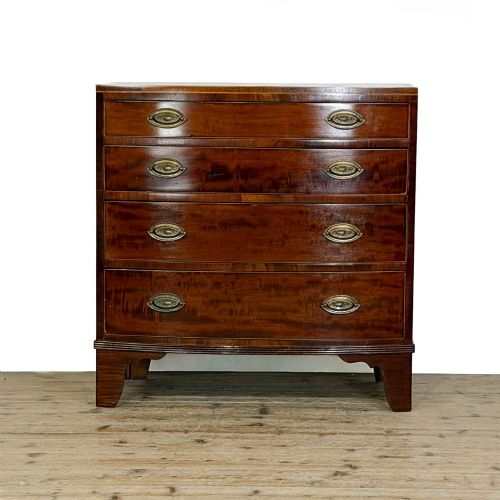
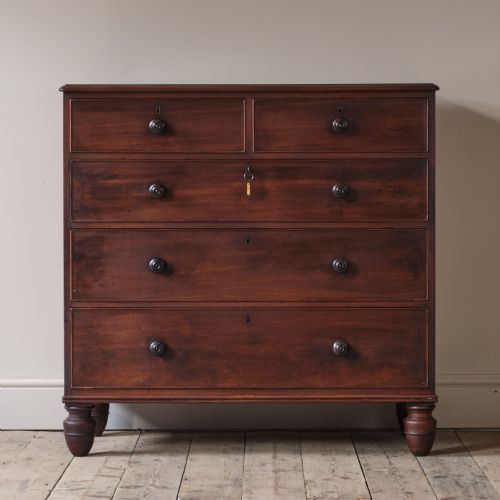
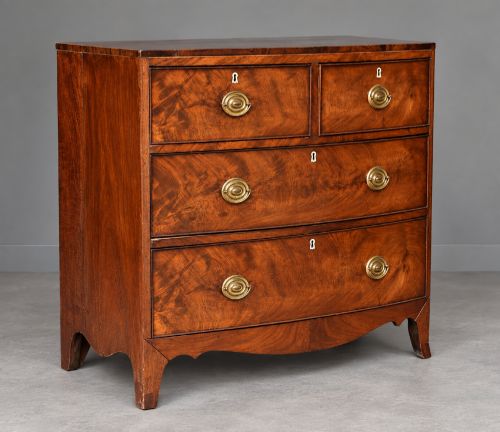
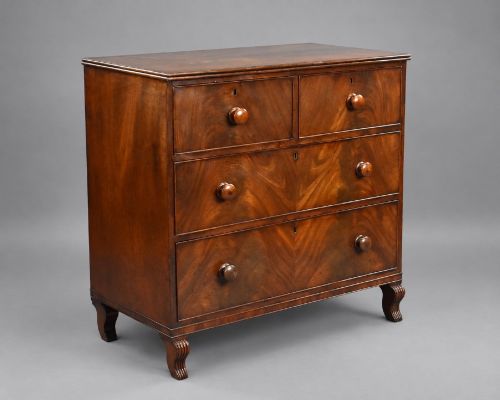
These pieces are primarily chests of drawers originating from the Regency period, alongside related forms like bow fronts, tallboys, and specialised cabinets. The listings heavily feature mahogany as the dominant timber, often enhanced by flame veneers or satinwood crossbanding that highlights the period's preference for striking wood figures.
Buyers will encounter straight-fronted models alongside popular bow front chests, compact bedside versions, and occasional tallboys. While the core stock dates firmly to the early nineteenth century, related examples span from late Georgian foundations through to later nineteenth and early twentieth-century interpretations.
Materials and Construction
Cabinet makers relied principally on solid mahogany and pine for structural carcases, applying figured flame mahogany veneers to drawer fronts and drawer linings of oak or pine. Brass hardware, including drop handles and escutcheons, provides functional contrast to the dark polished timber surfaces.
Joinery techniques involve precise dovetailing on drawer construction and secondary woods like oak for internal drawer linings. Crossbanding in lighter satinwood or contrasting stringing frames the main drawer panels, demonstrating meticulous attention to surface detail.
Quality Variations
Superior examples distinguish themselves through the selection of timber figures, such as heavily figured flame mahogany and crisp satinwood crossbanding that remains intact and unwarped. The precision of the drawer dovetailing and the retention of original brass handles and backplates elevate a piece above standard utility items.
T G Seddon·Gillows
The Regency Wooden Drawers Glossary
- Bow Front
- A convex, curved front shape popular on chests of drawers during the Regency period. This curved design softens the rigid lines of standard case furniture.
- Flame Mahogany
- A veneer cut from the fork of a mahogany tree to create a distinctive, flickering flame pattern. It provides rich visual texture on drawer fronts.
- Crossbanding
- A narrow strip of veneer laid around the border of a panel with the grain running perpendicular to the centre. This technique creates a neat framing effect on tabletops and drawer fronts.
- Tallboy
- A tall chest of drawers consisting of one chest stacked on top of another. These units maximise vertical storage space in bedrooms.
- Satinwood
- A durable, yellow-toned timber used for contrasting inlay and stringing on Regency furniture. It brightens darker mahogany surfaces.
Regency Wooden Drawers: Frequently Asked Questions
What defines Regency wooden drawers?
Regency wooden drawers are characterised by their early nineteenth-century origins, prominent use of mahogany and flame mahogany veneers, and refined classical proportions. They often feature curved bow fronts and subtle decorative inlay.
Cabinet makers during this era focused on clean lines combined with striking wood grain patterns, creating storage pieces that functioned as decorative focal points.
How do I care for antique mahogany drawers?
Maintain antique mahogany surfaces by keeping them away from direct sunlight and steady heat sources to prevent the timber and veneers from drying out. Dust regularly with a soft, dry cloth and apply a quality beeswax polish sparingly.
Avoid using modern liquid sprays containing silicones, as these can penetrate old finishes and damage the traditional polish over time.
Where were these chests used?
These chests were primarily designed for bedrooms and dressing rooms to store clothing, linens, and personal valuables. Smaller variations were also placed in hallways or living spaces.
Their finished backs and refined appearance allowed them to sit comfortably in principal rooms rather than remaining hidden away in private chambers.
How can I tell a Regency chest from a later copy?
Examine the secondary timbers inside the drawers, such as oak or pine, alongside the hand-cut dovetail joints which show subtle irregularities typical of nineteenth-century work. Look for signs of age in the timber shrinkage and the patina of the polish.
Machine-cut joints, uniform modern screws, and absence of timber movement generally indicate a later reproduction rather than an authentic period piece.