



Regency Whatnot
A regency whatnot brings tiered display to a room, offering open shelving for books and ornaments with understated upright supports.
Regency Whatnot
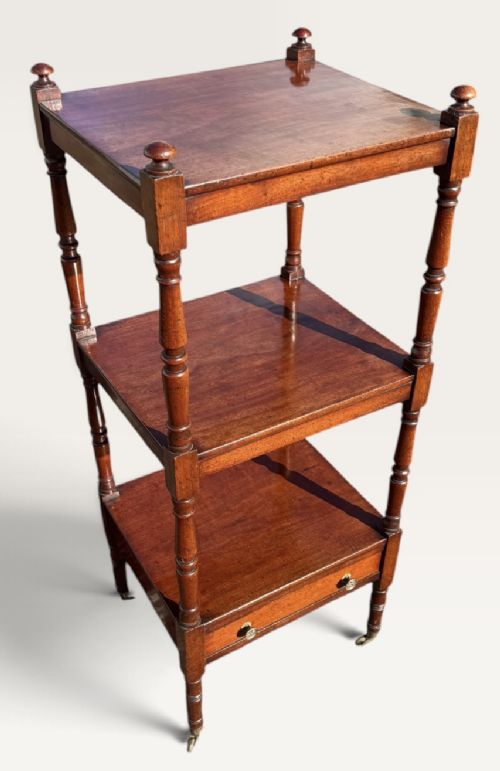
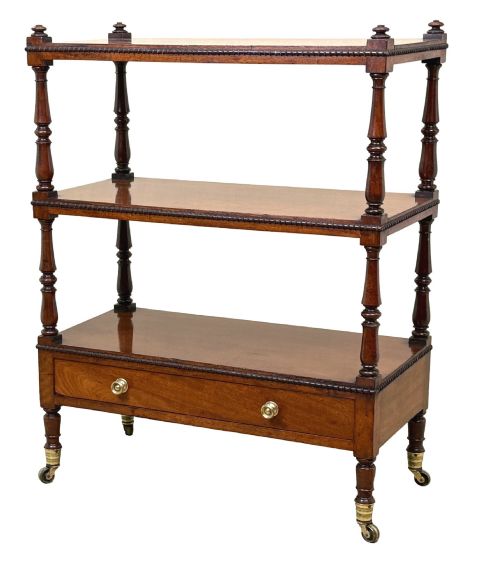
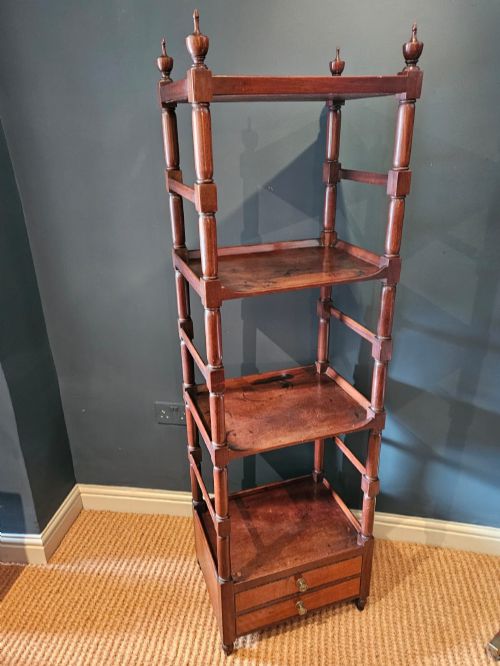
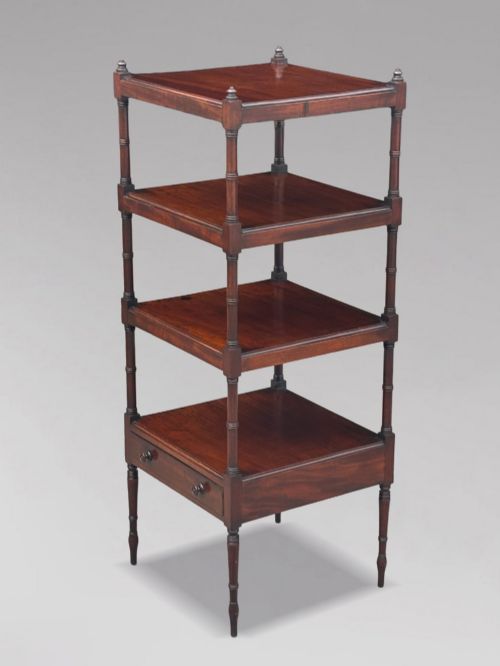
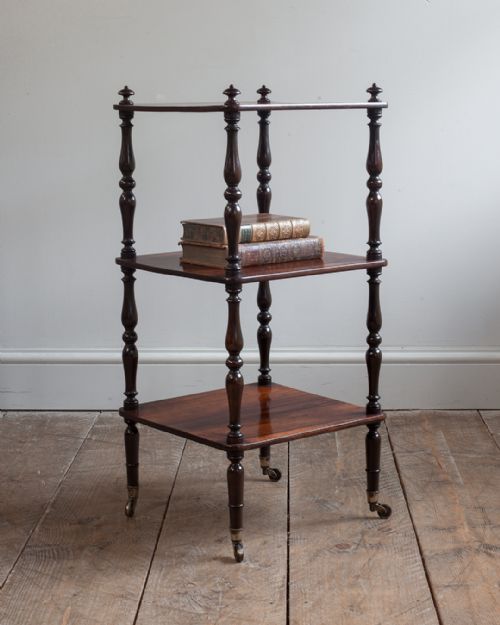
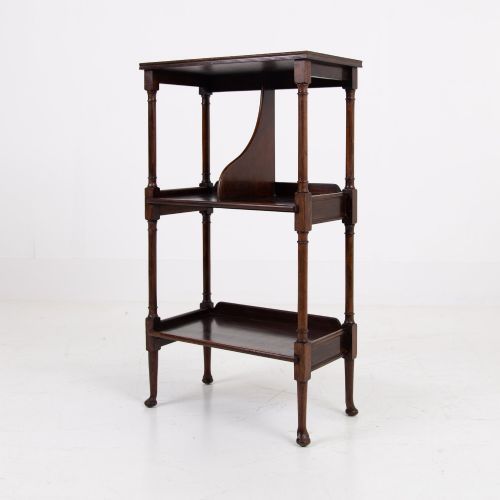
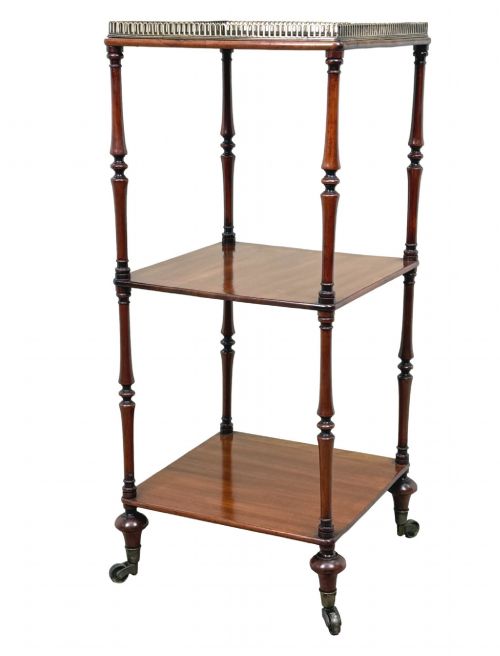
A regency whatnot is a multi-tiered piece of freestanding furniture designed to hold books, sheet music, or decorative objects within domestic parlours and libraries. These pieces appear primarily as tiered shelving units, often taking square, rectangular, or octagonal forms with slender uprights connecting each level.
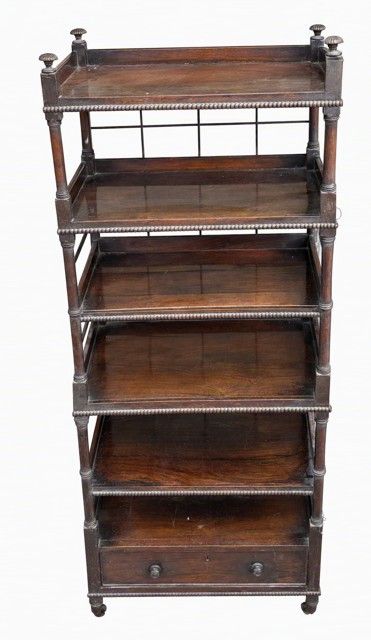
Most examples encountered here date from the Regency and George IV periods, alongside later Victorian interpretations and revivals. The form ranges from simple three-tier stands to taller structures incorporating drawers, cellarettes, or reading stands at the base.
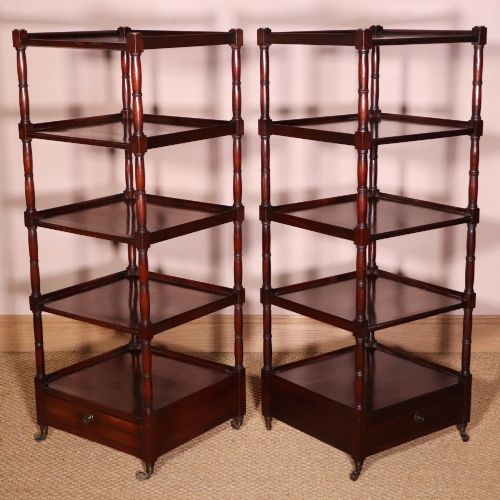
Makers of the era utilised mahogany and rosewood as primary timbers, constructing open display furniture that served practical storage needs without dominating the floor space. Buyers find both single stands and matched pairs designed to stand alongside seating or against panelled walls.
Materials and construction methods
Cabinetmakers built these tiered units predominantly using dense hardwoods such as mahogany and rosewood, occasionally incorporating burl elm, burr walnut, birdseye maple, or ebonised wood for decorative contrast. Turned columns or slender square supports divide the shelves, frequently joined by brass castors at the floor level for mobility.
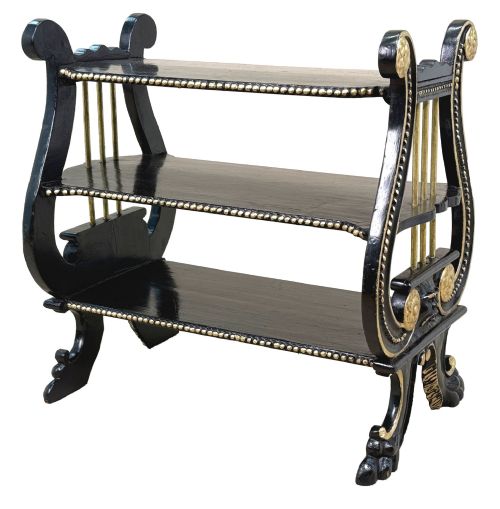
Finer workshops employed sophisticated joinery to ensure stability across multiple open tiers, adding small galleries or spindle rails to keep objects secure on upper shelves. Details such as parcel gilding, brass inlay, and adjustable reading ledges appear on select music stands and reading tables within the category.
Regency Whatnot Retail Price Guide 2026
Typical asking prices for regency whatnot among the pieces listed under this phrase on Sellingantiques today, from the lower quarter to the upper quarter. They describe what is for sale here now, not the wider market.
Several stands double as music rests, suggesting someone practiced scales while keeping sheet music neatly stacked just inches away.
Distinctions in craftsmanship
Quality in a regency whatnot rests upon the choice of timber grain, the proportion of the tiers, and the crispness of the turned uprights. Superior examples exhibit carefully matched veneer figures across each shelf surface and precise joinery that maintains rigidity without heavy bracing.
Gillows
The Regency Whatnot Glossary
- Whatnot
- An open shelving unit with multiple tiers used for displaying or storing small household objects. The form emerged in the late eighteenth century and remained popular through the Victorian era.
- Étagère
- A French term for a display stand with several shelves rising one above another. It functions similarly to a whatnot for holding porcelain, books, or ornaments.
- Cellarette
- A fitted cabinet or compartment positioned in the lower section of certain stands to hold bottles. It provides secure enclosed storage beneath open display shelves.
- Canterbury
- A low stand featuring slatted partitions, originally built to hold sheet music or folios. Many period examples combine this partitioned base with upper whatnot shelves.
- Dumb waiter
- A tiered freestanding piece used in dining rooms for holding dishes or serving items without domestic staff present. Some multi-tiered stands share this tapered upright construction.
Regency Whatnot: Frequently Asked Questions
What was a regency whatnot used for?
These tiered stands served as practical storage for books, writing materials, and decorative objects in principal rooms. Families placed them beside seating or against walls to keep frequently used items within easy reach.
Over time, variations emerged with built-in music stands, reading ledges, and lower drawers or cellarettes. This flexibility allowed the furniture to adapt to the specific needs of the drawing room or library.
How do I identify a period piece?
Examination of the timber, secondary woods, and construction joints helps determine the age of a piece. Period items from the early nineteenth century typically feature dense mahogany or rosewood with hand-turned uprights and subtle patination.
Later Victorian revivals often display heavier proportions, machine-cut elements, or different internal framing methods. Comparing the turning style and shelf graduation against documented examples clarifies the date of manufacture.
Are pairs difficult to find?
Matched pairs of tiered stands occur less frequently than single pieces due to the scatter of domestic furniture over generations. When workshops produced them for symmetrical placement in grand rooms, they utilised matching timber veneers for both frames.
Buyers seeking a pair must look for consistent shelf dimensions, identical turning patterns on the supports, and uniform wear across the wood surfaces. Single stands remain far more common in the market.
How do I care for rosewood and mahogany?
Maintenance requires keeping the timber away from direct sunlight and extreme humidity fluctuations to prevent veneer splitting. Regular dusting with a dry, soft cloth preserves the natural polish without building up excess residue.
Applying a traditional beeswax polish occasionally nourishes the grain and enhances the depth of the dark hardwoods. Avoiding liquid cleaners protects the historic finish and underlying joins.