
Regency Tier Stand
A regency tier stand offers stacked surfaces for books, plants, and display, bringing elegant vertical storage to traditional rooms.
Regency Tier Stand
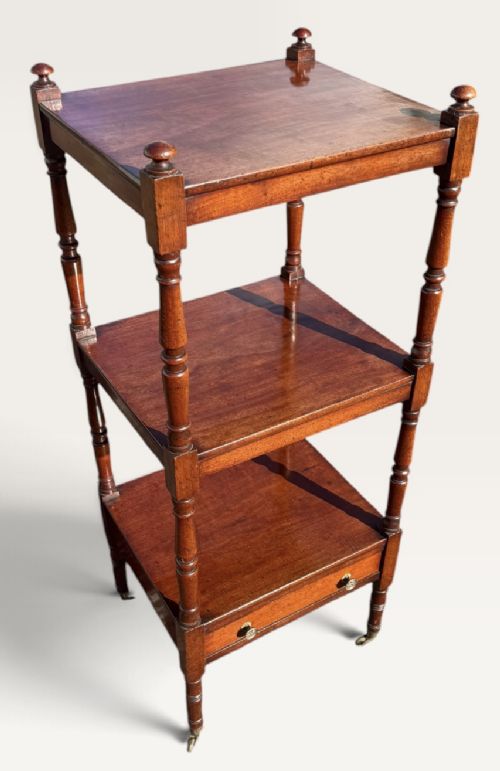
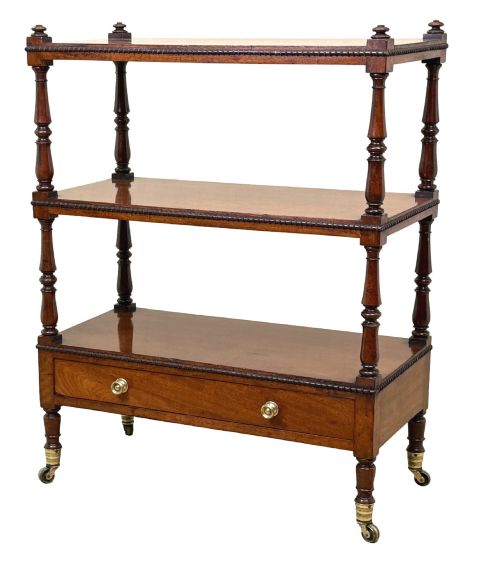
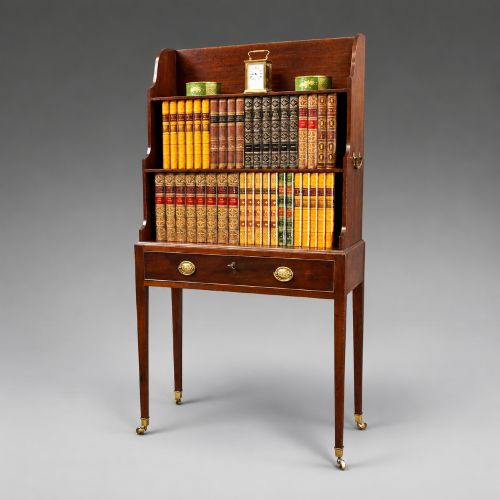
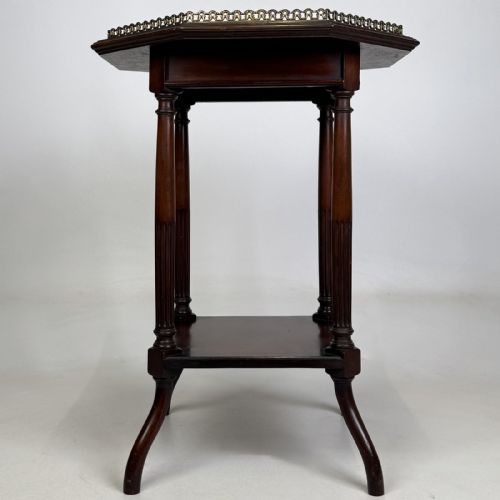
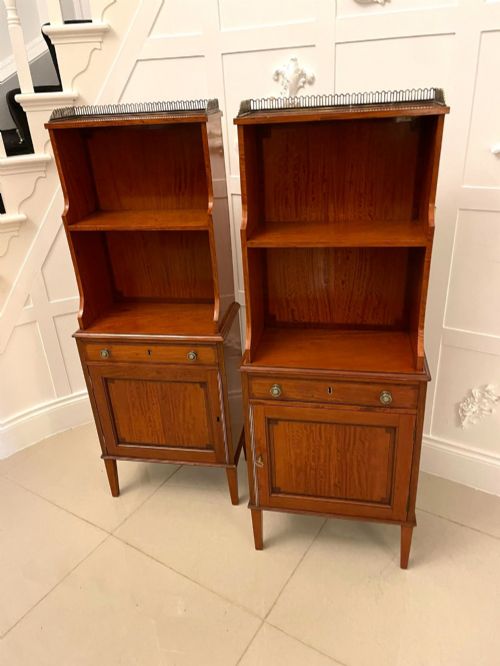
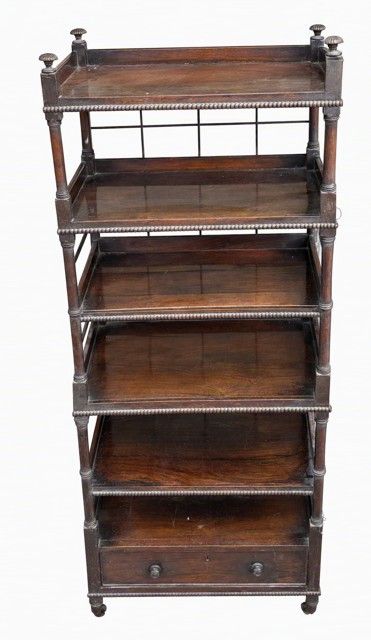
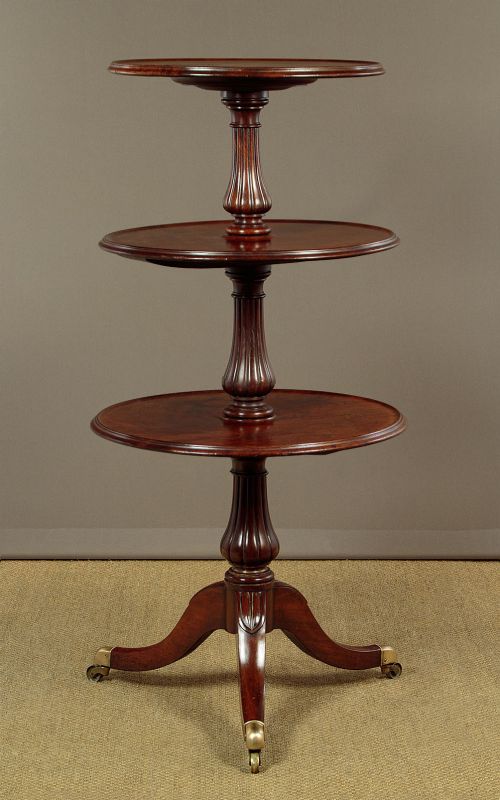
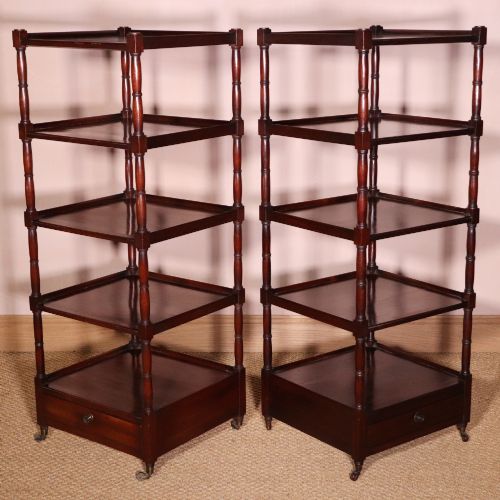
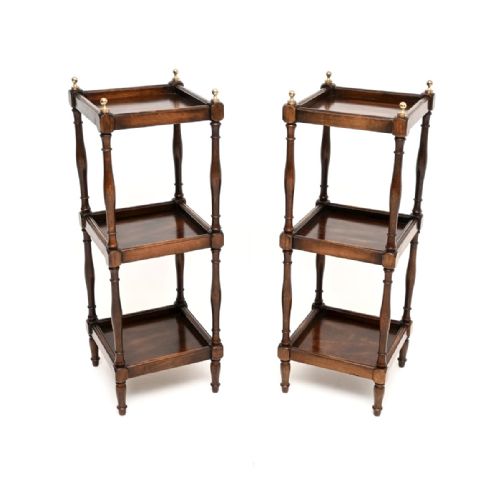
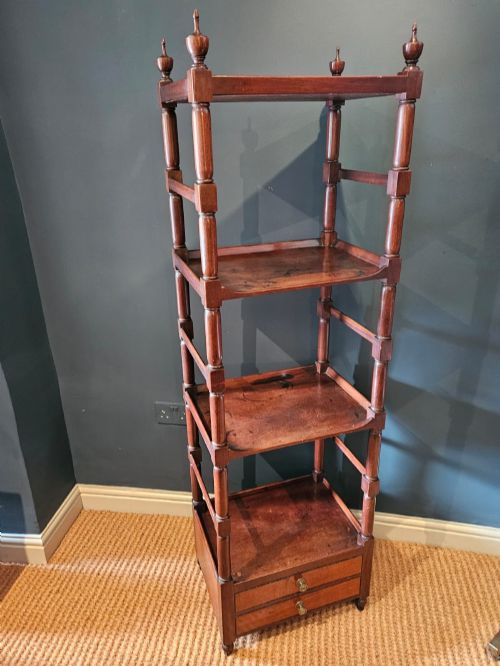
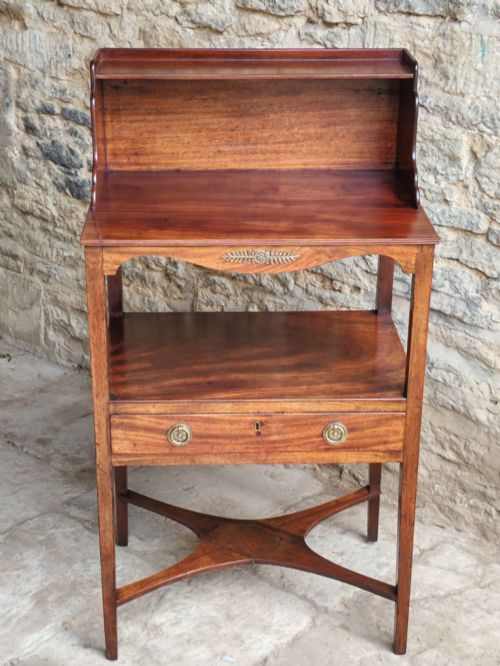
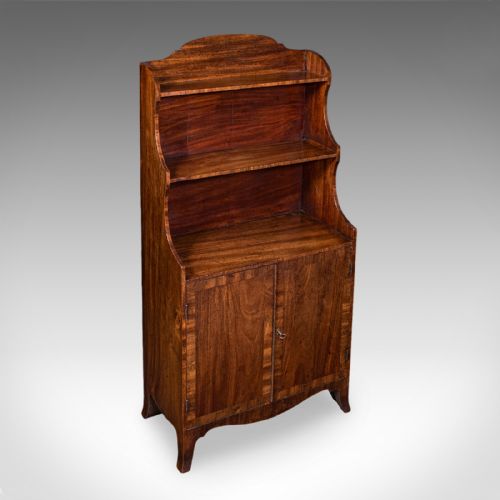
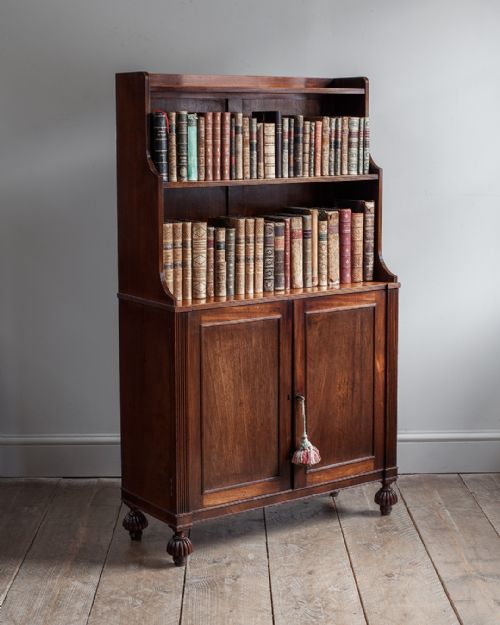
A regency tier stand encompasses multifarious freestanding multitiered furniture forms, primarily appearing as what-nots, etageres, dumb waiters, and waterfall bookcases. These pieces provide multiple open shelves arranged vertically, designed to hold books, ornaments, and serving items without dominating floor space.
Most examples you encounter on this page span the Regency period and the wider nineteenth century, alongside later revivals from the Edwardian era and the nineteen-twenties and thirties. Mahogany and rosewood dominate the form, often configured in two, three, or four tiers.
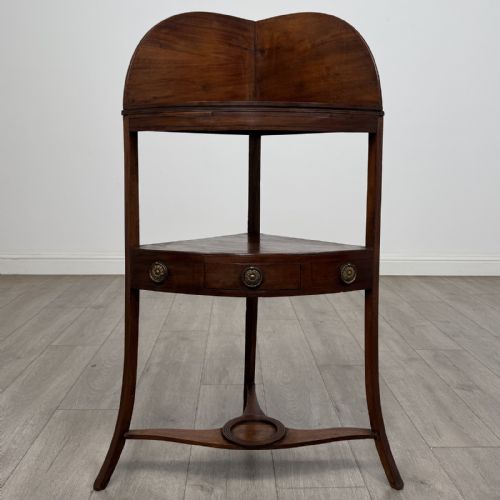
You will also find specialised variants like music stands, corner stands, and revolving dumb waiters among the selections. These functional items reflect the diverse domestic requirements of their original nineteenth-century settings.
How they were made
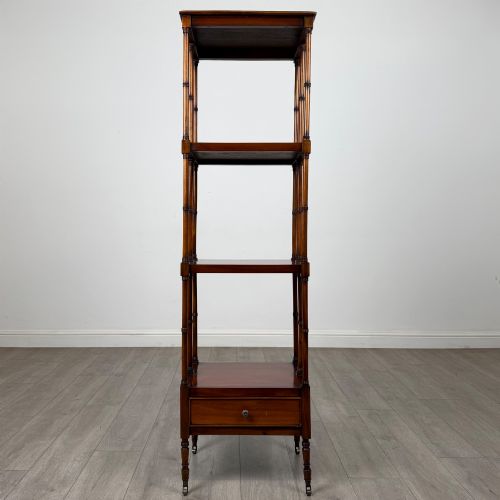
Cabinet makers constructed these tier stands predominantly from solid and veneered timbers, utilising rich figured mahogany, rosewood, and occasional birdseye maple. Uprights and supports frequently incorporate turned wood columns, brass rods, or parcel-gilded elements to divide the tiers.
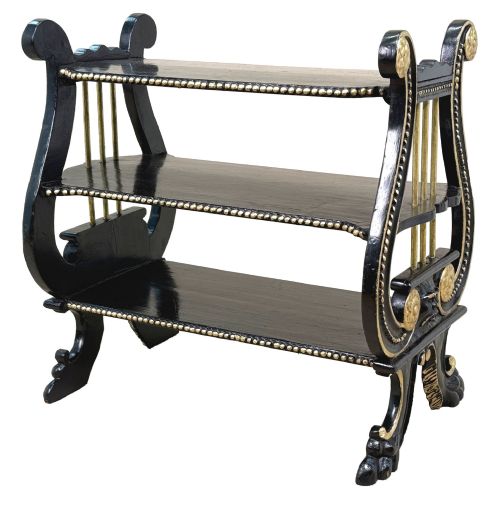
Surface treatments range from polished mahogany grains to ebonised wood and paint, sometimes paired with delicate wirework or brass galleries. Joinery techniques prioritize stability across multiple levels, balancing heavy hardwood shelves upon slender vertical supports.
Some nineteenth-century stands feature folding reading lecterns so guests could peruse heavy folios while standing politely.
What varies in quality
The distinction between ordinary and exceptional pieces rests upon timber selection and the crispness of turning on the upright supports. Superior examples display dense, highly figured flame mahogany or richly grained rosewood matched evenly across every shelf.
Refinement in secondary details, such as integrated brass castors, fine brass galleries, and precise joinery at the tier junctions, elevates a piece. Pieces reflecting workshop attributions or superior proportion maintain greater harmony between their loaded vertical weight and slender framing.
Gillows·George Bullock
The Regency Tier Stand Glossary
- What-not
- An open shelving unit with multiple tiers supported by slender uprights, designed for displaying ornaments or holding books. These pieces became popular during the Regency period for organising loose items in drawing rooms.
- Étagère
- A French term for a piece of furniture consisting of a set of open shelves for displaying small objects or ornaments. They frequently appear in rosewood or ebonised wood with multiple decorative tiers.
- Dumb waiter
- A tiered freestanding stand traditionally used in dining rooms for serving food or holding tableware without servant assistance. Many Regency examples feature revolving circular tiers supported on a central column and tripod base.
- Waterfall bookcase
- A graduated set of open shelves where each successive tier is shallower than the one below, resembling a descending cascade. They provide compact book storage with a distinctive stepped profile.
- Canterbury
- A low, open-partitioned stand originally designed for holding sheet music or loose folios, often incorporated into the lower section of tiered furniture. These compartments allow organised vertical sorting of papers.
Regency Tier Stand: Frequently Asked Questions
What is a regency tier stand used for?
These tiered pieces served varied domestic purposes, functioning as book repositories, display surfaces for ornaments, and serving stands for meals. Their open vertical design allowed owners to house collections within compact floor footprints.
Today, they adapt readily to modern interiors as lamp tables, bedside storage, or plant stands. Their multiple levels provide practical organisation for daily items while maintaining an airy visual presence.
How do I date a tier stand?
Dating relies on timber choices, turning styles, and construction methods characteristic of specific decades. Regency and Georgian pieces typically feature solid mahogany or rosewood with hand-turned supports and period joinery.
Later Victorian and Edwardian revivals often incorporate softer secondary woods or machine-cut components. Examining the patina and fixing methods helps distinguish original early nineteenth-century production from subsequent twentieth-century interpretations.
Where should I place a tier stand at home?
These stands suit corners, alcoves, and spaces beside seating where horizontal surface area is useful. Their open shelves prevent rooms from feeling crowded while utilising vertical wall space effectively.
Avoid placing delicate rosewood or mahogany examples in direct sunlight or beside intense heat sources. Stable humidity preserves the rich wood veneers and prevents warping across the multiple tiers.
What is the difference between a what-not and an etagere?
While both terms describe tiered shelving units, what-nots traditionally emphasise partitioned book and object storage in English interiors. They frequently feature rectangular or corner-fitting shelves supported by turned posts.
Etageres often lean toward decorative display, occasionally utilising French-influenced styling with ebonised finishes, brass accents, and curved outlines. Both forms deliver stacked open platforms for storage and exhibition.