


Regency Tier Chiffonier
These regency tier chiffonier pieces combine refined display space with enclosed storage, offering a practical centrepiece for any traditional interior.
Regency Tier Chiffonier
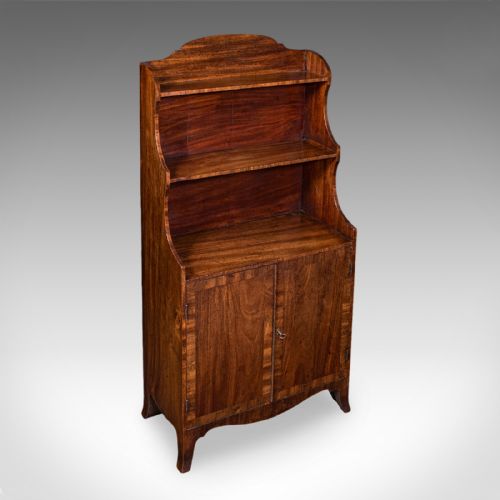
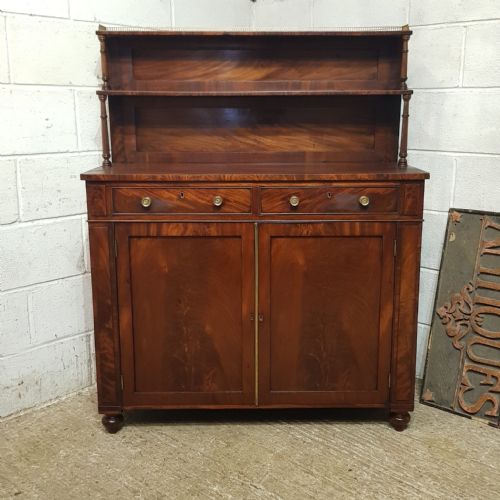
When searching for a regency tier chiffonier, a buyer encounters a specialised form of low cabinet that emerged during the Georgian and Regency periods. These architectural storage pieces feature stepped upper shelves, known as tier or upstand backs, designed for displaying small objects alongside a lower cupboard or drawer section.
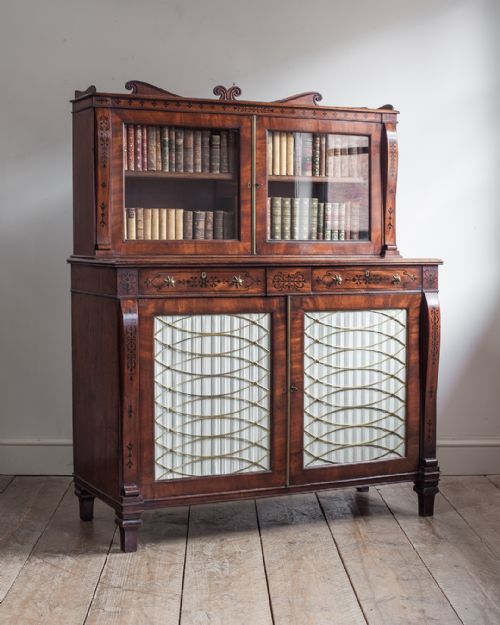
The versions most commonly met on this page date from the nineteenth century, including pieces from around eighteen hundred and the grand Regency era. Surviving examples frequently merge cabinet work with open bookcase elements, often incorporating fitted writing drawers or dwarf side cabinet proportions.
The form developed to serve refined domestic interiors, providing a neat footprint while maintaining vertical presence through graduated shelves. Buyers find these cabinets fabricated in mahogany, rosewood, and satinwood, reflecting the cabinet-making standards of the Georgian and Regency epochs.
How They Were Made
Cabinet makers constructed these pieces using dense hardwoods like mahogany and rosewood, frequently applying flame mahogany veneer over secondary timbers to achieve deep figured surfaces. Selected examples incorporate rich satinwood or exotic palisander timbers, demonstrating advanced timber selection during the Regency period.
Decoration relied heavily on precision brass inlay and mounted brass detailing, integrated directly into the polished wood grain of the door panels and friezes. Structural elements often included graduated tiers supported on turned or shaped uprights, alongside fitted interior writing drawers and marble top surfaces.
Some tier chiffoniers hide secret writing drawers so compact they could barely hold a love letter written by a hummingbird.
What Varies in Quality
The tier chiffonier range separates according to the fineness of the timber veneer and the precision of the brass inlay work. Superior examples display carefully matched flame mahogany grain and harmonious proportions across their tiered shelving backs.
Gillows
The Regency Tier Chiffonier Glossary
- Chiffonier
- A small, low sideboard or cabinet with shelves on top, evolving during the Regency period to hold books and display items. It provides both enclosed storage and open display within a compact footprint.
- Palisander
- A dense, dark timber akin to rosewood, utilised for fine cabinet making and decorative veneer work. Its rich grain patterns made it popular for high-status Regency furniture.
- Upstand
- The raised vertical tier or shelf backing attached to the top of a cabinet. These graduated shelves allowed for the neat arrangement of decorative ceramics or small volumes.
- Secretaire
- A writing cabinet featuring a pull-down desk flap that conceals small drawers and pigeonholes. This multifunctional element often hides within the upper drawer tier of sophisticated side cabinets.
- Dwarf bookcase
- A low shelving unit designed to sit below dado height, keeping walls clear above. These pieces frequently share the proportions and storage functions of regional tier chiffoniers.
Regency Tier Chiffonier: Frequently Asked Questions
What is a regency tier chiffonier?
A regency tier chiffonier is a low nineteenth-century cabinet featuring graduated open shelves above a closed cupboard base. These pieces served as multifunctional furniture for display and storage in refined rooms.
Cabinet makers produced them in woods like mahogany and rosewood, often embellishing the surfaces with brass inlay. The upper tiers held books or ornaments while the lower section concealed household items.
How were these cabinets used originally?
Original usage centred on the drawing room or parlour, where homeowners displayed porcelain, small sculptures, and bound volumes on the upper tiers. The enclosed lower cupboards stored papers, linens, or silverware.
Selected models incorporated writing drawers, allowing the furniture to function as a compact desk space during the day. Their low profile ensured windows and wall art remained unobstructed.
How do I care for rosewood and mahogany?
Maintaining these polished hardwood surfaces requires dusting with a soft, dry cloth and avoiding direct sunlight to prevent fading. Natural waxes help nourish the timber without building up heavy chemical residues.
Keep the cabinets away from direct heat sources and sudden humidity changes to protect the wood grain and delicate veneer work. Marble top variants benefit from simple wiping with damp cloths followed by immediate drying.
How do I distinguish Regency from Georgian pieces?
Georgian furniture generally displays classical proportions and understated rectilinear forms rooted in eighteenth-century design principles. Regency pieces often incorporate bolder decorative treatments, such as extensive brass inlay and exotic timber veneers.
Tier chiffoniers from the Regency era frequently feature more pronounced architectural upstands and specialised hardware compared to earlier Georgian side cabinets.