





Regency Tall Clock
A regency tall clock commands a room with architectural presence and precise mechanical mastery, offering an anchor of heritage and rhythm for the home.
Regency Tall Clock
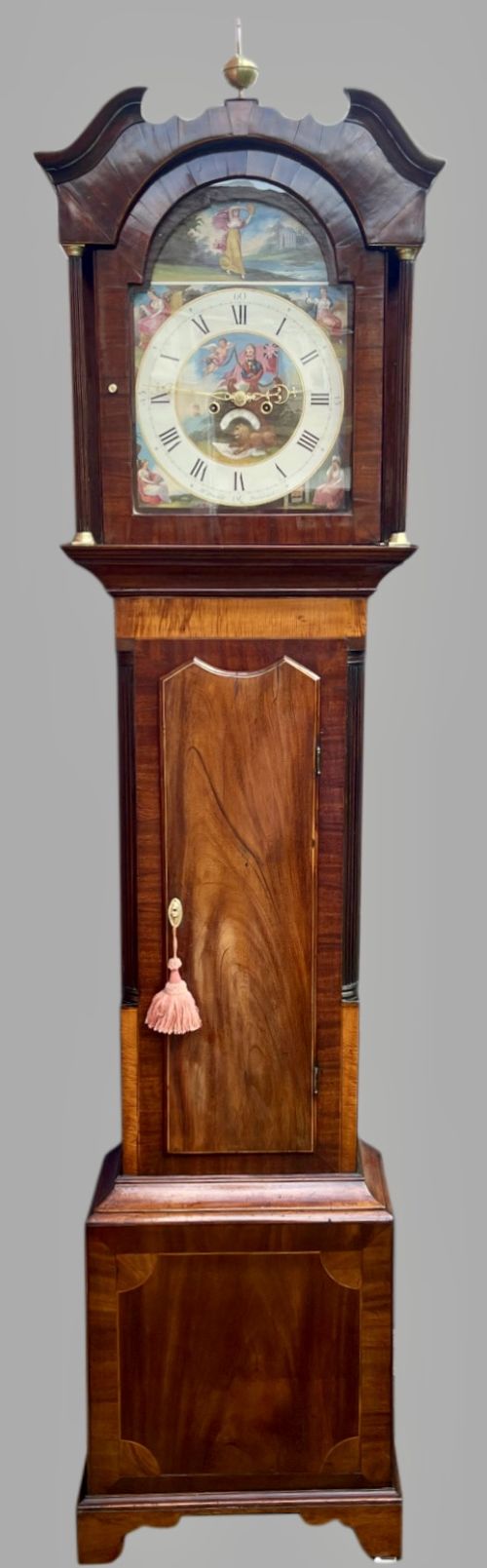
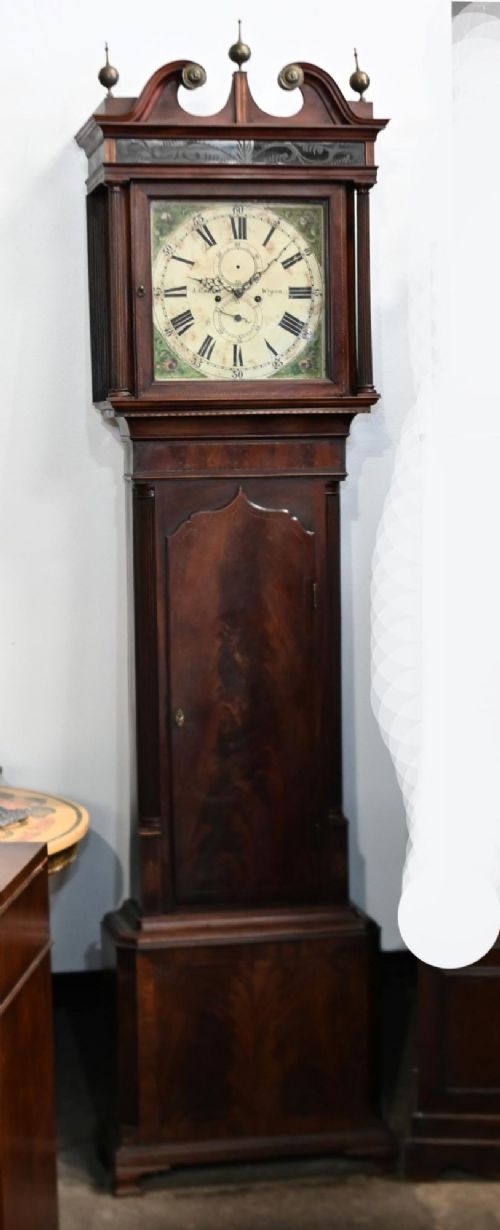
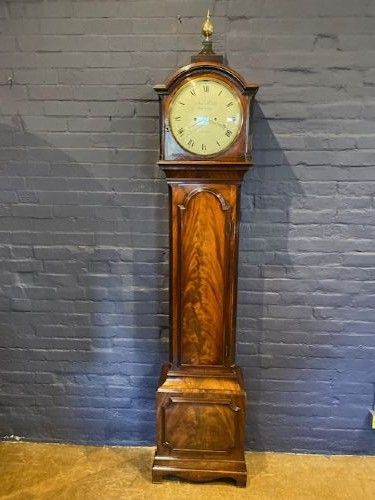
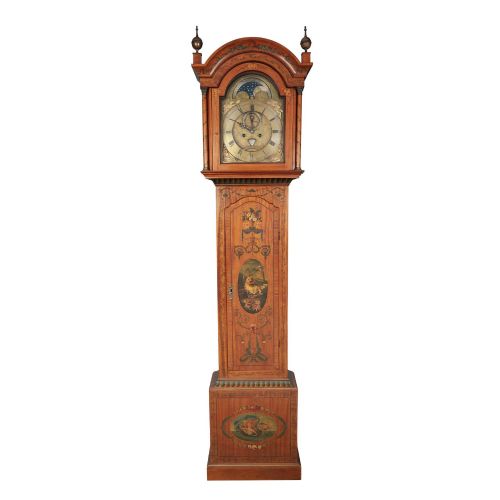
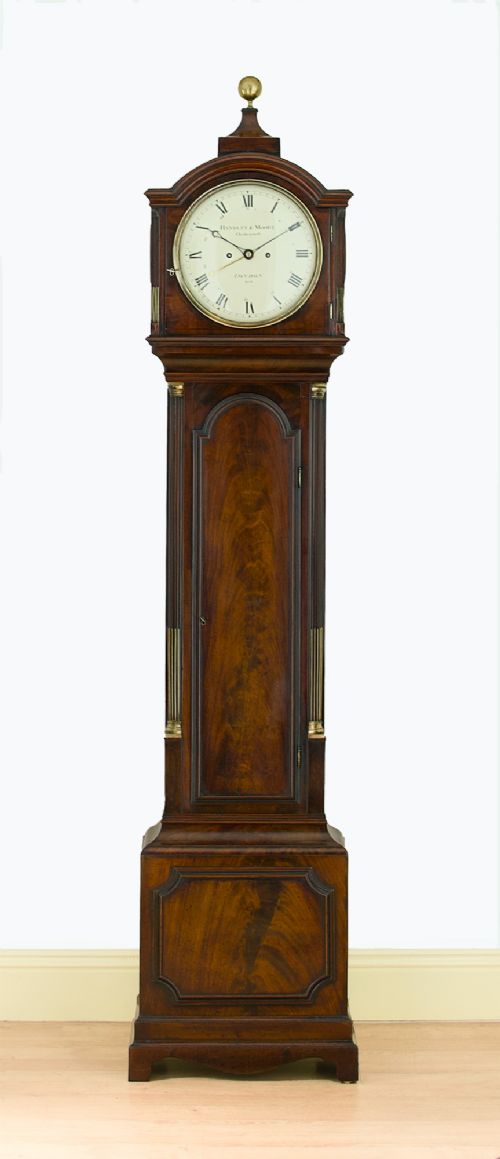
A regency tall clock stands as a monumental timepiece housed in an upright wooden case, uniting furniture design with horological engineering. When exploring a regency tall clock on this page, buyers encounter tall floor-standing longcase and grandfather clocks originating primarily from the nineteenth century and the Georgian era.
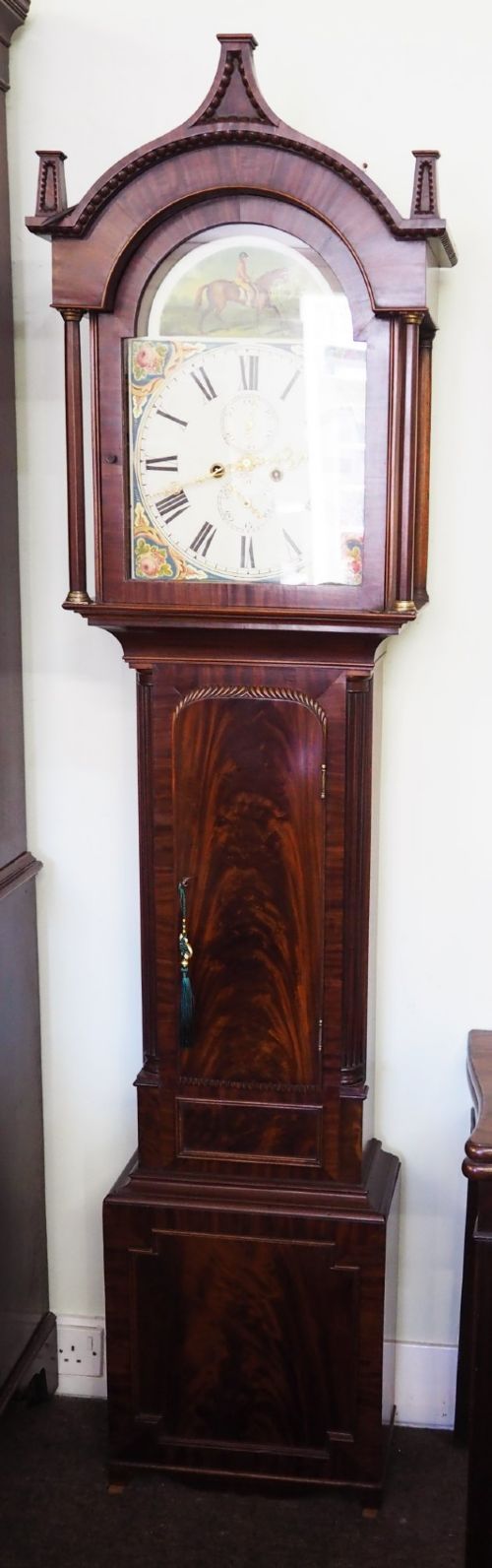
The pieces appearing here showcase regional variations from London workshops, Scottish makers in centres such as Edinburgh and Dunfermline, and provincial makers from places like Wigan, York, and Wales. Mahogany, flame mahogany, and oak form the predominant cabinetry, housing painted iron, enamel, or brass dials.
Makers often integrated moonphase mechanisms, quarter-striking systems, or rocking seesaw automata into the dial face. Cabinet styles stretch from standard Georgian proportions to Scottish Regency and Regency Gothic Revival lancet-topped cases.
Materials and construction
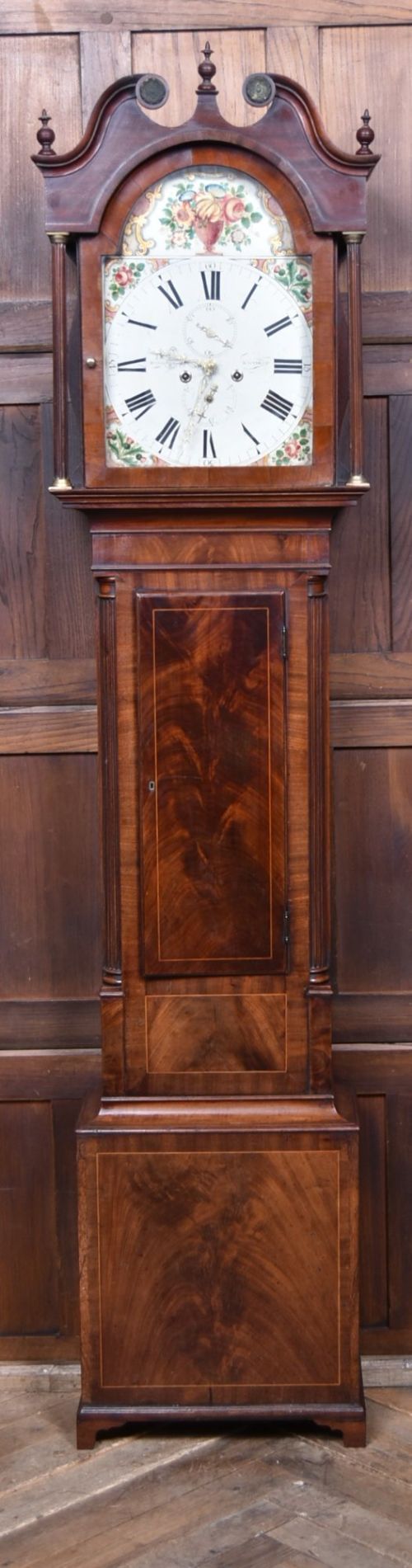
Cabinet makers built these tall cases predominantly using solid mahogany, figured flame mahogany, or oak, often incorporating intricate inlay work and glass panels to protect the dial. Selected woods underwent careful seasoning to prevent warping over decades of housing heavy weight-driven mechanical movements.
Dial faces combined iron plates with painted finishes, enamel details, and applied brass numerals or spandrels. Metalworkers forged the intricate brass gear trains, escapements, and pendulum rods that kept eight-day time or regulated precision tracking.
Regency Tall Clock Retail Price Guide 2026
Typical asking prices for regency tall clock among the pieces listed under this phrase on Sellingantiques today, from the lower quarter to the upper quarter. They describe what is for sale here now, not the wider market.
Listings feature eighteenth and nineteenth-century longcase clocks constructed from mahogany, flame mahogany, and oak, originating from London, Welsh, and Scottish makers.
Distinctions in craftsmanship
The visual hierarchy of these longcase clocks rests heavily on the selection of timber and the sophistication of the cabinetry. Figures at the upper tier display book-matched flame mahogany veneers and crisp architectural mouldings, whereas simpler regional pieces rely on sturdy plain oak.
Dial execution separates workshop standards significantly, with hand-painted floral arches and complex moonphase or quarter-striking complications marking out the ambitious town productions from standard utility timepieces.
James McCabe·Handley & Moore·Samuel Kellett·Parkinson & Frodsham·Dwerrihouse & Carter·Perigal·Ganthony Of London
The Regency Tall Clock Glossary
- Longcase clock
- A tall, weight-driven pendulum clock housed in a protective wooden case standing directly on the floor. This term is synonymous with the grandfather clock.
- Moonphase
- A rotating dial mechanism tracking the lunar cycle visible through an aperture on the clock face. It added both practical utility and visual charm to the upper dial.
- Regulator
- A precision timekeeper designed for extreme accuracy, often featuring a simplified dial layout and mercurial or gridiron compensation pendulums. These were essential for setting local time standards.
- Quarter-striking
- A movement complication that sounds the Westminster or other chime sequences at each quarter hour before striking the full hour. It requires an additional train of gears within the weight-driven movement.
- Spandrel
- The triangular corner space between a circular dial face and its square frame, frequently decorated with cast brass ornamentation or painted motifs.
Regency Tall Clock: Frequently Asked Questions
Where should I place a tall clock?
Position your longcase clock against a sturdy interior wall away from direct sunlight, central heating vents, and damp exterior stone. Hallways, landings, and principal reception rooms provide stable environments where the pendulum can swing level without floor vibration.
Ensure the selected spot allows sufficient clearance for the full height of the case and permits easy access for opening the front door to wind the weights.
How do eight-day movements work?
An eight-day movement relies on two suspended weights connected by cords or chains to brass drums within the mechanical gear train. Gravity pulls the weights down over the course of a week, turning the gears that drive the hands and operate the strike train.
Owners use a winding key every week to draw the weights back up to the top of the trunk, resetting the potential energy required for continuous operation.
How do I identify a Scottish longcase?
Scottish longcase clocks often feature distinctive regional hood designs with swan-neck pediments, arched painted dials, and cabinet work executed in local mahogany or native timber. Inscriptions on the painted iron dial typically name provincial Scottish towns like Dunfermline, Peebles, or Auchtermuchty.
Makers working north of the border frequently incorporated moonphase displays or calendar apertures into the dial layout with distinctive lettering styles.
What is a Gothic revival case?
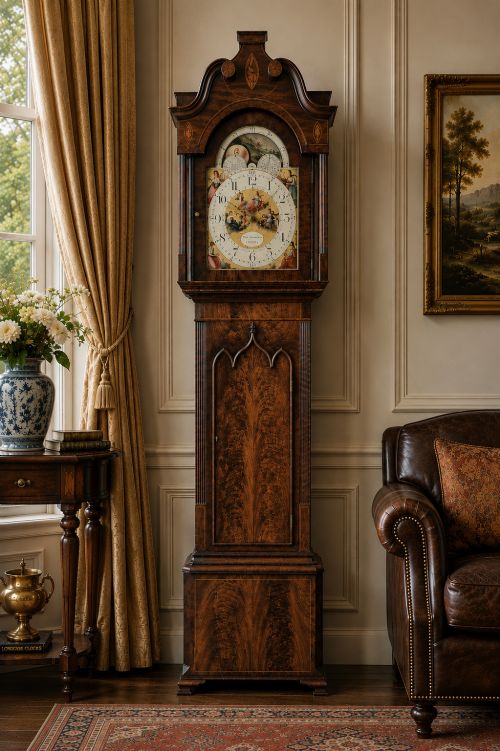
A Gothic revival longcase incorporates architectural elements inspired by medieval ecclesiastical design, such as lancet-topped hoods, pointed arch glass doors, and carved tracery. These stylistic details reflect nineteenth-century romanticism applied to traditional domestic furniture.
Cabinet makers paired these dramatic structural silhouettes with rich mahogany timbers and precise eight-day striking movements to create an imposing interior statement.