


Regency Style Shelf
When you handle a regency style shelf, you hold furniture built for display, holding books and ornaments with architectural poise.
Regency Style Shelf
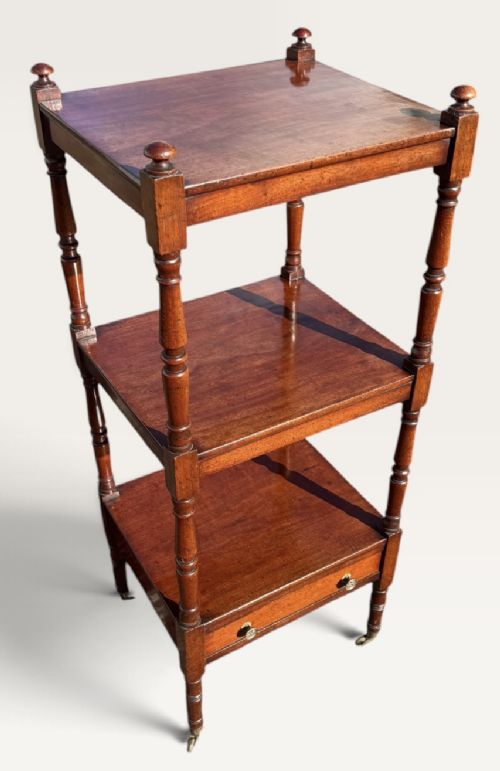
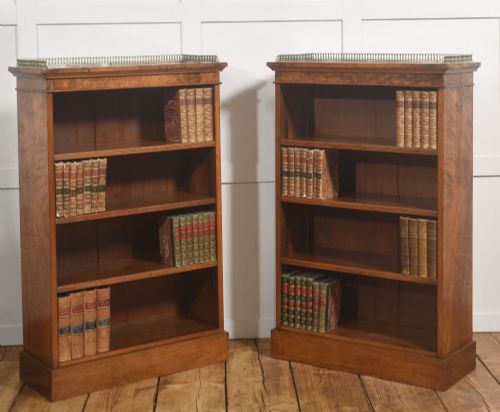
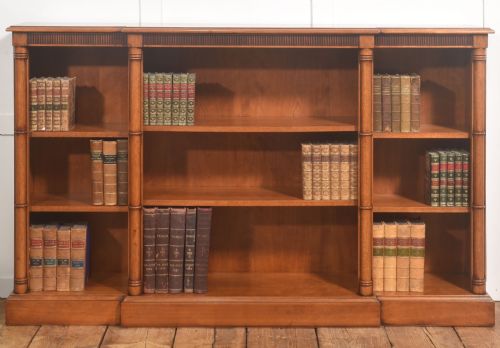
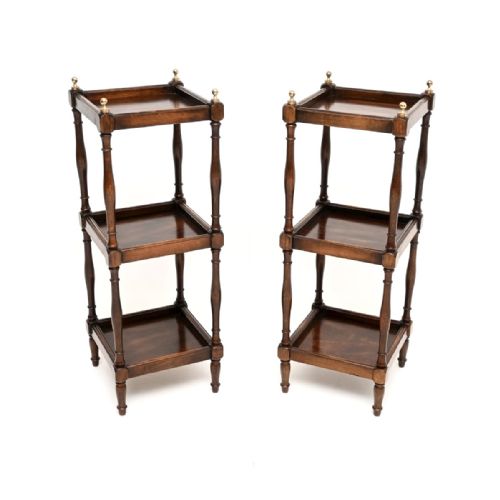
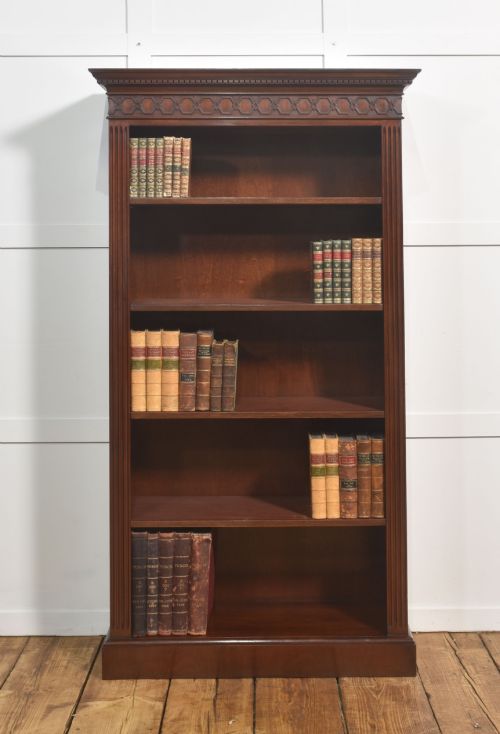
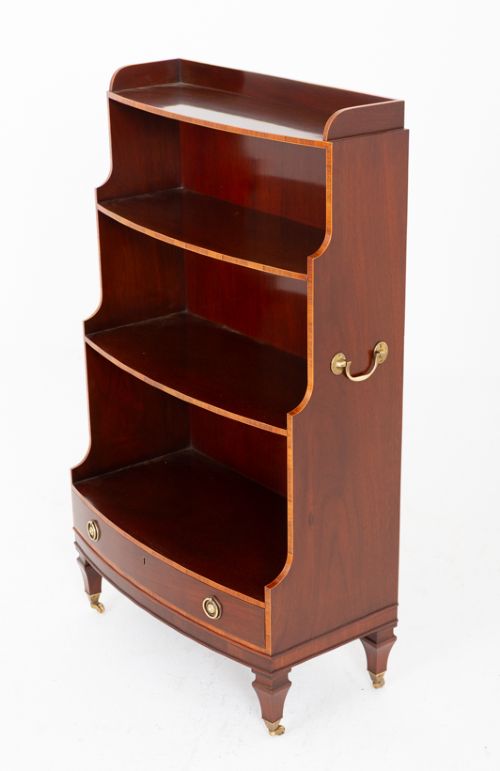
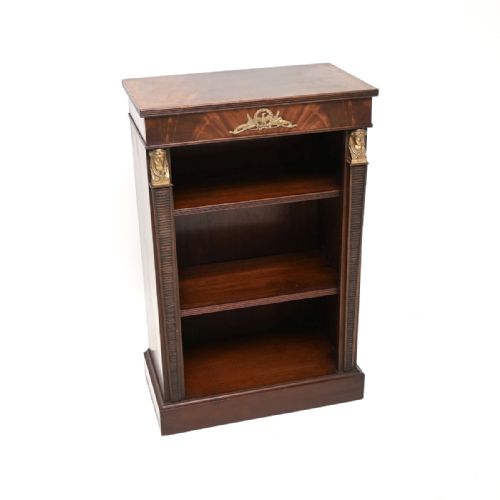
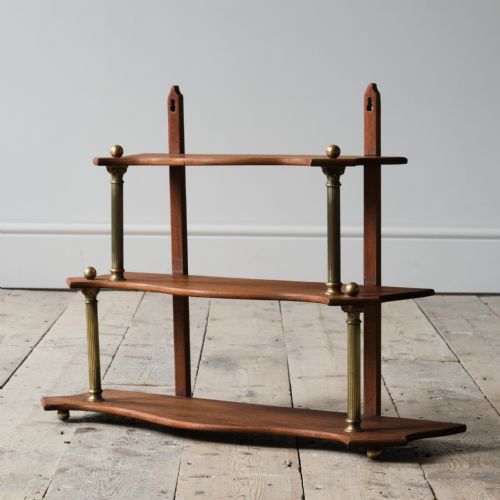
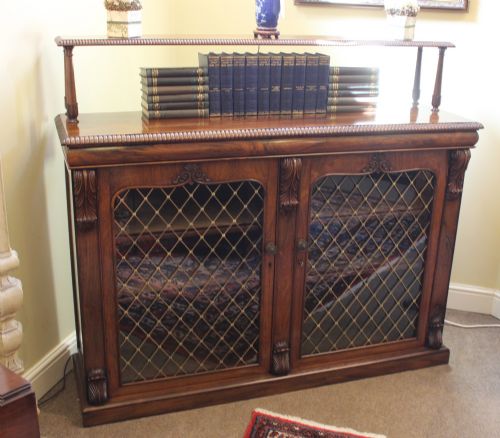
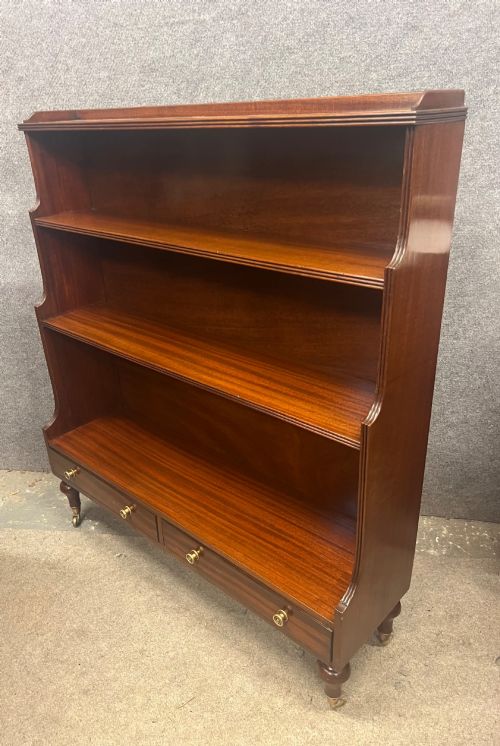
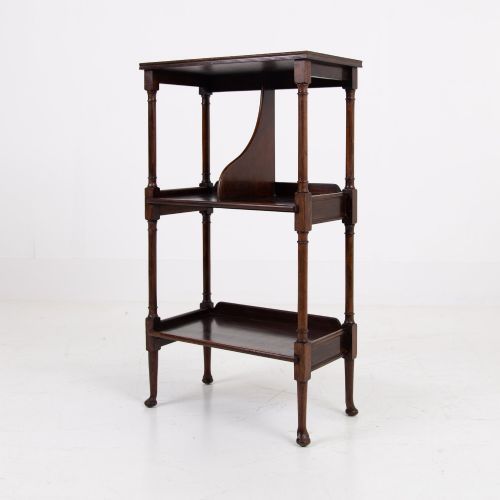
A regency style shelf typically manifests as open bookcases, multi-tiered whatnots, or wall hanging shelves designed to hold books and decorative objects. The pieces appearing here span actual Regency origin, the Georgian era, and subsequent revival periods into the twentieth century.
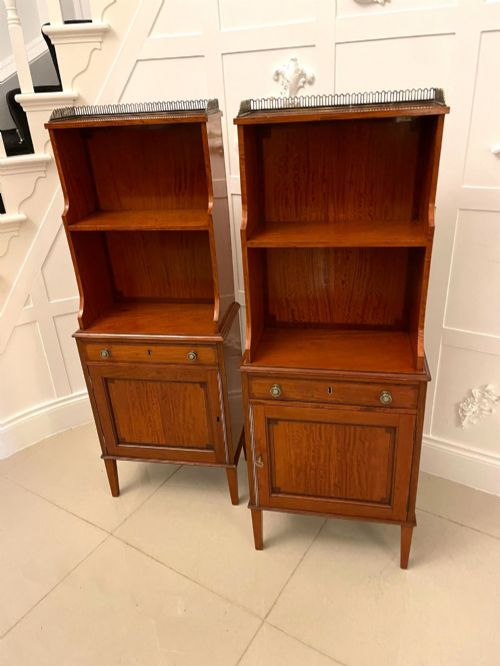
Makers and craftsmen favoured versatile formats such as waterfall bookcases and corner stands, utilising rich timbers to create functional display space. Most examples you encounter lean toward mahogany and rosewood constructions, often incorporating brass galleries or adjustable shelving.
The aesthetic draws heavily on classical lines, balancing proportion and utility whether the piece dates from the original nineteenth century or a later revival. Buyers find these items suited to modern interiors precisely because their open shelving and compact footprints offer practical display without dominating a room.
Factors of craftsmanship and execution
The distinction between standard production and superior work lies in the selection of timber veneers and the crispness of carved details. Finer pieces demonstrate careful attention to grain matching across breakfront surfaces and waterfall tiers.
Hardware and secondary materials also signal quality, distinguishing utilitarian items from pieces finished with cast brass galleries and solid brass mountings. The joinery of adjustable shelves and the weight of the timber reflect the maker's original ambition.
Regency Style Shelf Retail Price Guide 2026
Typical asking prices for regency style shelf among the pieces listed under this phrase on Sellingantiques today, from the lower quarter to the upper quarter. They describe what is for sale here now, not the wider market.
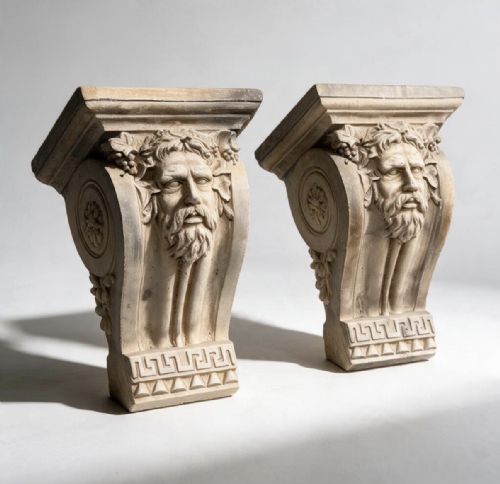
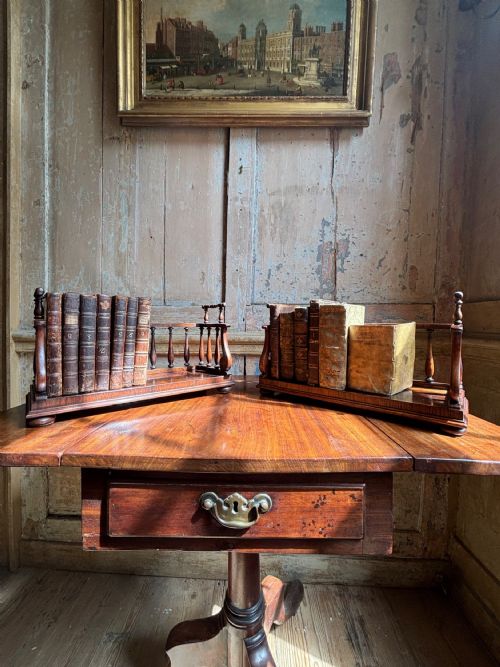
Some diminutive bookcases pack remarkable architectural ambition into furniture small enough to hang on a modest parlour wall.
Gillows·Pennington of Camberwell
The Regency Style Shelf Glossary
- Waterfall bookcase
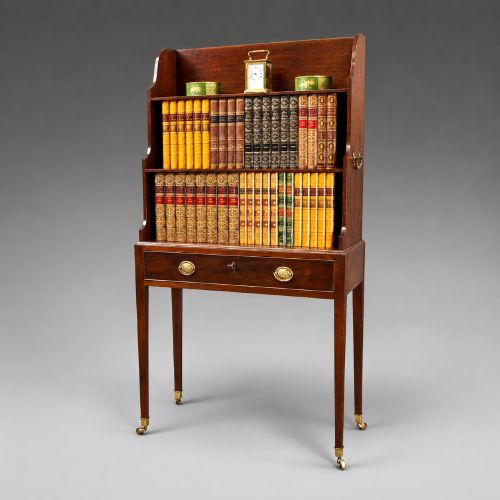
- A set of open shelves where each tier steps back progressively from the one below. The sides often follow this curved descent.
- Breakfront
- A piece of furniture where the central section projects forward from the flanking wings. This architectural arrangement creates depth and shadow.
- Crossbanding
- A narrow strip of veneer laid across the grain of the primary timber to form a decorative border. It frames panels on tabletops and shelf fronts.
Regency Style Shelf: Frequently Asked Questions
What is a waterfall bookcase?
A waterfall bookcase is an open shelving unit where each successive tier steps back from the one below it, creating a descending profile resembling a cascade. These pieces appeared frequently in mahogany and rosewood during the nineteenth century.
Craftsmen often incorporated graduated shelves to display smaller volumes at the top and heavier folios at the base. Their open construction made them popular for everyday sitting rooms.
How do I use a whatnot?
A whatnot serves as a multi-tiered display stand for books, ceramics, and small decorative objects in a drawing room or study. Its open shelves allow items to be viewed from multiple angles.
Because they occupy a small floor footprint, these stands fit easily into corners or beside seating areas. They provide vertical storage without closing off the surrounding space.
Are these shelves adjustable?
Many open bookcases and shelving units from this tradition feature adjustable shelves supported by wooden ratchets or metal pins. This adaptability allowed owners to accommodate books of varying heights.
When examining a piece, look for the traditional slots or tracks lining the interior uprights. Fixed shelves remain more common in smaller whatnots and wall hanging brackets.
How do I distinguish revival pieces?
Revival pieces from the late nineteenth and early twentieth centuries adopt the proportions and decorative motifs of earlier Regency and Georgian furniture. Cabinet makers during these later decades worked with similar hardwoods like mahogany and satinwood.
Clues to date lie in the construction methods, secondary timbers used inside, and the wear patterns on the finish. Revival furniture represents the enduring popularity of classic architectural forms.