
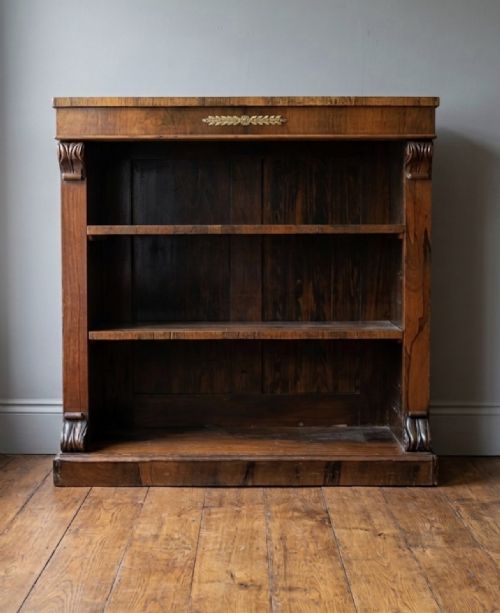


Regency Style Shelf Unit
Regency style shelf units bring architectural elegance and practical display to any room.
Regency Style Shelf Unit
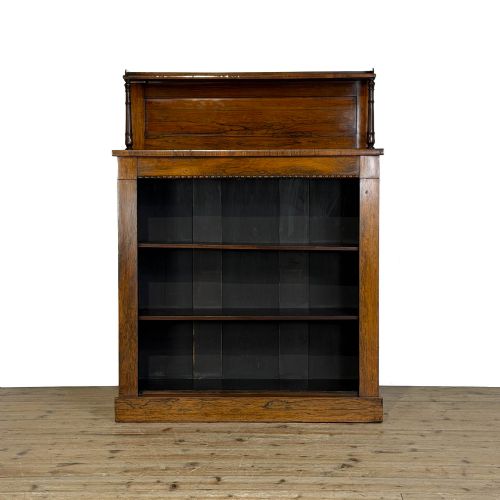
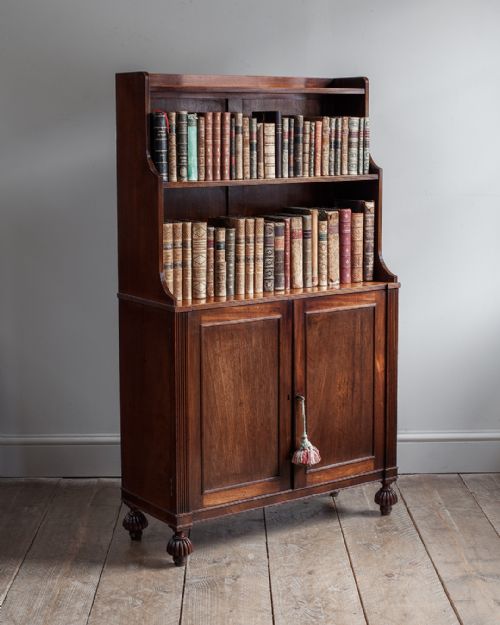
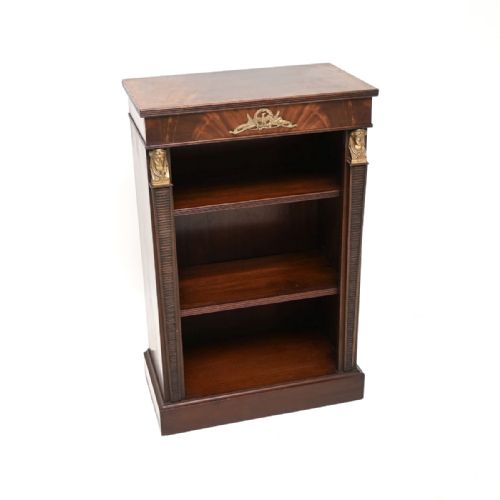
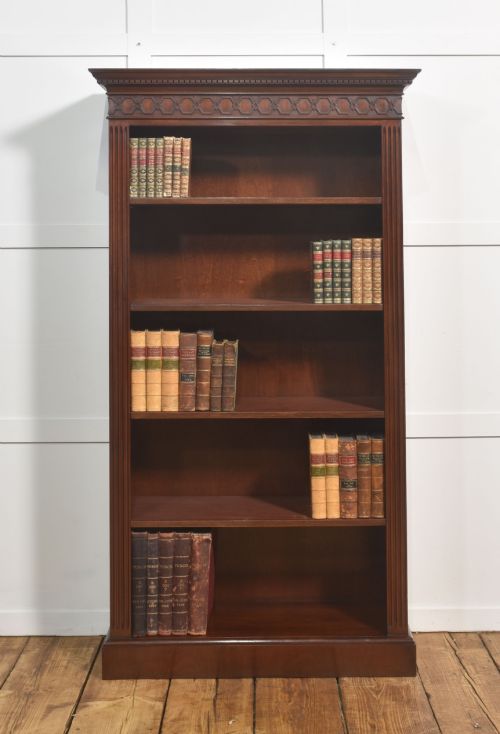
When you search for a regency style shelf unit, you encounter open bookcases, whatnots, hanging shelves, and tiered display units designed for versatile storage and display. The selection spans pieces from the nineteenth century, the William IV period, and later revival eras including the 1920s and 1930s.
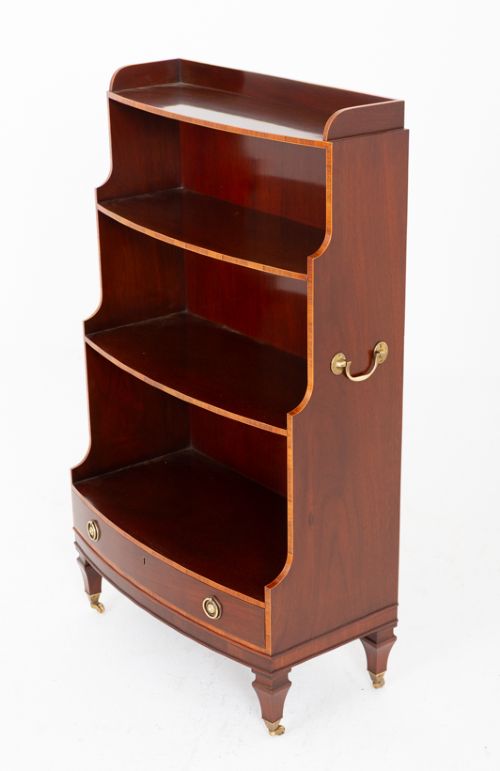
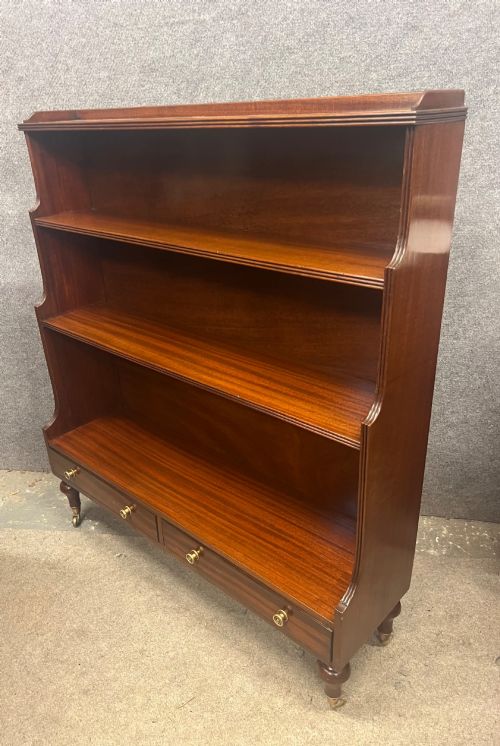
The most common forms you meet on this page are waterfall bookcases and freestanding open shelving units. These incorporate graduated tiers or adjustable shelves configured for books and decorative objects.
Materials and construction methods
Cabinet makers utilised dense hardwoods such as mahogany and rosewood, often applying fine veneers over secondary woods to create smooth surfaces. Timber selection governed both the structural integrity and the visual richness of the finished piece.
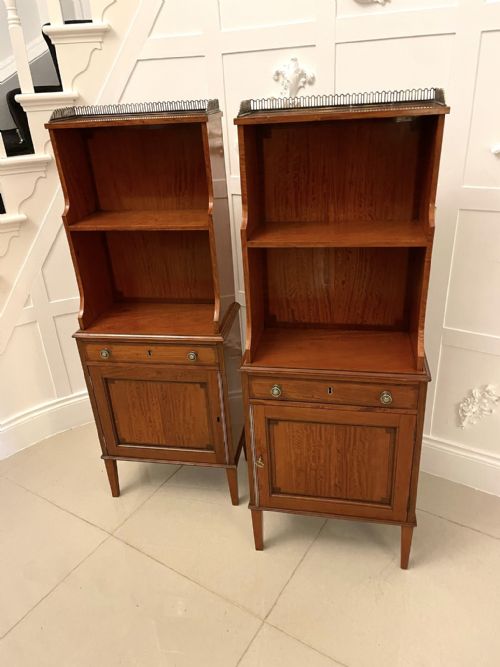
Detailing frequently involved applied brass mounts, brass gallery rails, and simulated paint finishes. Joinery methods relied on traditional techniques to support multi-tiered waterfall frameworks and freestanding uprights.
Some pieces feature simulated paint finishes, proving that cabinet makers have long enjoyed convincing the eye with clever brushwork.
Markers of superior craftsmanship
The highest tier of these pieces displays meticulous timber selection, particularly in figured rosewood veneers and well-matched mahogany grains. Superior examples integrate refined brass hardware and precise tier graduation.
Construction depth and stability differentiate finer items from simpler utilitarian versions. Attention to detail in edge moulding, gallery work, and structural joins defines the upper range of these bookcases and whatnots.
Gillows
The Regency Style Shelf Unit Glossary
- Waterfall bookcase
- A shelving unit with graduated tiers decreasing in depth from bottom to top. This form became popular during the Regency period for displaying books and ornaments.
- Whatnot
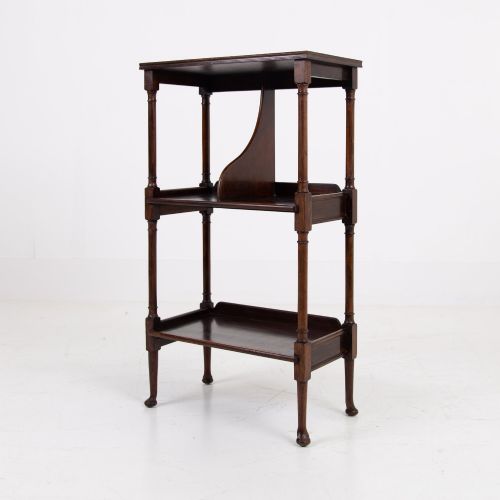
- A piece of freestanding furniture consisting of several open shelves used for displaying ornaments or books. Nineteenth-century examples often feature multiple tiers supported by slender uprights.
- Étagère
- A piece of furniture with a set of open shelves for displaying small objects or ornaments. These function as decorative side tables or display stands.
- Ebonised wood
- Timber treated with a finish to imitate ebony. This dark, polished surface appeared frequently on nineteenth-century display furniture.
Regency Style Shelf Unit: Frequently Asked Questions
What is a waterfall bookcase?
A waterfall bookcase is a shelving unit featuring open shelves that graduate in depth from bottom to top. This stepped profile allows books and objects to be displayed clearly on each tier.
Originating in the Regency era and revisited in later decades, this form combines vertical storage with an open, accessible design.
How do you use a whatnot?
A whatnot serves as an open multi-tiered stand designed for holding books, ceramics, or decorative objects. Their compact footprints make them suitable for corners or beside seating areas.
Historically placed in reception rooms, they provide accessible surface space without blocking light or views.
Are these shelves adjustable?
Many open bookcases and shelving units include adjustable shelf mechanisms to accommodate varying book sizes. This adaptability distinguishes utilitarian library pieces from fixed architectural display units.
Checking the interior uprights reveals the slots or brackets used to alter shelf heights.
How do I distinguish Regency from revival pieces?
Original Regency pieces date from the early nineteenth century and show period-specific timber handling, joinery, and patination. Revival items from the 1920s or 1930s often employ machine-cut elements and cleaner finishes.
Examining the secondary woods and construction methods helps clarify the precise period of manufacture.