



Regency Style Settee
Regency style settees bring classical elegance and scroll ends into a room, offering comfortable seating with distinct historical character.
Regency Style Settee
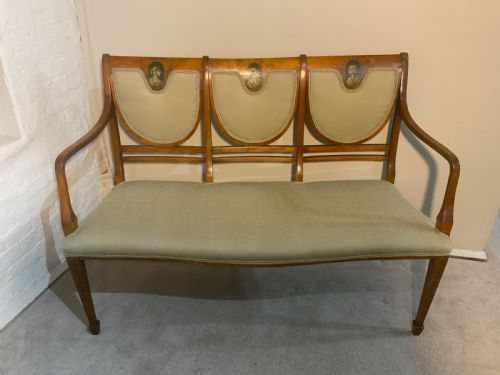
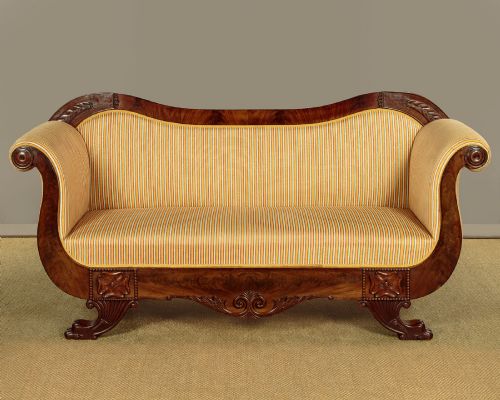
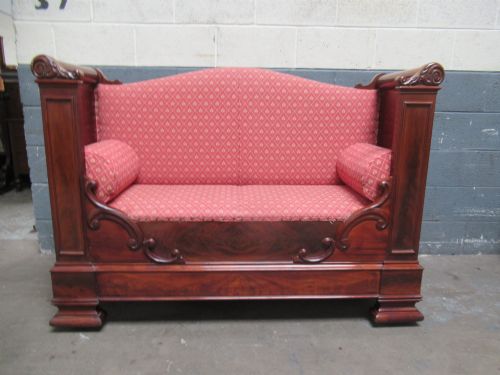
When you search for a regency style settee, you are looking at seating forms that draw on early nineteenth-century design, ranging from authentic period pieces to later revivals. The versions you are most likely to meet on this page include mahogany frames, caned seats, and scroll-end sofas originating from the Regency era and the nineteenth century.
The selection encompasses diverse regional interpretations and styles, including French Empire-style sofas, Anglo-Indian caned pieces, and Sheraton Revival examples. These settees function as statement seating in libraries, drawing rooms, and hallways, bringing classical proportion into domestic spaces.
Makers and manufacturers across different decades reinterpreted the classic scroll end and chair-back forms, resulting in variations from large four-seater settees to intimate chaise longues. Each piece reflects the enduring appeal of classical symmetry combined with functional comfort.
How they were made
Makers shaped these frames from dense timbers such as mahogany, satinwood, and walnut, frequently employing veneer work and ebonised detailing. Brass mounts and inlays added metallic contrast to the dark wood surfaces.
Caning provided a lightweight, breathable seat surface on specific models, while others relied on textile upholstery, button backs, and giltwood finishes. Painted surfaces often featured on satinwood frames, combining delicate pigments with gilded highlights.
Regency Style Settee Retail Price Guide 2026
Typical asking prices for regency style settee among the pieces listed under this phrase on Sellingantiques today, from the lower quarter to the upper quarter. They describe what is for sale here now, not the wider market.
Several settees on this page double as chaise longues, perfect for nineteenth-century afternoon lounging when sitting upright simply required too much effort.
What varies in quality
The sophistication of the timber selection and the crispness of the carving distinguish finer examples from simpler workshops. Timber grain, whether figured mahogany or polished satinwood, dictates the visual depth of the frame.
Execution of decorative elements such as giltwood, painted details, and brass fittings determines the refinement of the piece. Superior construction shows in the structural integrity of scroll ends and the precise integration of caning or upholstery.
The Regency Style Settee Glossary
- Scroll end
- A sweeping, curved armrest that rolls outward at the end, typical of classical sofa designs. This form mimics ancient Greek and Roman seating archetypes.
- Caning
- Woven rattan material used to create resilient, open-patterned seats and backs. It offers both flexibility and visual lightness.
- Satinwood
- A pale, lustrous hardwood prized for its smooth texture and fine grain. It frequently serves as a base for painted decoration.
- Giltwood
- Timber coated with a thin layer of gold leaf or gilt paint. This finish creates a bright, reflective surface characteristic of formal reception furniture.
- Chaise longue
- An elongated chair designed for reclining, combining a seat with a single raised backrest. It functions as a hybrid between a chair and a sofa.
Regency Style Settee: Frequently Asked Questions
What defines a Regency style settee?
These settees are defined by classical proportions, scroll ends, and inspirations drawn from ancient Greek and Roman furniture. They often incorporate mahogany frames, brass details, and symmetrical lines.
Design elements typically reference the early nineteenth century, though many pieces date from later revival periods like the late Victorian or Edwardian eras.
How were these settees used historically?
Historically, these pieces served as formal seating in reception rooms, libraries, and drawing rooms. They were designed for upright sitting as well as relaxed reclining on scroll-end models.
Larger versions accommodated multiple guests, while caned models provided lighter seating options suitable for warmer spaces.
How do I live with a caned settee?
Caned furniture requires stable indoor humidity to prevent the rattan from drying out and becoming brittle. Placing the settee away from direct heat sources helps preserve the natural flexibility of the weave.
For daily use, a soft brush removes dust from the woven surface without damaging the material.
How do I tell original Regency from later revivals?
Original pieces from the early nineteenth century exhibit construction methods, tool marks, and timber ageing consistent with that period. Later revivals, such as Sheraton Revival or Edwardian pieces, often show standardised joinery and different secondary woods.
Examining the underside, blockings, and interior framing reveals the construction era of the settee.