





Regency Style Dressing Table
These pieces for a regency style dressing table bring architectural elegance and practical drawer space to a bedroom, uniting classic classical lines with daily utility.
Regency Style Dressing Table
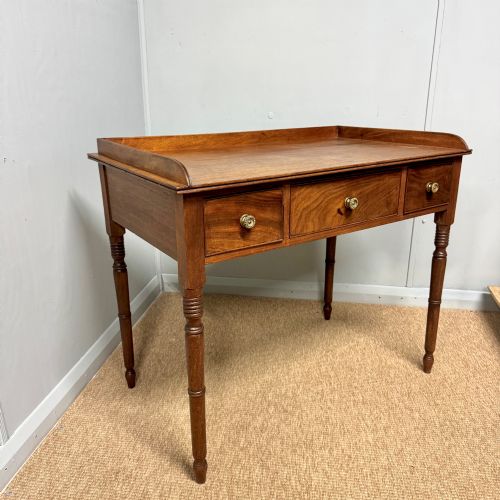
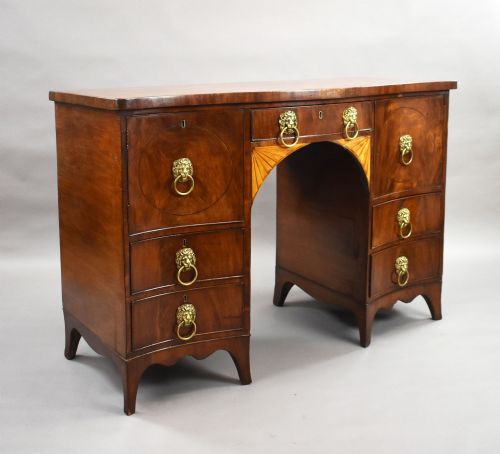
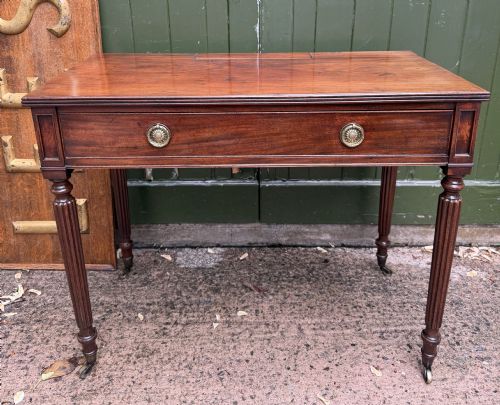
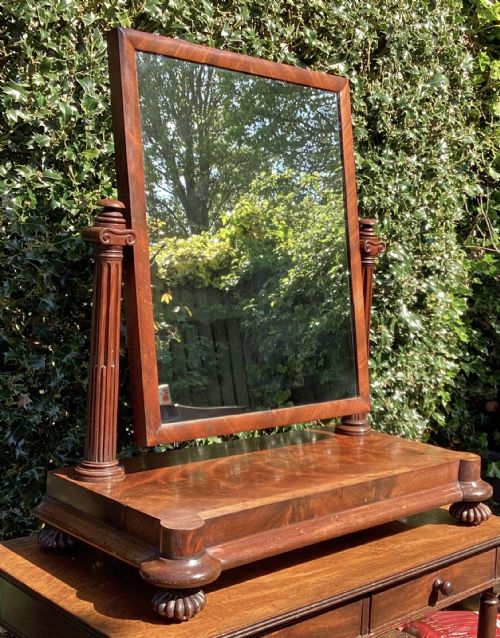
A regency style dressing table encompasses various nineteenth-century forms, including pedestal desks, side tables, and freestanding mirrors designed for grooming and writing. The pieces seen on this page span the Georgian, Regency, and Victorian eras, reflecting both original period manufacture and later revivals.
Buyers will encounter compact bow-fronted writing tables alongside larger mahogany dressers with multiple drawers. Many surviving examples integrate compact proportions with inlaid boxwood details, brass fittings, and painted finishes reminiscent of Regency country houses.
How they were made
Cabinetmakers relied heavily on solid and veneered mahogany, often accented with boxwood stringing and contrasting satinwood veneers. Secondary woods such as pine and softwood appear in drawer linings and internal framing.
Surfaces frequently feature hand-applied painted finishes, faux bamboo turnings, or clear wax polish to highlight the grain. Brass handles, castors, and pivoting glass mirror frames complete the construction of these tables and toilet mirrors.
Regency Style Dressing Table Retail Price Guide 2026
Typical asking prices for regency style dressing table among the pieces listed under this phrase on Sellingantiques today, from the lower quarter to the upper quarter. They describe what is for sale here now, not the wider market.
Some tables double as chamber writing desks, proving that early morning correspondence and grooming routinely shared the exact same piece of furniture.
What varies in quality
The degree of refinement in timber selection and secondary wood usage distinguishes finer examples from simpler provincial pieces. Crispness in the execution of cockbeading, dovetailing, and inlay work indicates the skill of the original workshop.
Proportion and the retention of original brass hardware or pivoting mirror glass substantially influence the character of each piece. Tables demonstrating clean lines without heavy later alterations command greater appreciation among collectors.
Gillows of Lancaster
The Regency Style Dressing Table Glossary
- Bow front
- A convex curved front contour typical of many tables and chests from the Georgian and Regency periods. This shape softens the corners of a room while maximising interior drawer space.
- Satinwood
- A pale, lustrous hardwood prized for its fine grain and golden colour, frequently utilised for veneers and decorative stringing on high-status tables. It provides a striking contrast against darker timbers like mahogany.
- Boxwood
- A dense, pale yellow wood often cut into thin strips for inlay and stringing along table edges. Cabinetmakers used it to outline drawers and define geometric borders.
- Toilet mirror
- A small freestanding mirror mounted on a pivoted frame above a miniature set of drawers, designed to sit atop a dressing table or chest. These pieces were essential for grooming in bedrooms before full-length mirrors became common.
- Faux bamboo
- A decorative technique where softwood or hardwood is carved and painted to imitate the segmented stalks of bamboo. This finish reflects the nineteenth-century fascination with exotic motifs.
Regency Style Dressing Table: Frequently Asked Questions
What is a regency style dressing table?
A regency style dressing table is a nineteenth-century or revival piece featuring classical proportions, mahogany or painted timbers, and functional drawer arrangements for personal grooming.
These items often incorporate turned legs, brass hardware, and associated tabletop mirrors designed for domestic bedrooms.
How do I distinguish original Regency from revival pieces?
Original pieces from the early nineteenth century typically exhibit period construction techniques, hand-cut dovetails, and aged timber patination.
Revival pieces, often produced during the Victorian era, may utilise machine-sawn elements while imitating the earlier classical aesthetic.
Where were these tables placed in a home?
These dressing tables and writing pieces traditionally stood in bedrooms, dressing rooms, or private chambers for daily grooming and correspondence.
Their compact footprints also allowed them to function effectively as side tables in reception spaces.
How do I care for mahogany dressing table surfaces?
Maintenance involves applying a quality natural beeswax and buffing gently with a soft cloth to nourish the wood grain.
Avoid placing these items in direct sunlight or near heat sources to prevent timber shrinkage and veneer lifting.