


Regency Style Crystal Lighting
Regency style crystal lighting brings dramatic sparkle and classical proportion to a room, channelling the architectural elegance of the nineteenth century.
Regency Style Crystal Lighting
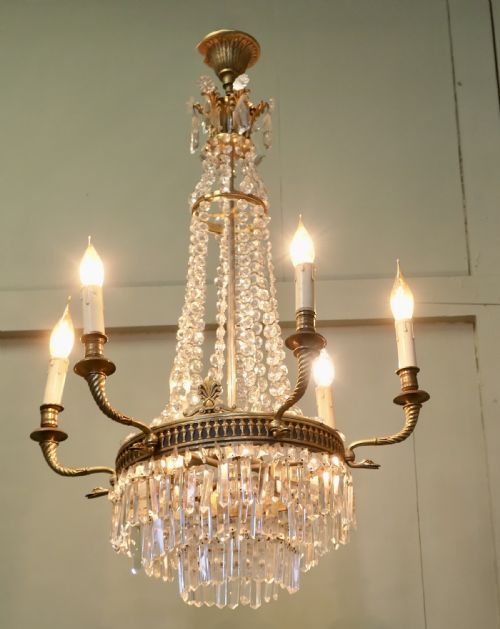
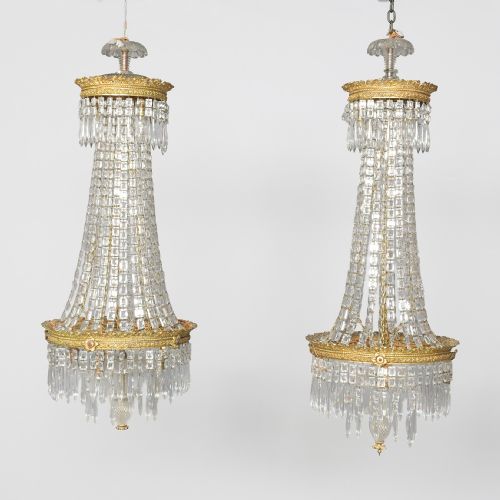
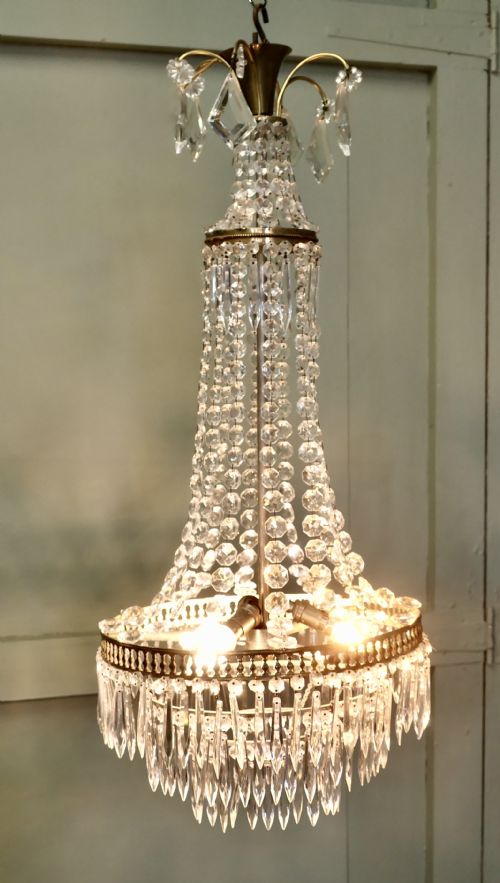
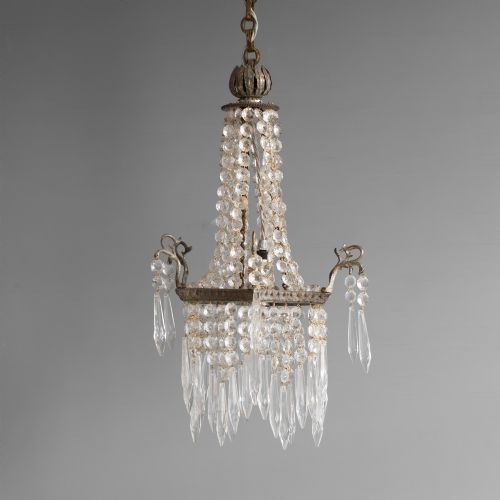
Regency style crystal lighting encompasses a varied selection of chandeliers, wall lights, sconces, and table lamps that span the nineteenth and twentieth centuries. These fixtures lean heavily into French Empire, neoclassical, and Regency design idioms, featuring distinct silhouettes from intimate single-light pendants to sprawling multi-branched fittings.
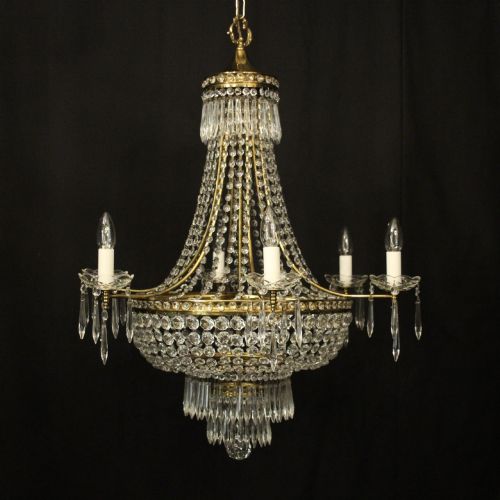
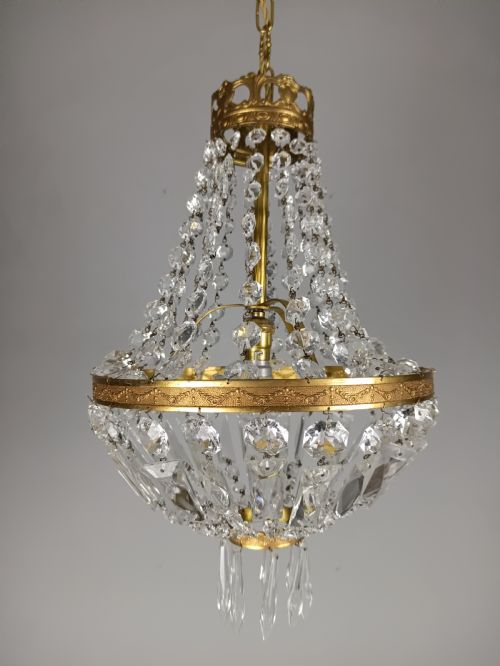
The most common formats you will encounter on this page are tent and bag chandeliers, alongside basket and spike configurations adorned with glass drops. Makers from the Edwardian era and the early twentieth century frequently reproduced these classical forms, pairing them with traditional brass or gilt metal mounts.
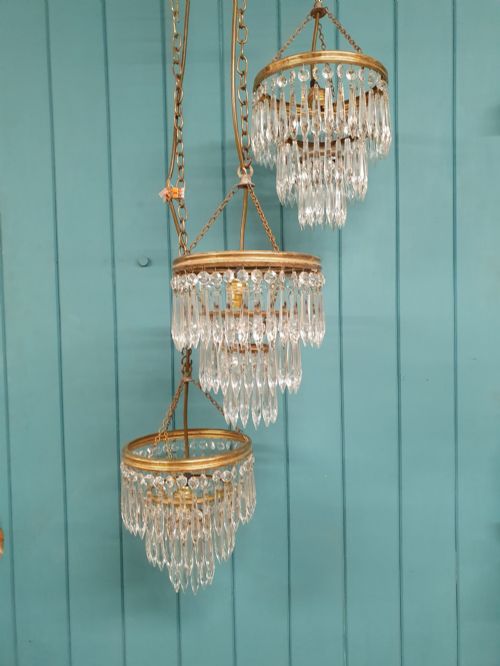
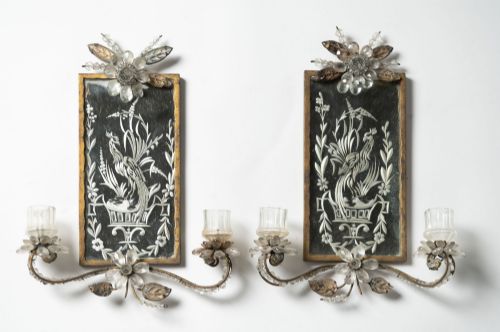
Beyond ceiling fixtures, the selection includes candelabra, candlesticks, and wall sconces that incorporate cut glass and crystal details. Whether you examine a small dome-top chandelier or a large multi-tiered waterfall piece, each object employs structured drops and swags to diffuse light effectively.
How they were made
The construction of these pieces relies heavily on a combination of cast metals and hand-finished glass elements. Frameworks are built from brass, gilded bronze, or gilt metal, providing a sturdy skeleton to support suspended glass components.
Cut glass and crystal drops, beads, and swags are meticulously wired to the metal armatures in precise geometric patterns, creating the signature tent, bag, and waterfall formations. Mounts and ormolu details are cast and chased to give the metalwork a crisp, classical definition.
Materials recur consistently across the decades, pairing cast brass and gilt metal with hand-cut crystal, glass, and delicate hanging beads.
What varies in quality
Quality in these lighting fixtures is defined by the clarity and cutting of the crystal elements, as well as the crispness of the metal casting. Finer pieces display sharp faceting on the glass drops that catches the light cleanly, alongside heavily chased brass or ormolu mounts rather than plain stamped metal.
The structural harmony of the hanging elements also separates standard examples from superior ones. Tighter, more complex arrangements of swags and beads show a higher level of artisan skill during assembly than simpler, sparser designs.
Maison Baguès·Wedgwood
The Regency Style Crystal Lighting Glossary
- Tent and bag chandelier
- A lighting fixture featuring an upper canopy of gathered glass strings forming a tent shape, dropping down into a bag or basket of clustered crystals below.
- Ormolu
- A finely chased and gilt bronze or brass finish used extensively for decorative mounts on classical lighting fixtures.
- Waterfall chandelier
- A multi-tiered fixture where cascading rows of cut glass drops flow outward and downward to create the impression of falling water.
- Lustre
- A decorative tabletop candlestick or candelabrum hung with cut glass pendants that catch and refract the flame light.
- Spike chandelier
- A vertical central shaft design where glass or metal arms branch outwards, often decorated with cascading swags to the top.
Regency Style Crystal Lighting: Frequently Asked Questions
How do I choose the right size chandelier?
Consider both the floor area of the room and the height of the ceiling when selecting a fixture. Smaller spaces suit compact single-light or eight-inch bag designs, while larger rooms accommodate multi-tier waterfall chandeliers.
Ensure there is adequate clearance beneath the hanging point for foot traffic. Proportion remains key to balancing the visual weight of the metal and crystal against the surrounding furniture.
Are these pieces wired for modern electricity?
Many vintage and antique lighting fixtures have been adapted over time for modern electrical standards. You should check the specific wiring details of each piece before installation.
Professional rewiring is often recommended for older brass and gilt metal fittings to ensure they meet current safety regulations. This allows you to safely utilise the lighting in daily domestic settings.
What is the difference between Empire and Regency styles?
Empire style originates from the French Napoleonic era, characterised by heavy use of gilded bronze, classical motifs, and grand tent structures. Regency style reflects the British interpretation of similar classical influences, often featuring lighter bronze and ormolu details.
Both design vocabularies share a fascination with Roman and Greek antiquity, translating those classical lines into sparkling glass and metal fixtures.