
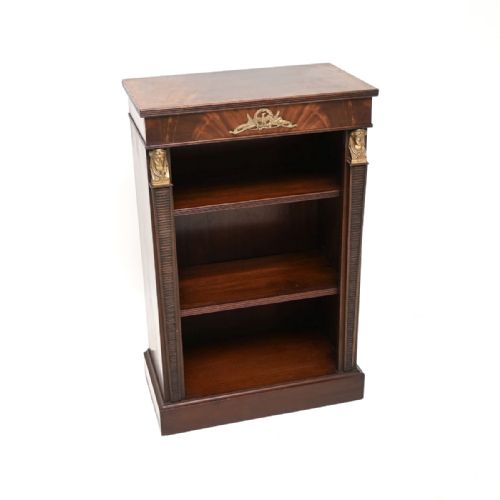
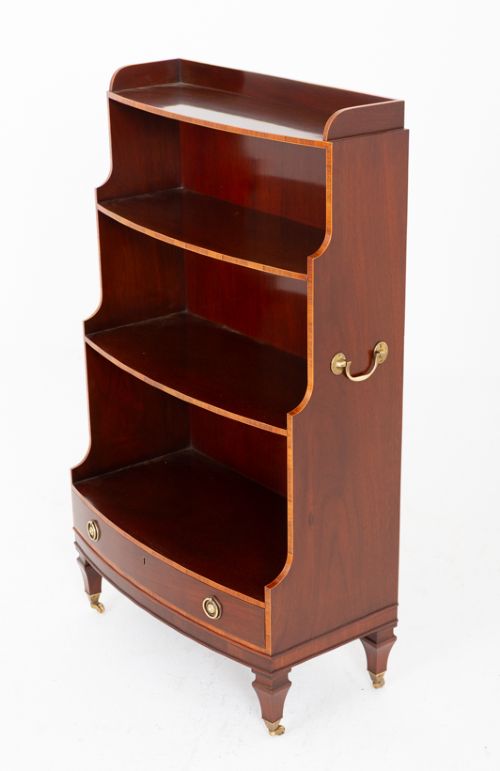
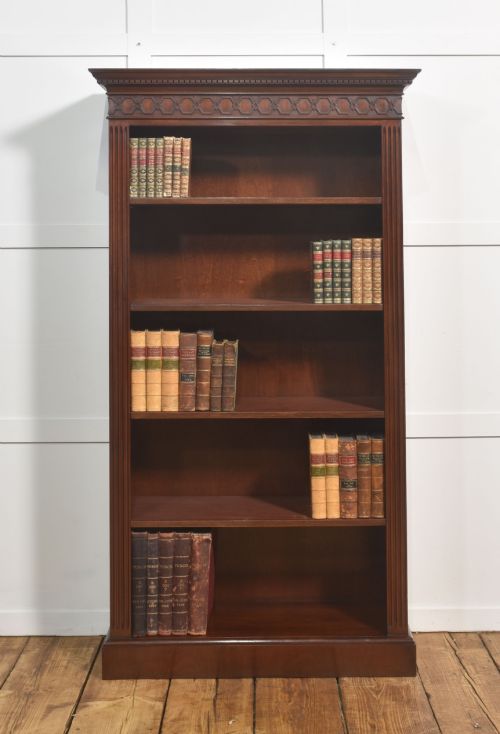
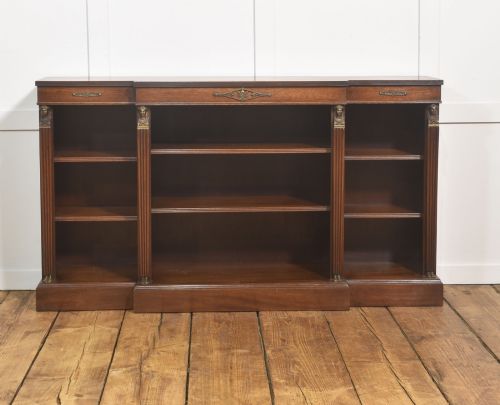
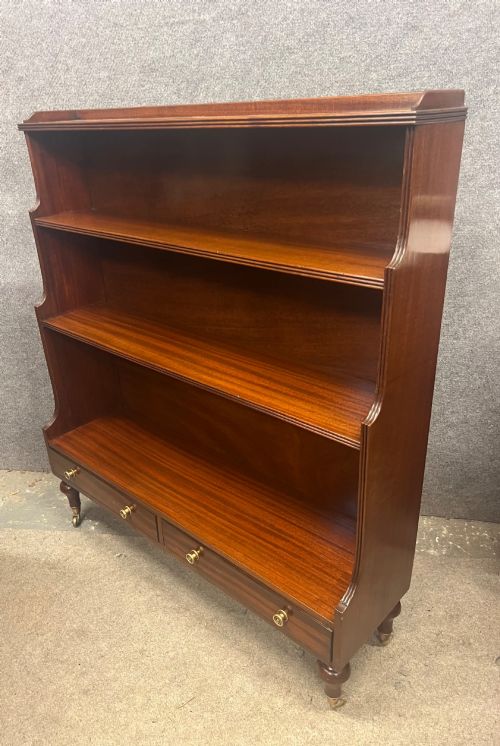
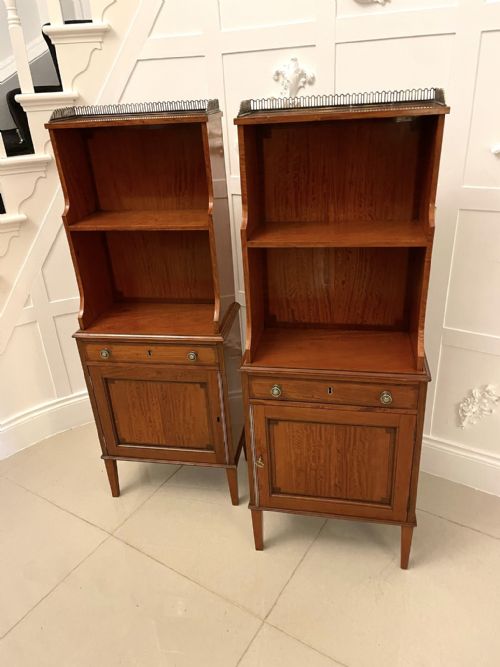
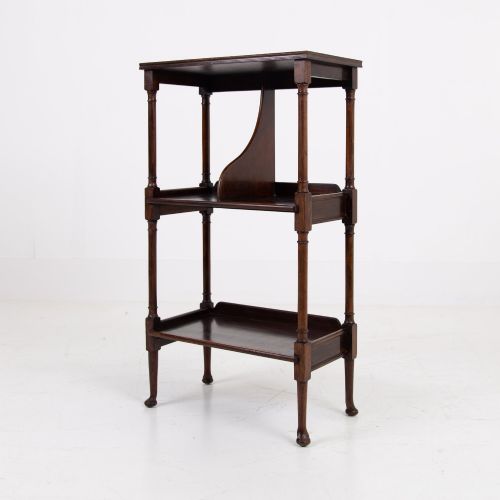
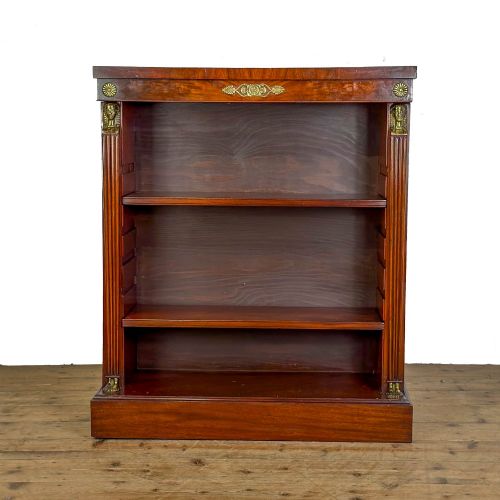
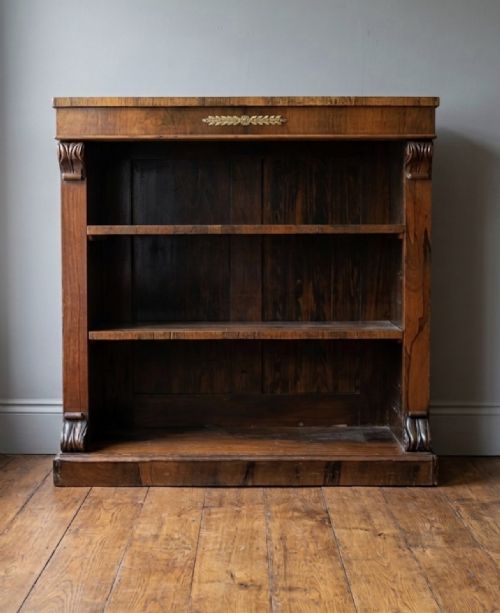


Regency Style Bookshelves
Regency style bookshelves bring architectural order and rich timber tones to a room, offering tiered display for cherished volumes.
Regency Style Bookshelves
When you search for regency style bookshelves, you encounter open bookcases, breakfront library pieces, and tiered waterfall shelves originating from the nineteenth century through later revival periods. The selections here include mahogany and rosewood forms with adjustable tiers, alongside smaller satinwood and walnut display pieces.
You meet open bookcase formats most frequently, often configured as freestanding library units or multi-tiered open shelves. These pieces borrow classical motifs from neoclassical and empire vocabularies, pairing practical shelf space with architectural proportions.
Materials and construction methods
Cabinet makers relied heavily on solid mahogany and rosewood veneers, applying fine crossbanding in satinwood and walnut to accent the shelves. Metal details such as brass mounts, galleries, and ormolu enrich the primary timbers.
Construction techniques combine traditional joinery with veneered carcases, incorporating adjustable shelf mechanisms and painted simulated finishes where exotic woods were not deployed.
Materials across the selection include brass, marble, ormolu, satinwood, and painted wood alongside primary mahogany and rosewood timbers.
Assessing quality in the construction
Quality rests upon the selection of timber figures and the crispness of applied brass or ormolu mounts. Finer pieces demonstrate careful grain matching across breakfront surfaces and waterfall tiers.
The integrity of the structural joints and the precision of the shelf adjustment mechanisms separate standard production pieces from master workshop outputs.
Gillows
The Regency Style Bookshelves Glossary
- Breakfront
- A piece of furniture where the central section projects forward from the flanking wings. This architectural layout creates depth and visual rhythm in larger library bookcases.
- Waterfall bookcase
- A tiered shelving unit where each successive shelf steps back from the one below it. The cascading tiers typically feature gallery rails along the edges.
- Ormolu
- Gilt bronze mounts cast and chased to ornament furniture surfaces. These metal details appear on finer nineteenth-century library pieces.
- Whatnot
- A set of open shelves used for displaying books or decorative objects. These multi-tier stands date through the nineteenth century and revival eras.
- Crossbanding
- A strip of veneer laid perpendicular to the grain of the primary surface. This decorative border technique frames shelves and tabletops.
Regency Style Bookshelves: Frequently Asked Questions
How do I spot a true nineteenth-century piece?
Examine the timber shrinkage, the construction of the shelf supports, and the hand-cut joinery visible within the carcase. Secondary woods used at the back often provide clues to the period.
Compare the patination and polish to known examples from the nineteenth century. Revival pieces from later decades often display different machine marks and standardised components.
Where should I place a waterfall bookcase?
Waterfall bookcases suit narrow spaces or alcoves where a deep cabinet might protrude too far into the room. Their stepped tiers work well against plain walls.
Keep them away from direct sunlight and heat sources to protect sensitive rosewood and mahogany veneers from drying out or splitting.
Can I adjust the shelf heights?
Many library bookcases include traditional rack-and-pinion or wooden peg systems for moving shelves. This allows you to accommodate volumes of varying sizes.
Check the inner sides of the uprights for the support slots. Fixed tiers appear more commonly on smaller waterfall designs.
What is the difference between revival and period?
Period pieces date from the original Regency era in the early nineteenth century, while revival items were manufactured later around nineteen-ten or nineteen-thirty.
Both categories utilise similar mahogany and rosewood materials, but the internal construction details and hardware often reveal the actual decade of manufacture.