

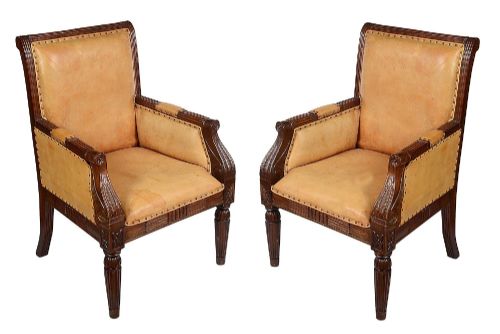
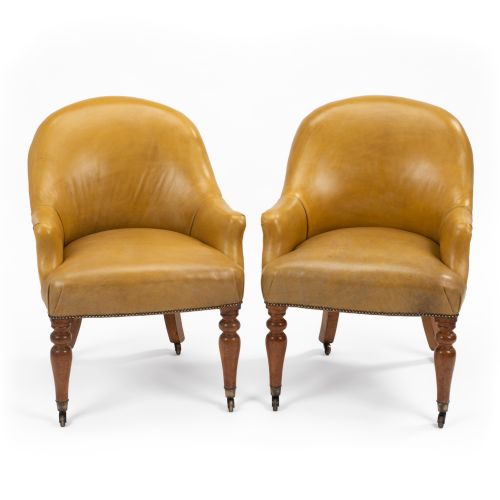
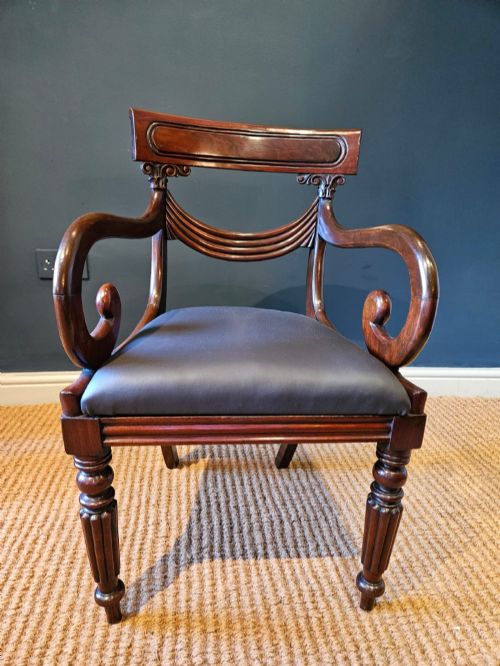
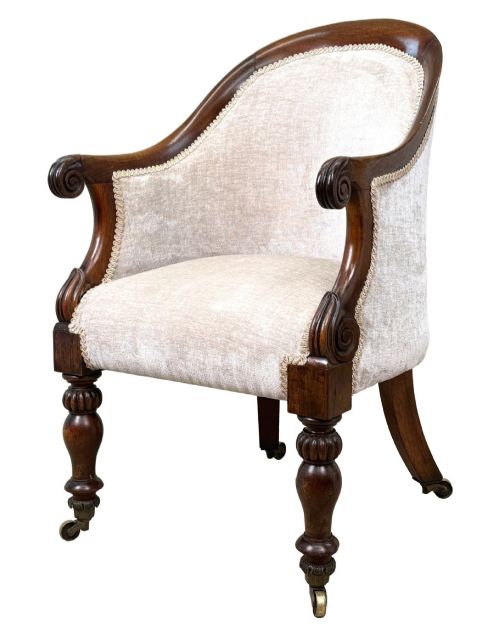
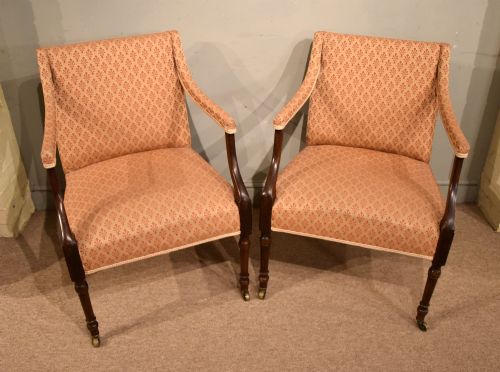
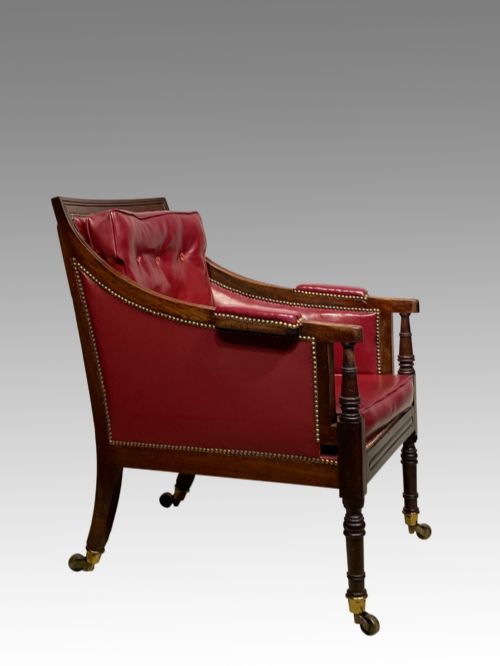
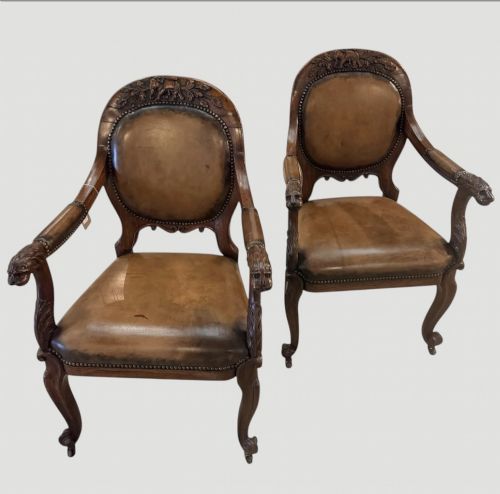
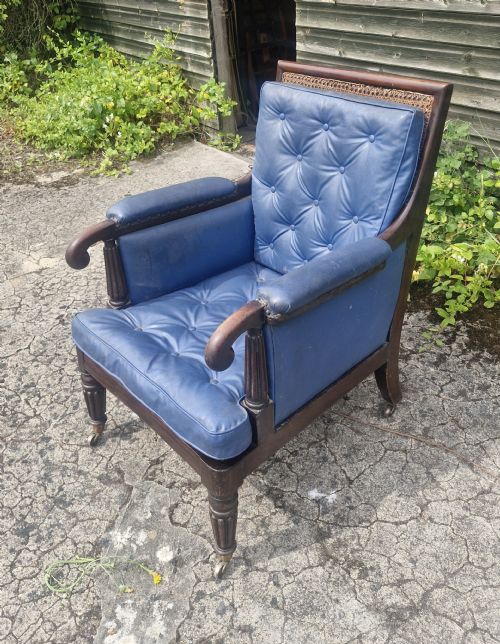


Regency Study Chair
A regency study chair brings solid mahogany, leather, and bergere caning to the desk or library.
Regency Study Chair
A regency study chair bridges the space between the library armchairs and the desk chairs found across the period. These seats appear in mahogany, rosewood, and maple, often taking the form of armchairs, bergere chairs, or desk chairs.
The materials and styles span Regency, William IV, and Georgian periods, alongside Anglo-Indian variations. Most pieces on this page originate from the nineteenth century, including copies and interpretations made around nineteen-twenty.
Many examples function as library armchairs or sliding library armchairs, while others serve specifically at desks. Makers such as Robert Daws produced marked reclining library chairs in mahogany and leather.
Distinguishing quality
The refinement of carved mahogany details and the depth of the timber grain separate standard examples from finer commissions. Pieces bearing maker signatures, such as Robert Daws, reflect documented workshop production.
Original leather upholstery, brass hardware, and intact bergere caning preserve the integrity of an armchair. Subtleties in the turnings and the joinery of the arms dictate the overall execution.
Regency Study Chair Retail Price Guide 2026
Typical asking prices for regency study chair among the pieces listed under this phrase on Sellingantiques today, from the lower quarter to the upper quarter. They describe what is for sale here now, not the wider market.
Some nineteenth-century readers apparently enjoyed reclining so deeply they needed a mechanical Robert Daws patent to achieve it.
Robert Daws
The Regency Study Chair Glossary
- Bergere
- An enclosed upholstered armchair with wooden framing, often featuring cane sides and back panels. This form appears frequently in nineteenth-century libraries.
- Library chair
- A substantial armchair designed for reading rooms, frequently fitted with leather seats and armrests. These pieces often accommodate sliding mechanisms or reclining functions.
- Desk chair
- A sturdy seat built for writing tables, typically equipped with a revolving or stationary wooden frame and leather upholstery.
- Cane
- Woven rattan material utilised for seat panels and backrests on light armchairs. This technique offers flexible support within a rigid wooden frame.
Regency Study Chair: Frequently Asked Questions
What defines a regency study chair?
A regency study chair combines nineteenth-century seating forms with mahogany, rosewood, or maple frames. These pieces serve library and desk functions using leather, fabric, or cane.
They reflect the styles of the Regency, William IV, and Georgian periods, often featuring carved woodwork and brass details.
How were these chairs used?
These chairs provided seating for reading, writing, and study in domestic libraries and private offices. Heavy library armchairs offered comfort for long hours among books.
Desk variants supported administrative tasks, sometimes utilising swivel mechanisms or sliding frames to ease movement.
How do I care for leather and cane?
Leather upholstery requires regular conditioning to prevent drying and cracking. Keep the material away from direct heat sources.
Bergere caning needs gentle dusting and should not support excessive concentrated weight to avoid snapping the strands.
How are periods told apart?
Georgian and early nineteenth-century pieces display restrained classical lines and dense mahogany. Regency and William IV examples introduce bolder proportions and richer rosewood veneers.
Twentieth-century reproductions imitate these earlier styles using traditional timber construction methods.