



Regency Storage Unit
These pieces sold as a regency storage unit span practical chests and bookcases that bring orderly proportion to a room.
Regency Storage Unit
When buyers search for a regency storage unit, they encounter a practical mix of mahogany chests of drawers, bookcases, side cabinets, and corner cupboards. These forms originate mainly from the nineteenth century, including specific periods like Regency, Victorian, and William IV.
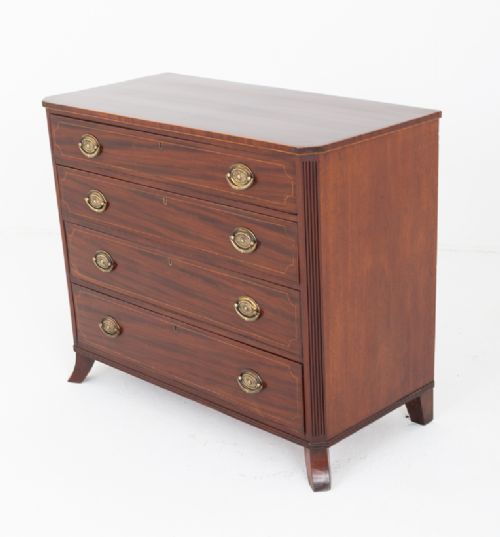
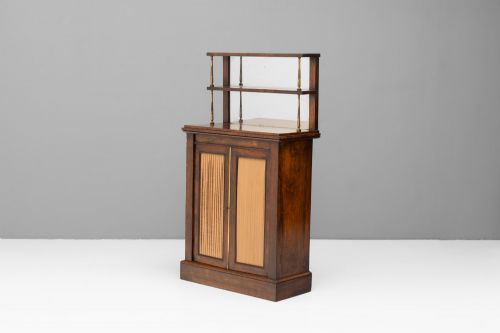
The version most commonly met on this page is the mahogany chest of drawers, ranging from narrow four-drawer formats to substantial two-part designs. Alongside these, open bookcases, sideboards, chiffoniers, and corner cabinets provide alternative ways to organise a space.
Styles stretch from Georgian and George III influences through to later Regency style and Victorian interpretations. This variety means buyers find both formal architectural storage and simpler country house pieces.
How they were made
Cabinet makers relied heavily on timber selections such as mahogany, rosewood, walnut, and satinwood, often combining them with brass hardware and glass doors. Line inlay added crisp geometric detail to drawer fronts and cabinet doors.
Regency Storage Unit Retail Price Guide 2026
Typical asking prices for regency storage unit among the pieces listed under this phrase on Sellingantiques today, from the lower quarter to the upper quarter. They describe what is for sale here now, not the wider market.
Even corners get a proper home with these mahogany cupboards designed to tuck neatly away.
What varies in quality
The distinction between standard utility storage and finer pieces rests on timber figure and the crispness of construction. Richly grained mahogany, rosewood, or gonçalo-alvez elevate a piece above simpler domestic carcases.
Proportion and restraint define the better examples, where line inlay and brass mounts integrate naturally into the design rather than crowd the surface.
The Regency Storage Unit Glossary
- Chiffonier
- A low sideboard or cabinet, typically featuring enclosed storage beneath open or shelved display space. This form became popular during the nineteenth century for keeping dining or parlour items close at hand.
- Bow front
- A convex curved cabinet or drawer front that softens the corners of a room. Cabinet makers used this technique to introduce fluid movement to rigid timber storage.
- Gonçalo-alvez
- A dense, highly figured tropical hardwood noted for its distinctive dark contrasting grain. It appears on select nineteenth-century cabinetry for decorative impact.
- Waterfall bookcase
- A set of open shelves diminishing in depth from bottom to top, creating a stepped profile. This configuration is particularly associated with mahogany and rosewood variants.
- Two-part design
- A carcase built in separate vertical sections to ease transport and placement within a home. This method is frequently found in taller chests of drawers from the period.
Regency Storage Unit: Frequently Asked Questions
What defines a regency storage unit?
These items encompass nineteenth-century chests of drawers, bookcases, corner cupboards, and side cabinets built from timbers like mahogany and rosewood.
They reflect stylistic influences ranging from George III and Regency through to Victorian and William IV periods.
How were corner cupboards used?
Corner cupboards utilised awkward room angles to store tableware, books, or household provisions out of sight.
Their enclosed shelving kept dust away while maintaining tidy proportions in dining rooms or parlours.
Where do two-part chests come apart?
Two-part chests of drawers separate horizontally into upper and lower halves to facilitate movement between rooms and floors.
This construction method was particularly useful for heavy hardwood furniture in multi-story houses.
How do I spot satinwood inlay?
Satinwood line inlay appears as pale, contrasting strips of timber inlaid flush into darker primary woods like mahogany.
It frames drawer edges and door panels to create delicate geometric borders.