

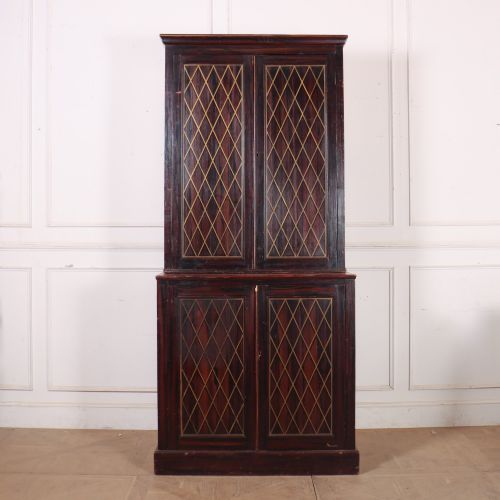


Regency Storage Armoire
Regency storage armoire pieces are substantial furniture designed to organise linen and garments, bringing classical proportions and figured timber into a bedroom.
Regency Storage Armoire
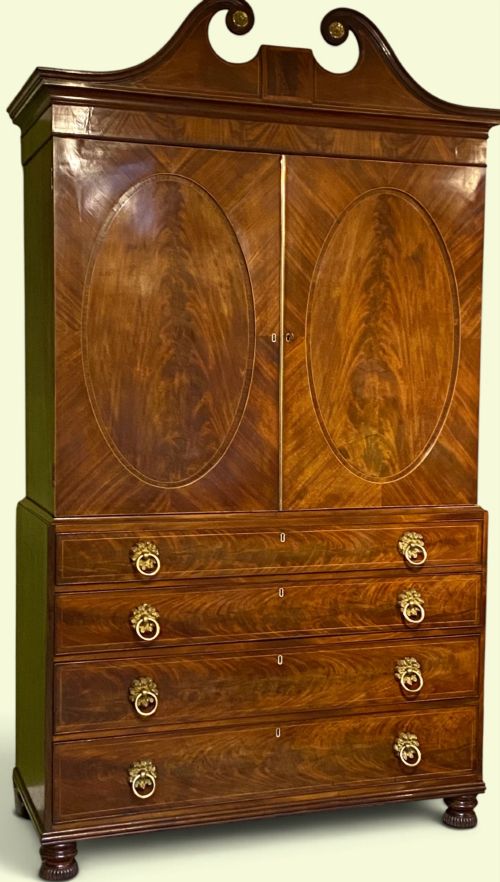
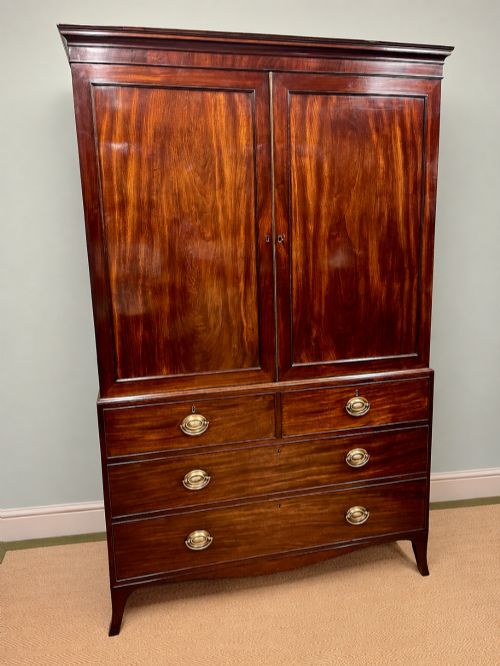
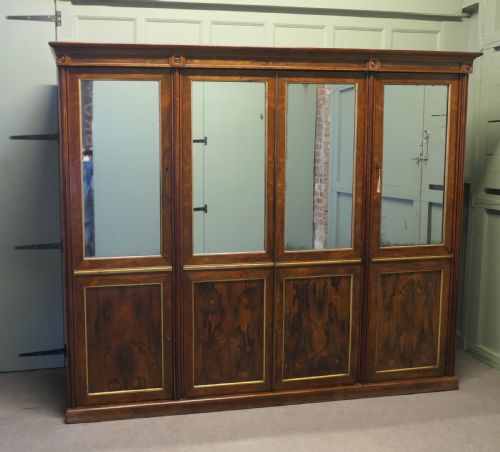
When buyers search for a regency storage armoire, they encounter large timber storage furniture originating primarily from the nineteenth century. These items include linen presses, wardrobes, compactums, and cupboards produced during the Georgian, Regency, George IV, and William IV periods.
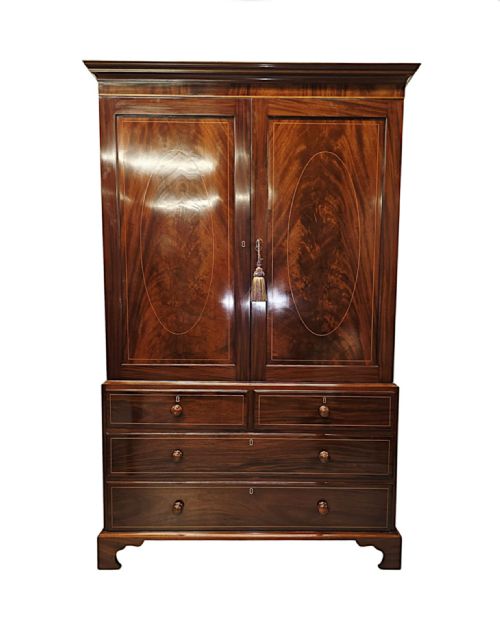
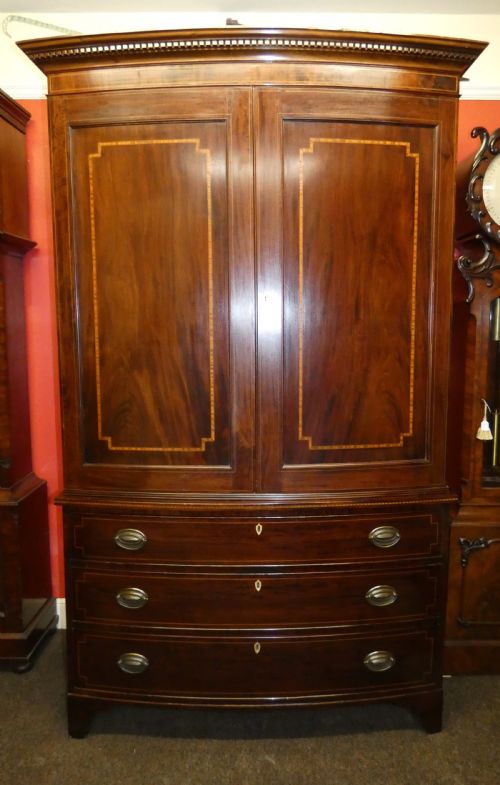
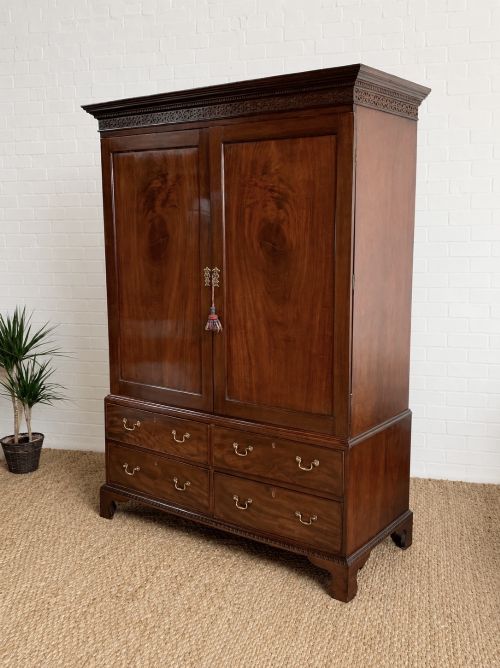
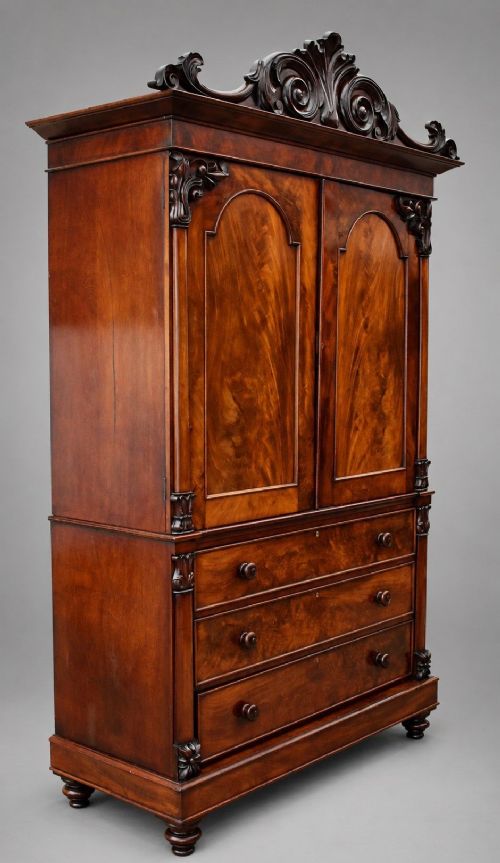
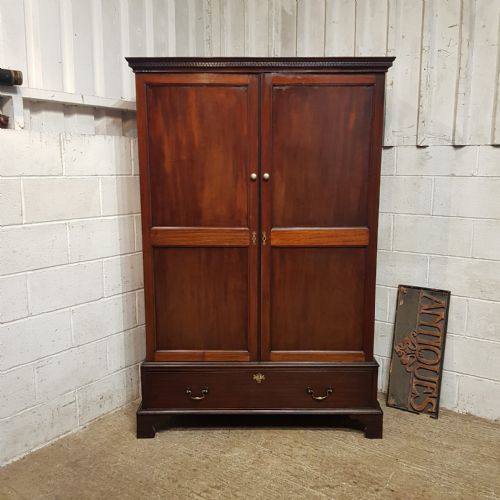
The version most commonly met on this page is the mahogany linen press, often combining upper panelled doors with lower drawer sections. Pieces span straightforward functional storage to finely inlaid examples featuring decorative cornices and breakfront configurations.
How they were made
Cabinet makers utilised dense primary timbers such as mahogany and rosewood, frequently selecting figured flame veneers for visible door panels. Secondary woods like pine appear in internal carcases and drawer linings.
Decorative surface enrichment relied on contrasting inlay work using satinwood and boxwood stringing, alongside carved elements like blind fretwork cornices. Hardware commonly incorporates cast brass escutcheons and handles fixed to drawer fronts.
Regency Storage Armoire Retail Price Guide 2026
Typical asking prices for regency storage armoire among the pieces listed under this phrase on Sellingantiques today, from the lower quarter to the upper quarter. They describe what is for sale here now, not the wider market.
The listings here draw from the nineteenth century, encompassing Georgian, Regency, George IV, William IV, and Victorian periods.
What varies in quality
The selection of timber grain largely dictates the visual merit of each piece, with symmetrical flame mahogany veneers commanding higher regard than plain stock. Superior examples display meticulous attention to timber matching across expansive door and drawer surfaces.
Construction integrity differentiates standard utility items from masterwork production. Refined pieces exhibit crisp joinery, precise inlay alignment, and well-executed decorative cornicing rather than plain architectural mouldings.
The Regency Storage Armoire Glossary
- Linen press
- A tall storage piece traditionally used for storing folded textiles, featuring upper shelving enclosed by doors above a chest of drawers.
- Compactum
- A multi-functional wardrobe offering a combination of hanging space, sliding trays, and drawers within a single carcass.
- Blind fretwork
- Carved ornamentation applied to a flat surface in an openwork geometric pattern that does not pierce through the timber.
- Stringing
- Fine inlaid lines of contrasting timber used to edge panels, drawers, and tabletops for decorative definition.
Regency Storage Armoire: Frequently Asked Questions
What is a regency storage armoire?
These pieces are large nineteenth-century timber storage units, primarily comprising linen presses, wardrobes, and cupboards made during the Regency and Georgian eras.
They were designed to house folded textiles, linens, and garments before modern fitted wardrobes became common in domestic interiors.
How were linen presses used?
Linen presses were utilised in bedrooms and dressing rooms to store household linens, sheets, and folded clothing on interior sliding trays.
The lower drawer section provided supplementary space for garments that did not require hanging or shelf storage.
How do I style these in a modern home?
These substantial timber cabinets function well as focal points in large bedrooms, hallways, or dressing areas where their scale can be accommodated.
Their rich mahogany and rosewood surfaces pair effectively with neutral walls, allowing the figured timber grain and brass hardware to stand out.
How do I identify a Regency period piece?
Dating relies on observing classical proportions, specific timber choices like rosewood or flame mahogany, and restrained classical inlay motifs.
Mouldings and hardware styles align with the design vocabulary of the early nineteenth century rather than later Victorian ornamentation.