
Regency Splay Leg Table
Regency splay leg table designs bring elegant timberwork and balanced proportion to dining and side use, shaped by period craft.
Regency Splay Leg Table
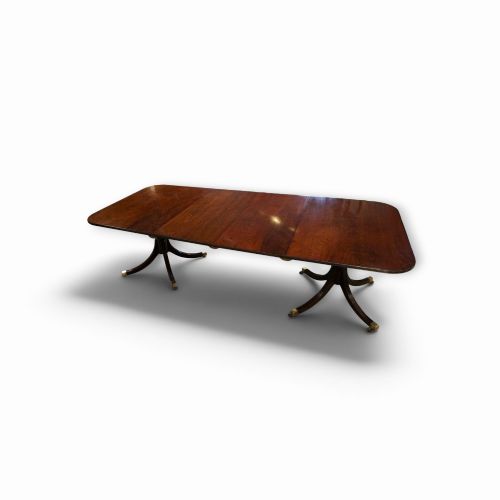
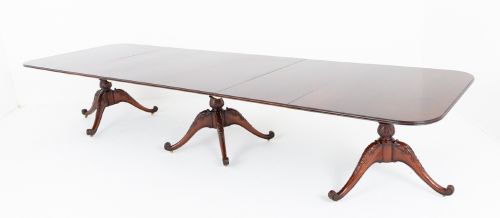
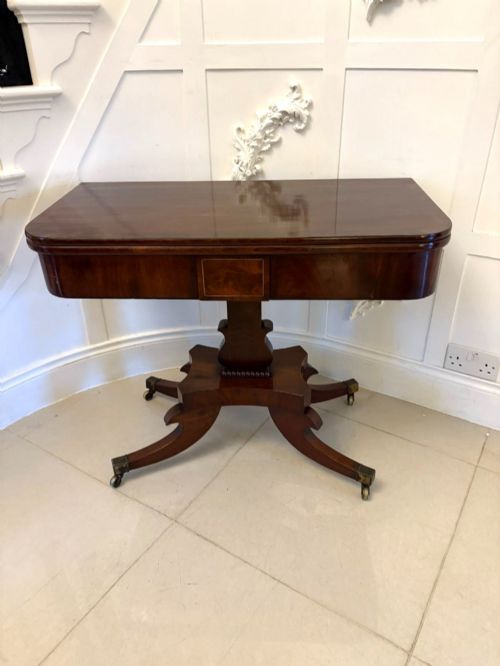
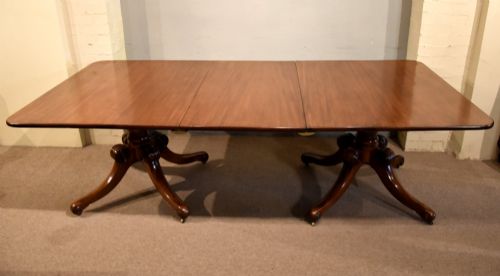
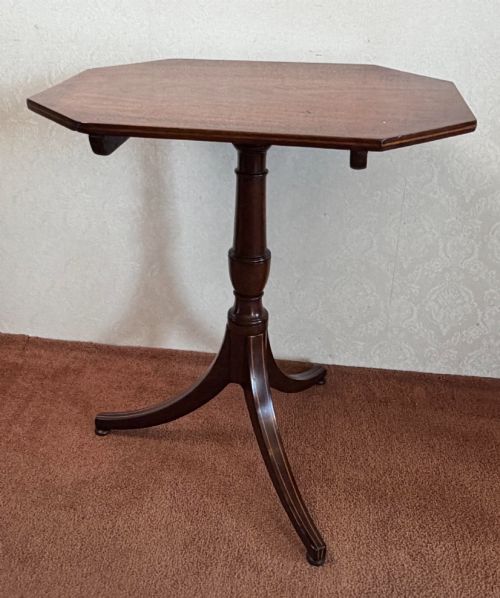
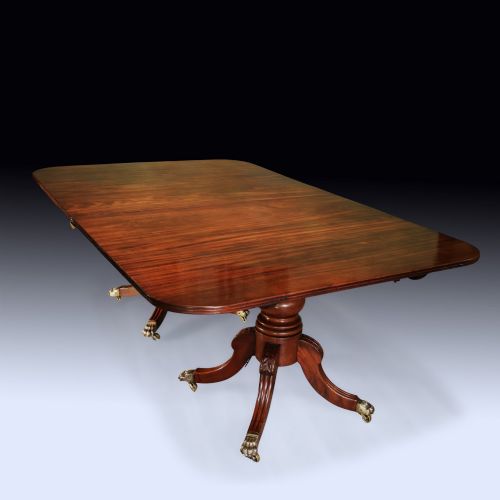
When you search for a regency splay leg table, you encounter formal dining pieces, side tables, and games tables dating from the nineteenth century alongside later revivals. These tables feature outwardly angled supports that lift the timber cleanly from the floor while providing sturdy support for heavy tops.
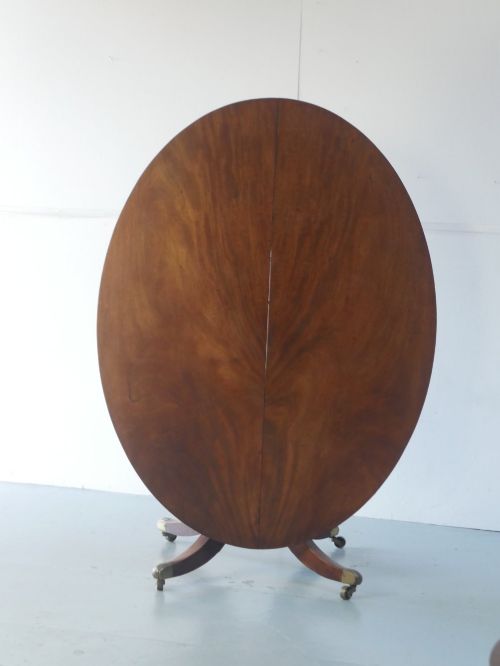
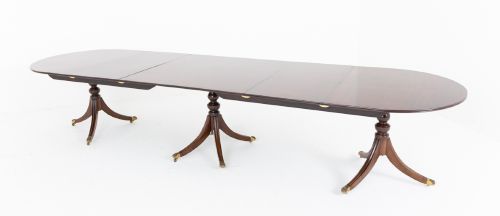
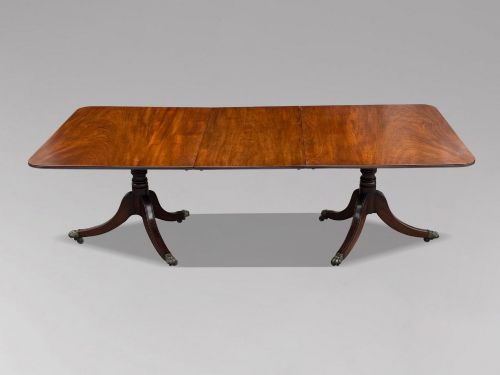
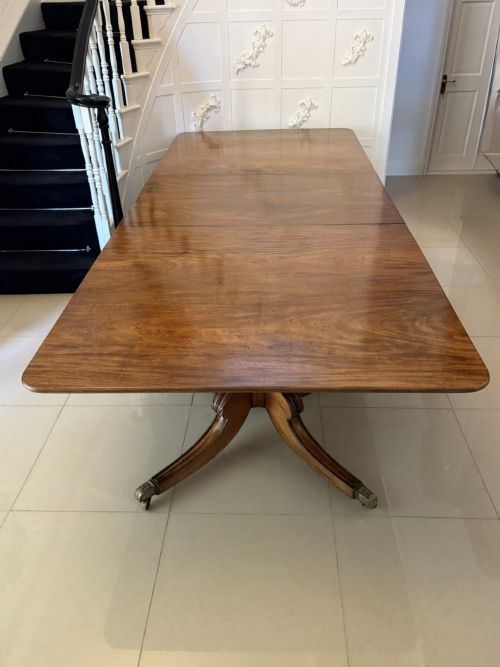
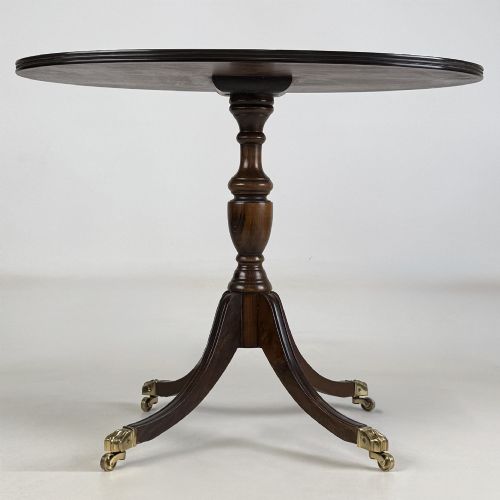
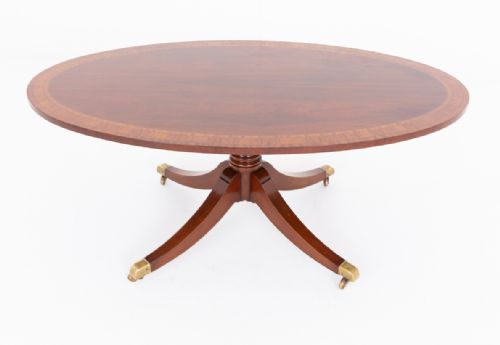
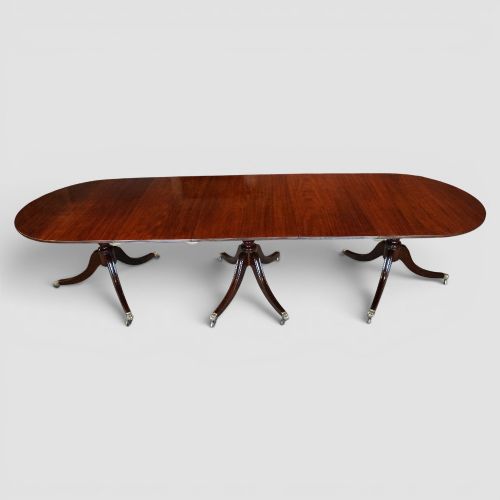
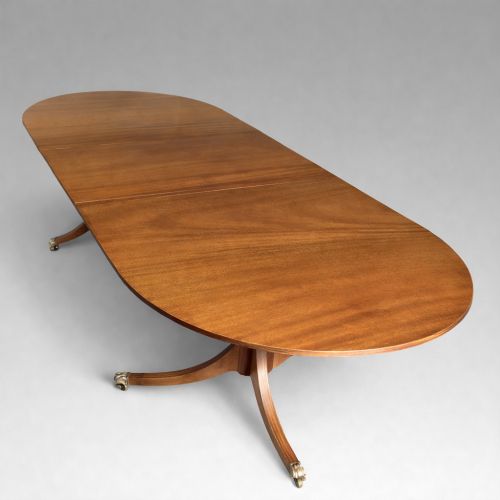
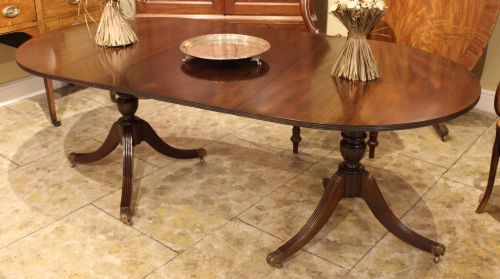
The version you are most likely to meet on this page is a mahogany dining or breakfast table resting on pillars or pedestals with splayed legs, often fitted with brass casters. Many examples date from the Regency period itself or incorporate Georgian traditions of cabinet making, while others emerge from later twentieth-century revivals.
Makers working within these styles utilise structural forms that distribute weight evenly across the splayed feet. The top surfaces range from circular breakfast boards to extending dining sections and folding card tables.
Materials and construction
Cabinet makers relied heavily on figured mahogany, rosewood, and satinwood, frequently accentuating the grain with contrasting boxwood and ebony inlay. Timber panels were selected for rich surface pattern, particularly in veneers like burr oak and burr root maple applied to core woods.
Pedestal supports and splayed legs required precise joinery to bear the weight of extending leaves and tilt-top mechanisms. Brass fittings, including castors and mounts, provided both functional movement and decorative contrast against the dark polished timber.
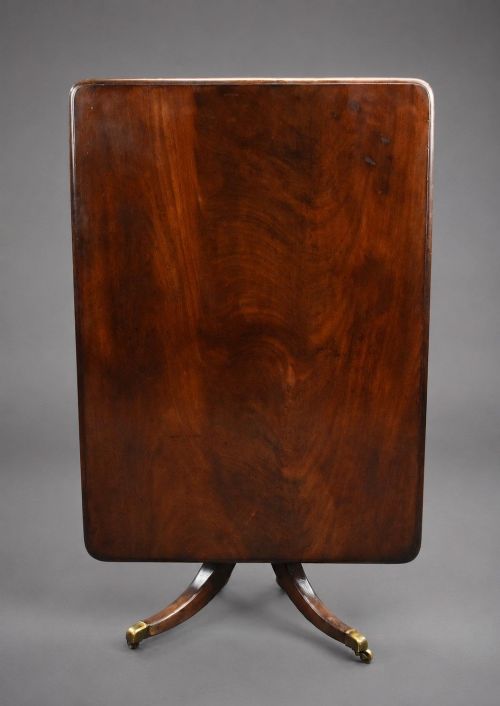
Some tilt-top breakfast tables were designed to pivot vertically and hide modestly against the wall between meals.
Judging quality in construction and finish
The distinction between standard workshop output and the finest examples lies in the selection of timber figure and the crispness of the joinery. Superior pieces display meticulously matched veneers and hand-cut inlay rather than printed or stamped decoration.
Mechanisms for tilting tops, extending dining leaves, and folding card tables operate smoothly on quality tables, reflecting precise internal engineering. The stability of the splayed legs and the original patination of the polished surface further define the better pieces.
Whytock & Reid·James Mein
The Regency Splay Leg Table Glossary
- Splay leg
- A support that angles outward from the vertical centre to increase stability. This configuration appears frequently on pedestals and occasional tables.
- Tilt top
- A tabletop mounted on a catch mechanism that allows the surface to pivot vertically when not in use. This design saved space in period interiors.
- Sofa table
- A rectangular side table traditionally placed behind a sofa, often featuring drop leaves and end supports. Examples frequently incorporate drawers.
- Crossbanding
- A border of veneer laid around the edge of a tabletop with the grain running perpendicular to the centre panel. This technique frames the primary timber.
- Caster
- A small wheel mounted in a swivel housing attached to the base of a table leg. Brass versions allowed heavy dining furniture to move across carpets.
Regency Splay Leg Table: Frequently Asked Questions
How do I identify a Regency table?
Regency tables display classical proportions influenced by archaeological discoveries and ancient Greek or Roman forms. Look for dark figured mahogany, brass toe caps, and clean geometric lines.
Later revival pieces from the twentieth century often emulate these exact stylistic markers.
Were these tables used for dining?
Many examples served as primary dining surfaces, particularly multi-pedestal models that could accommodate extending leaves. Smaller versions functioned as tea, console, or games tables in drawing rooms.
Tilt-top variants allowed households to clear floor space when meals concluded.
What woods were used?
Mahogany served as the primary timber for the majority of formal tables, often selected for strong figure and deep natural colour. Rosewood, satinwood, and burr veneers appeared on finer decorative surfaces.
Inlays utilised contrasting woods like boxwood and ebony to create geometric borders.