


Regency Sofa Table Desk
A regency sofa table desk offers versatile workspace with drop leaves, designed to stand freely in a room.
Regency Sofa Table Desk
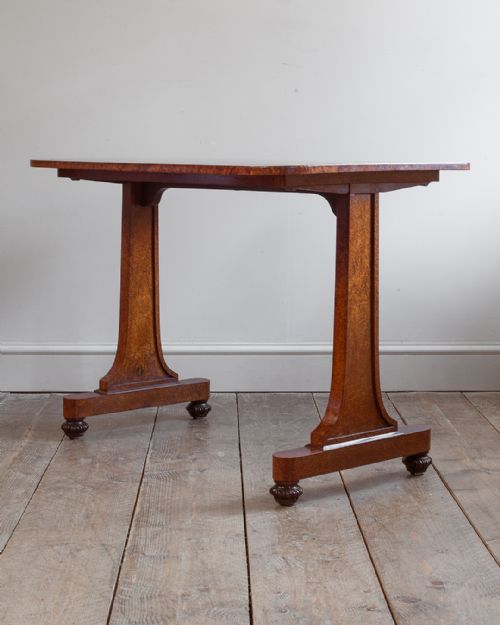
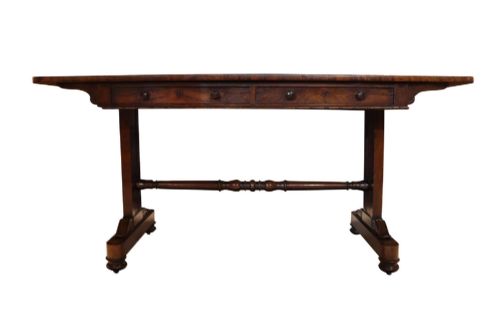
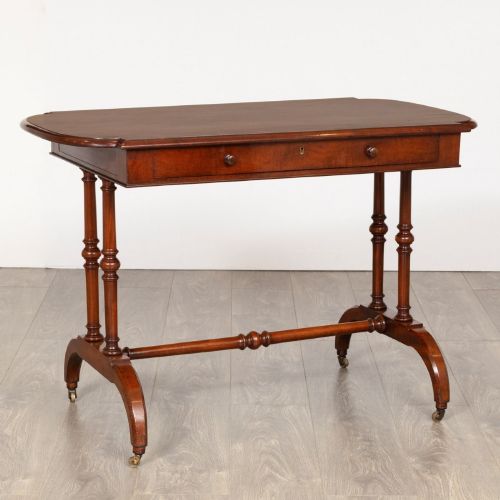
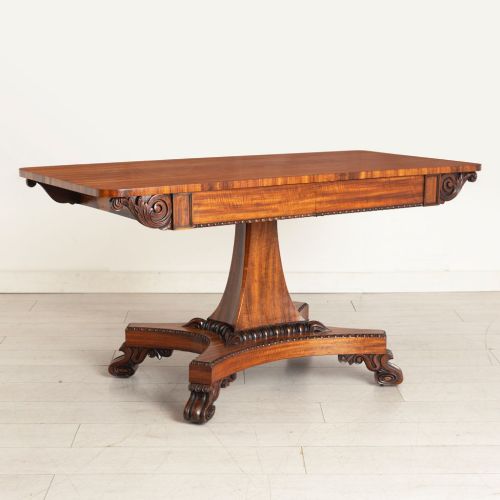
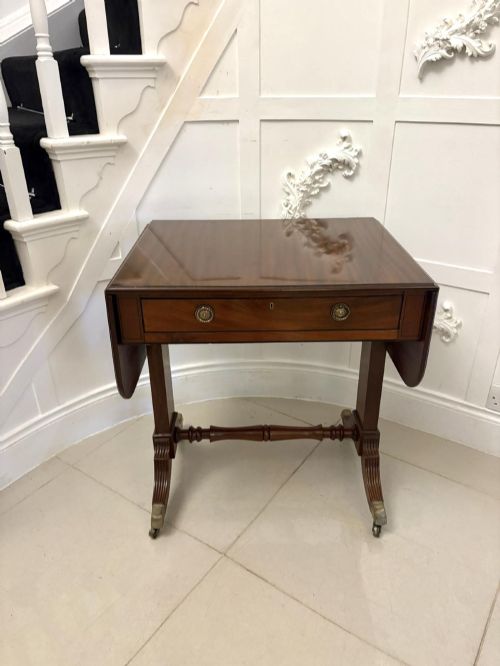
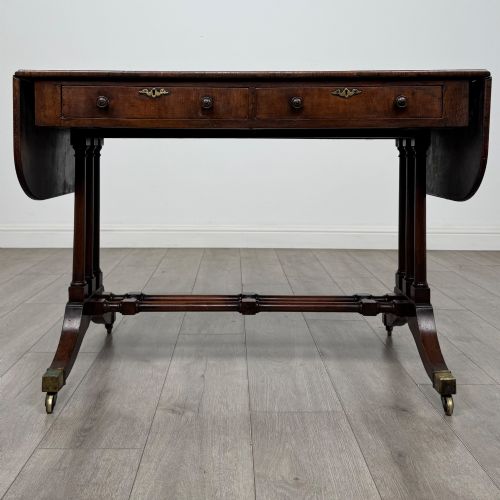
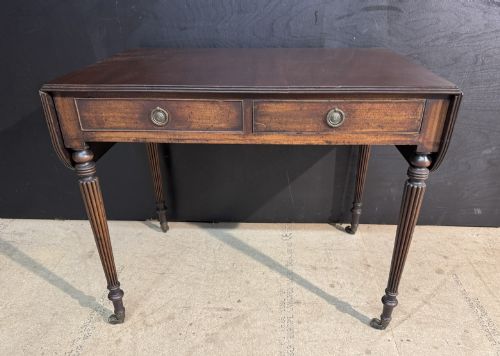
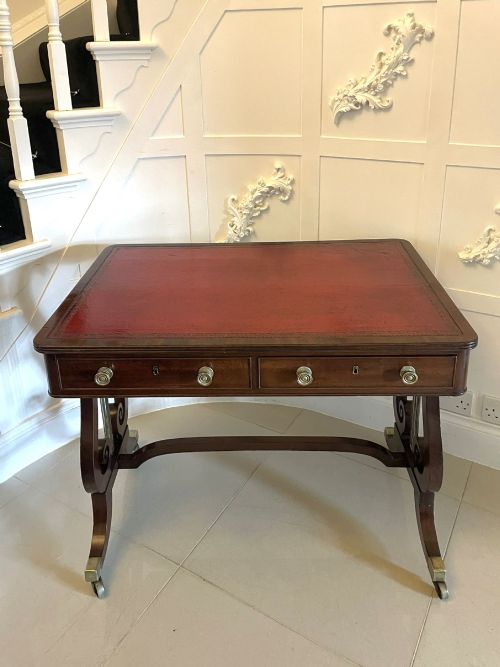
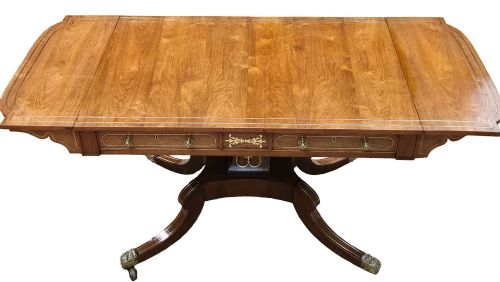
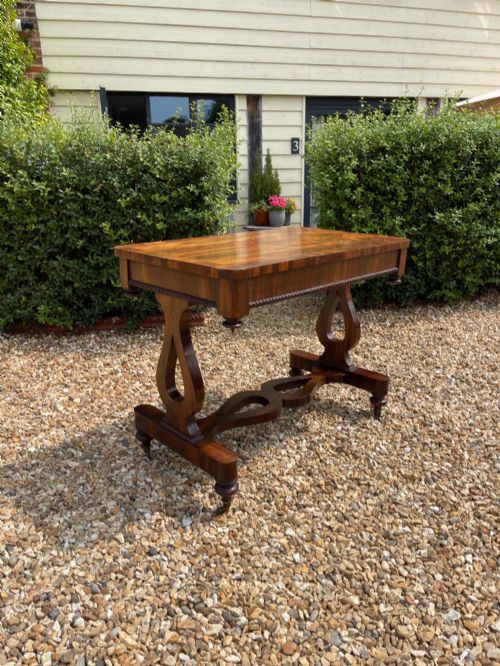
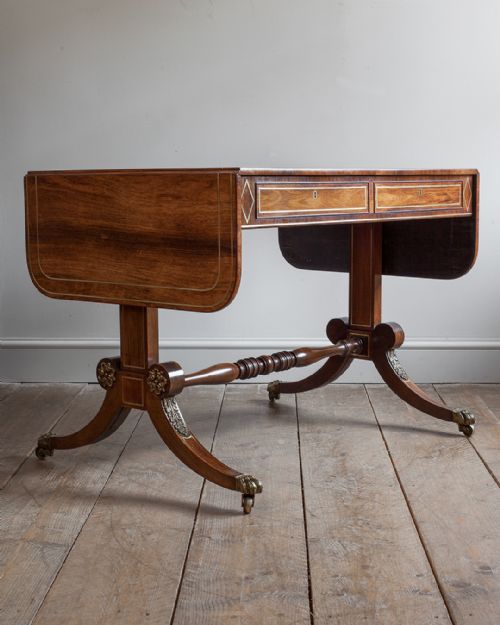
A regency sofa table desk combines the proportions of a traditional sofa table with the surface utility of a writing desk. These pieces typically feature rectangular tops flanked by drop leaves, resting on pillar supports or trestle bases designed to sit behind a sofa or stand centrally in a room.
The pieces appearing on this page span the 18th century, the Georgian era, the Regency period proper, and later Victorian revivals up to the 1930s. Mahogany and rosewood dominate the material record, frequently accompanied by brass mounts and leather writing surfaces.
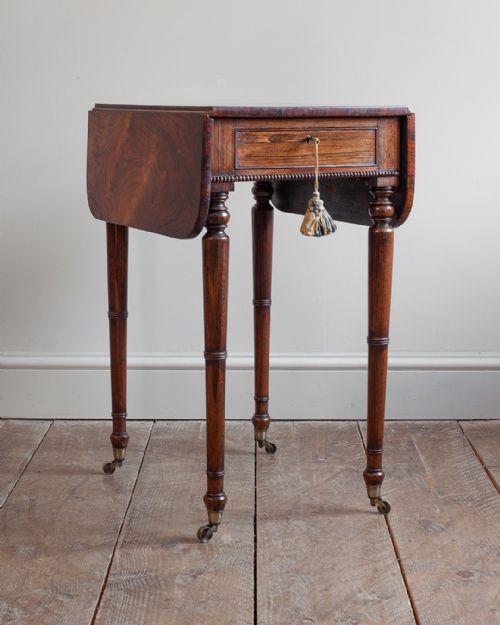
Form variations include freestanding library tables, writing desks, and Pembroke tables that cross over into the sofa table category. Buyers meet numerous examples dating from the early 19th century alongside later Edwardian interpretations.
Materials and construction
Cabinet makers utilised dense hardwoods, chiefly solid and veneered mahogany, rosewood, and pollard oak, applied to sound structural carcases. Timber selection prioritised figured grains, flame mahogany, and rich burr oak surfaces.
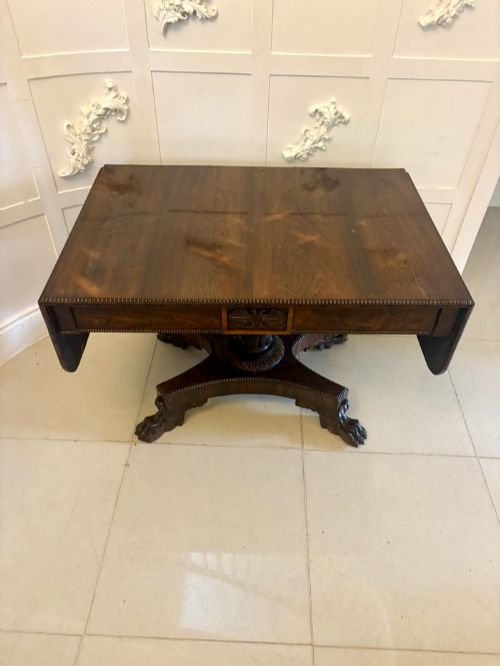
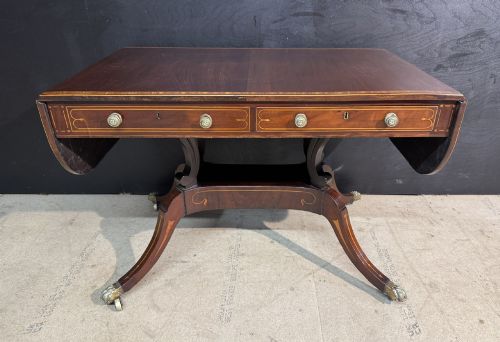
Decorative embellishments rely on contrasting wood inlay, boxwood stringing, and brass mounts, alongside carved details such as lion's paw feet. Leather inserts provide a durable writing plane, often tooled with gilt borders.
Drop leaves operate on hinged fly brackets or swing-out wooden arms that support the extended flaps. Freestanding designs demand finished backs and sides, allowing the furniture to occupy the centre of a room rather than hugging a wall.
Some nineteenth-century tables include clever secret compartments hidden within the frieze drawers for storing private correspondence.
Assessing quality in construction and timber
The standard of a regency sofa table desk rests upon the selection of timber veneers and the crispness of any carved or inlaid detail. Superior pieces employ heavily figured rosewood or flame mahogany with continuous grain patterns across the drawers and flaps.
Structural integrity differentiates standard workshop output from exceptional cabinet work. High-grade examples feature tight dovetail joints in the drawer construction, robust pivoting mechanisms for the drop leaves, and original brass hardware.
The integration of secondary timbers and the finesse of secondary elements like brass stringing or carved lion paw feet indicate the maker's hand. Pieces retaining their original leather writing surfaces and patinated finish command closer alignment with period standards.
Gillows·Williams and Gibton·Jean-Joseph Chapuis·James Mein of Kelso
The Regency Sofa Table Desk Glossary
- Sofa table
- A small rectangular table with drop leaves on either side, originally designed to stand in front of a sofa. They frequently incorporate twin drawers on the frieze.
- Drop flap
- A hinged leaf attached to the main table top that raises to extend the surface area. These are supported by swinging wooden brackets when in use.
- Freestanding
- Finished on all four sides so the piece can stand in the middle of a room rather than against a wall. This indicates careful finishing of the rear carcase.
- Stringing
- A narrow strip of contrasting wood inlaid into the surface of a piece to create decorative borders. Boxwood is frequently used against darker mahogany.
- Patina
- The deep gloss and surface texture developed by timber through age, handling, and polishing. It serves as an indicator of a piece's age and history.
Regency Sofa Table Desk: Frequently Asked Questions
What is a regency sofa table desk used for?
These tables provide a compact writing surface combined with the flexible space of drop leaves. They suit placement behind a sofa or as central writing desks.
Historically, they functioned for correspondence and light reading in principal rooms. Their freestanding nature allows placement anywhere in an interior layout.
How do I tell a true regency period piece apart?
Examine the timber quality, construction methods, and secondary woods used inside the drawers. Period pieces often feature hand-cut dovetails and mature patination.
Stylistic markers include brass inlay, sabre legs, and turned pillars characteristic of the early nineteenth century. Later revivals from the Edwardian era adopt similar forms but show distinct manufacturing traits.
Where should I place a freestanding sofa table desk?
Place the table in the centre of a room or directly behind a sofa to display its finished back. Because the piece is finished on all sides, it commands attention away from the walls.
Ensure adequate clearance around the drop leaves if you intend to raise them for writing or display. Position the desk near natural light if utilising the leather top for regular writing.
How do I care for mahogany and rosewood surfaces?
Dust the timber regularly with a soft, dry cloth and apply quality beeswax sparingly to nourish the grain. Avoid placing the desk near direct heat sources or strong sunlight.
Protect leather inserts from moisture and sharp implements by using blotters or pads. Gentle maintenance preserves the original polish and historical patina.