
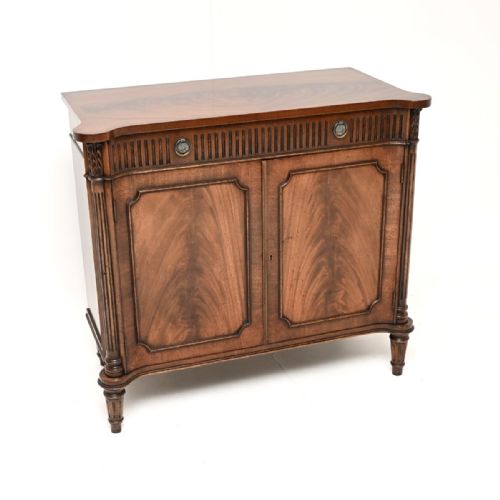
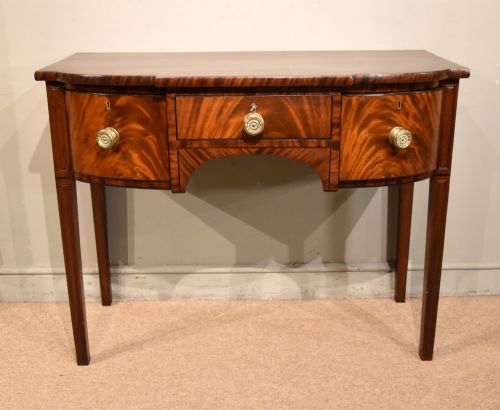
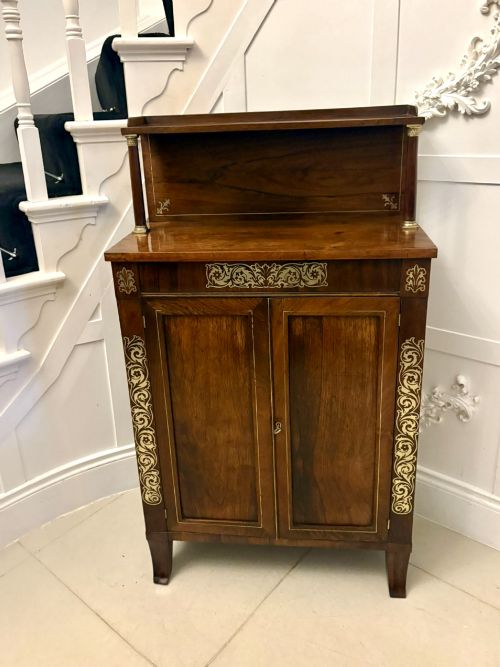
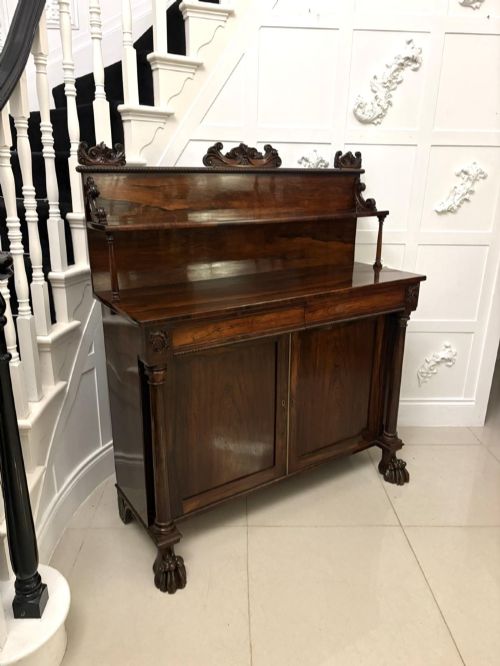
Regency Sideboard Cupboard
A regency sideboard cupboard brings architectural harmony and rich timber tones to a dining room or hallway.
Regency Sideboard Cupboard
A regency sideboard cupboard serves as a substantial storage piece, combining enclosed lower shelving with upper display surfaces or drawers. Buyers look for these items to anchor a room with period proportion and practical capacity.
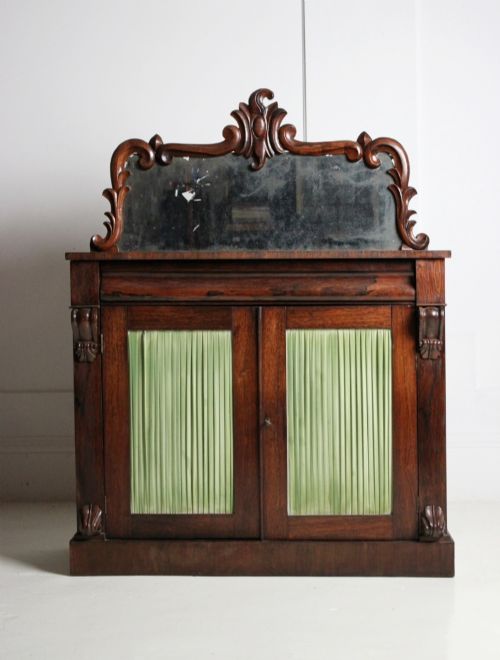
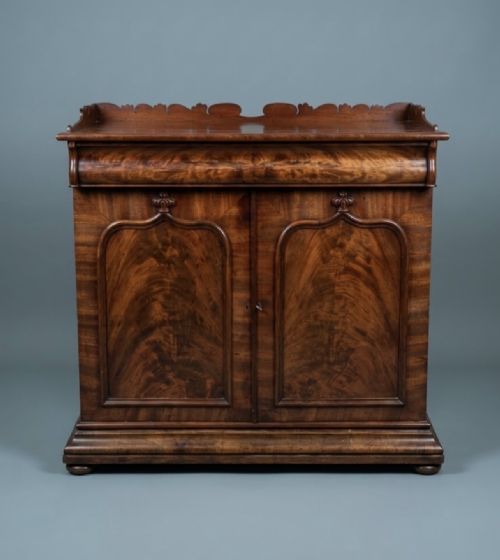
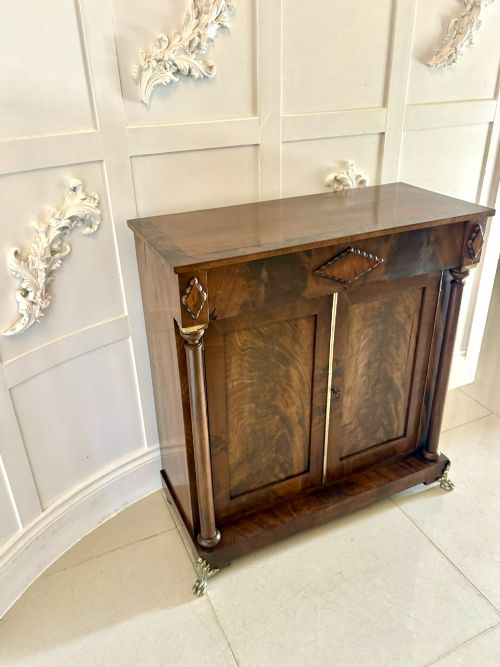
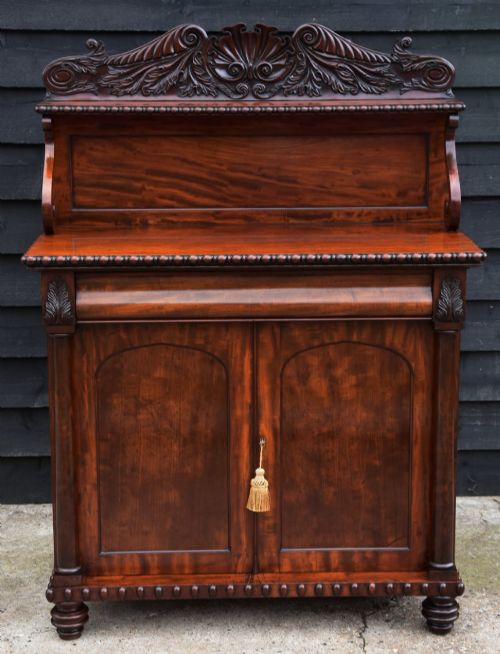
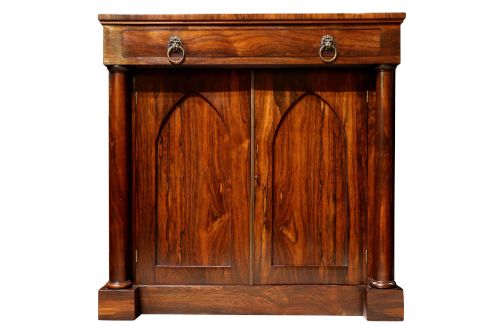
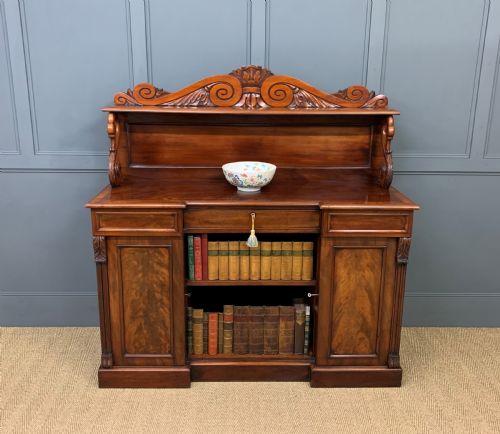
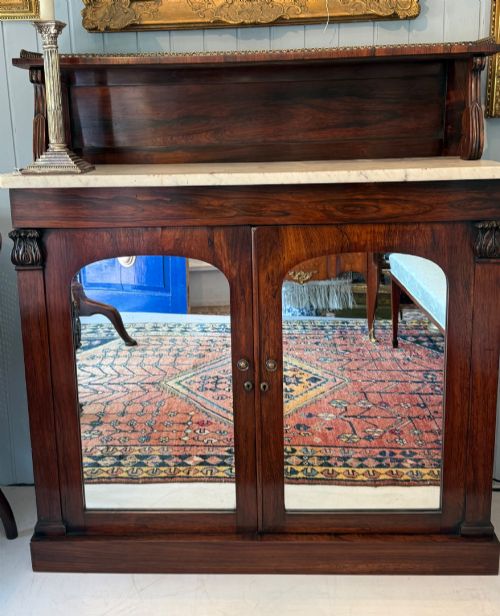
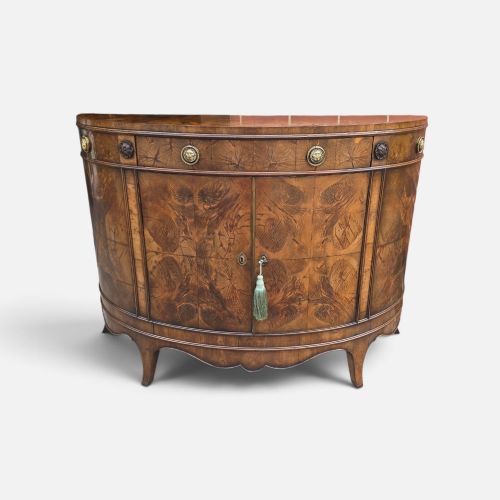
The most common forms on this page include mahogany and rosewood chiffoniers, low cupboards, and breakfront side cabinets originating from the Regency, Georgian, and William IV periods. These pieces demonstrate the refined lines and restrained ornamentation characteristic of early nineteenth-century cabinet making.
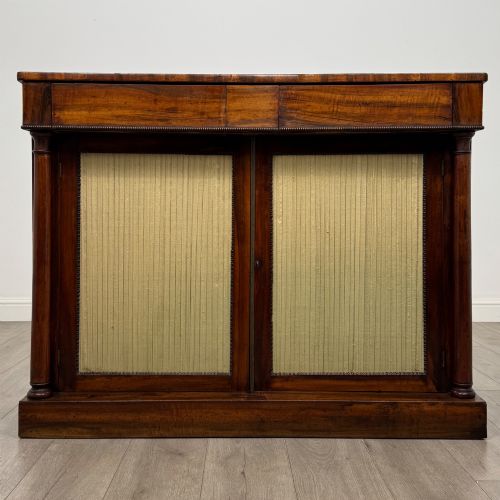
Makers often integrated brass mounts, lattice grilles, or mirror panels into the cabinetry to enhance the formal appearance of the dining room or morning room.
Materials and Construction
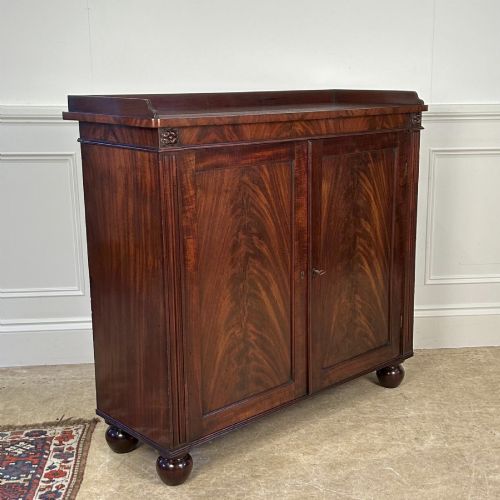
Cabinet makers utilised dense native and exotic timbers such as mahogany, rosewood, and goncalo alves, frequently applying flame mahogany veneer to create striking, figured grain patterns across the primary surfaces. Secondary structural elements often incorporated pine or oak for stability.
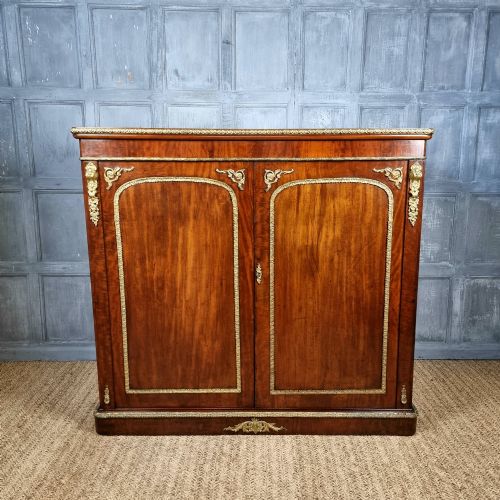
Decorative detailing relied upon cast or gilt brass mounts, inlay, and occasional simulated rosewood paint applied to pine carcasses to mimic costlier hardwoods. Joinery techniques ensured sturdy frame construction for heavy daily domestic use.
Listings feature pieces spanning the Georgian, Regency, Victorian, and Edwardian eras, constructed from mahogany, rosewood, brass, and glass.
Assessing Quality and Execution
Quality rests upon the selection of timber veneers and the precision of the cabinet maker in matching grain patterns across door panels and drawers. Superior examples display thoughtful proportions and harmonious integration of brass hardware or glazed doors.
Pieces attributed to established workshops exhibit sharper carving details, finer turning on legs or columns, and robust internal construction that survives centuries of use without structural sagging.
Gillows
The Regency Sideboard Cupboard Glossary
- Chiffonier
- A low cabinet featuring enclosed shelving below, sometimes surmounted by a small shelf or mirrored superstructure. This form evolved during the Regency period to hold books, linen, or serving utensils.
- Flame mahogany
- A veneer cut from the fork of the mahogany tree where the branch meets the trunk. It creates a distinctive, flickering flame effect across the polished surface.
- Breakfront
- A cabinet design where the central section projects forward from the flanking outer sections. This architectural arrangement creates depth and shadow on long dining room walls.
- Ormolu
- Gilded bronze mounts applied to furniture for decorative contrast against dark hardwoods. The technique involves treating metal with an amalgam of gold.
- Goncalo alves
- A dense exotic hardwood prized for its variegated, contrasting brown and dark stripes. Cabinet makers used this timber for high-status Regency furniture.
Regency Sideboard Cupboard: Frequently Asked Questions
What is a regency sideboard cupboard?
A regency sideboard cupboard is a low storage piece featuring enclosed doors, drawers, or shelving built during the early nineteenth century. These items were designed for dining rooms and hallways to store tableware and linens.
They combine functional capacity with formal decorative elements like brass inlay and figured mahogany veneers.
How do I identify a Regency period piece?
Authentic pieces from the Regency period typically display classical architectural proportions, restrained ornamentation, and dense timbers like mahogany or rosewood. Look for construction methods consistent with the early nineteenth century.
Cabinet makers of this era favoured clean lines, brass mounts, and flame veneer panels over heavy carving.
Where should I place a chiffonier?
A chiffonier fits well in a dining room, hallway, or living space against a substantial wall where its proportions can anchor the room. The flat top surface provides an ideal display area for lamps or decorative objects.
Ensure the clearance allows cupboard doors to open fully without obstruction from other furniture.
What woods were used in these cabinets?
Cabinet makers predominantly utilised mahogany, rosewood, and yew wood, often enhanced by decorative flame mahogany veneers. Secondary woods like pine and oak were standard for internal linings and structural framing.
Exotic imports like goncalo alves and amboyna also appeared on high-status commissions.